

Apartment Home Gym Setup: The Ultimate Guide for Small Spaces

Dreaming of crushing your fitness goals at home, but your apartment's tiny footprint and paper-thin walls say otherwise? The thought of creating an apartment home gym setup can feel impossible, bringing up visions of angry downstairs neighbors, scuffed floors, and a budget that just won't stretch. But what if you could have it all? A powerful, effective workout routine without sacrificing your living space-or your security deposit.
It’s not only possible, it’s easier than you think. This ultimate guide is here to walk you through every step. We’ll show you how to maximize every square inch with clever, space-saving gear, master the art of the quiet workout, and protect your rental from any damage. Get ready to build a functional and affordable fitness corner that finally works for you, your budget, and your neighbors.
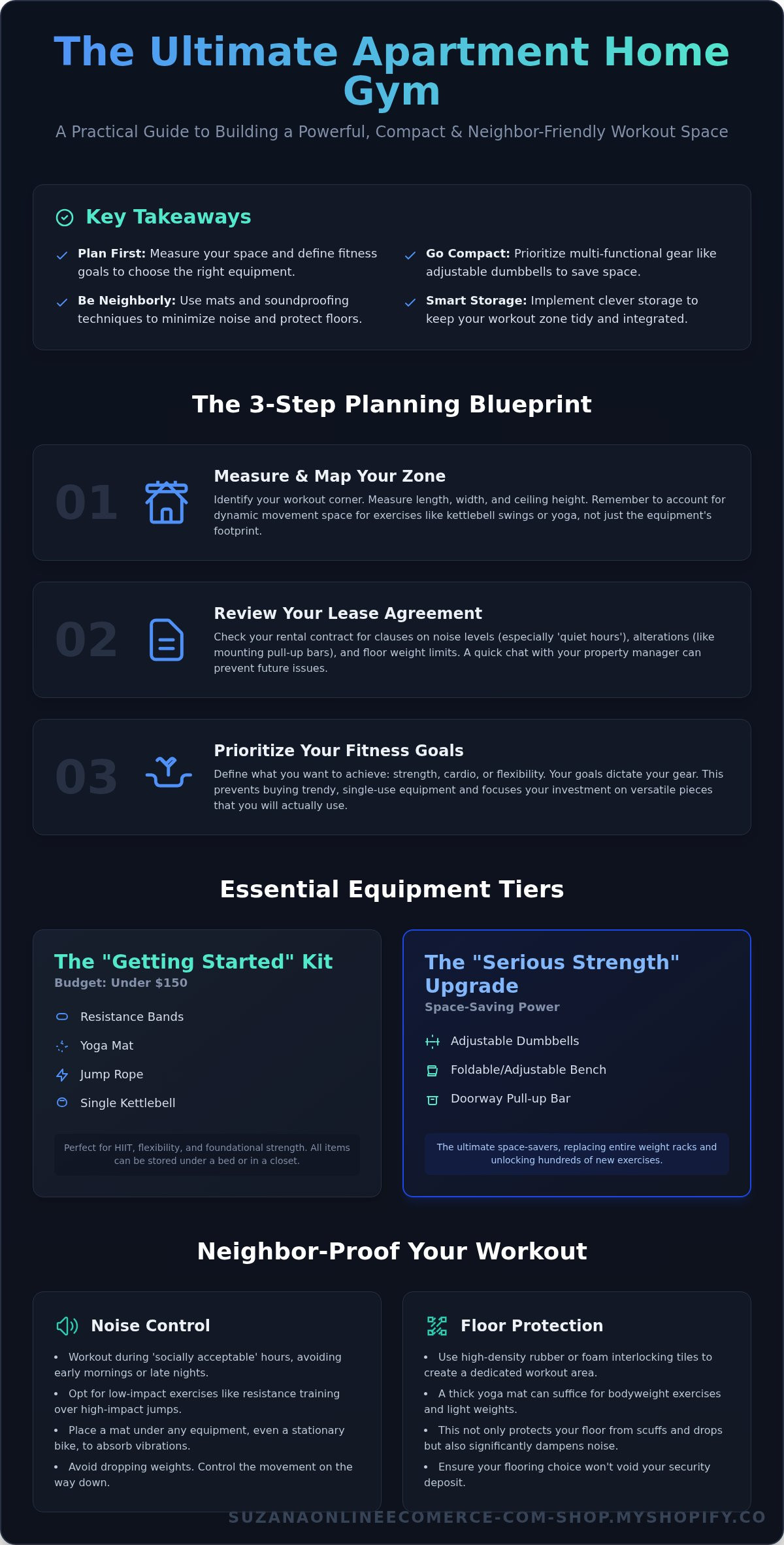
Key Takeaways
- Start with a solid plan by measuring your space and defining your fitness goals to avoid buying equipment you don't need or can't fit.
- Discover the best compact and multi-functional equipment that delivers a full-body workout without taking over your living area.
- Master the art of soundproofing and floor protection for a quiet and effective apartment home gym setup that keeps your neighbors happy.
- Implement clever storage solutions and layout strategies to create a dedicated workout zone that seamlessly integrates into your home.
The 5-Step Blueprint: Planning Your Perfect Apartment Gym
Jumping straight into buying equipment is a recipe for clutter and regret. Before you spend a dime, creating a solid plan is the most critical step for a successful apartment home gym setup. This crucial groundwork saves you time, money, and frustration by ensuring every piece of gear has a purpose and a place. A thoughtful plan helps you maximize your limited space while respecting your lease and your neighbors, turning a cramped corner into a functional and motivating workout zone.
For a visual guide on how to approach small spaces, this video offers some excellent ideas:
Step 1: Measure and Map Your Workout Zone
First, identify potential spaces. This could be a living room corner, a spare closet, or even the area under your bed for storing flat equipment. Grab a tape measure and get the exact dimensions-length, width, and height. Don't just measure the equipment's footprint; account for dynamic movement. You'll need enough clearance for a full-range kettlebell swing or the length of a yoga mat for floor exercises. Always check ceiling height for activities like jump rope or overhead presses.
Step 2: Review Your Lease Agreement
Your lease is your rulebook. Before setting up your gym, carefully review it for clauses that could impact your plans. Look specifically for rules regarding:
- Noise Levels: Many buildings have 'quiet hours'. Dropping weights or using a loud treadmill could be an issue.
- Alterations: Check if you are allowed to mount equipment like pull-up bars to walls or doorframes.
- Weight Limits: Some older buildings have floor weight limits, which is crucial if you're considering a power rack or heavy dumbbells.
When in doubt, a quick, friendly conversation with your property manager can prevent future problems.
Step 3: Prioritize Your Fitness Goals
What do you want to achieve? Whether it's building strength, improving cardio, or increasing flexibility, your goals dictate your gear. Defining your objectives prevents you from buying trendy equipment you'll never use. For example, if your goal is strength, adjustable dumbbells are a better investment than a stationary bike. Understanding the different types of exercise equipment available will help you choose versatile pieces that serve multiple functions, making your apartment home gym setup both efficient and effective.
Essential Equipment for Your Apartment Gym: Tiered Recommendations
Forget the idea that a great workout requires a clunky, oversized machine that takes over your living room. The key to a successful apartment home gym setup is focusing on compact, versatile, and multi-functional equipment. We’ve broken down the essentials into three tiers based on your budget and fitness goals, ensuring you invest in gear that works for your space, not against it.
The 'Just Getting Started' Kit (Under $150)
This minimalist kit is proof that you can build a powerful fitness foundation for less than the cost of a few months at a traditional gym. Each item is incredibly versatile and stores away in a closet or under a bed with ease.
- Resistance Bands: A full set offers variable resistance for strength training, physical therapy, and stretching. They are lightweight and take up virtually no space.
- Yoga Mat: Essential for providing cushion and a non-slip surface for floor exercises, yoga, and high-intensity interval training (HIIT).
- Jump Rope: An unbeatable tool for high-intensity cardio that can be used anywhere. Use it on your mat to help dampen the noise for downstairs neighbors.
- A Single Kettlebell: Choose a moderate weight (15-35 lbs) to start. It’s perfect for swings, squats, and presses, delivering a full-body workout with one piece of equipment.
The 'Serious Strength' Upgrade (Space-Saving Power)
When you're ready to build serious muscle, it’s time to upgrade to tools that maximize your strength potential. Most guides to the best home gym equipment for small spaces emphasize items that replace multiple pieces of gear, giving you more workout variety without the clutter.
- Adjustable Dumbbells: This is the ultimate space-saver, replacing an entire rack of weights with a single pair. Find the perfect adjustable dumbbells for your space.
- Foldable/Adjustable Bench: A bench unlocks hundreds of new exercises, from chest presses to step-ups, and can be folded flat to slide under a couch or bed.
- Doorway Pull-up Bar: Leverage your vertical space for one of the most effective back and bicep exercises. Most models are tension-mounted and require no screws.
The 'Quiet Cardio' Corner
Getting your heart rate up in an apartment requires being mindful of your neighbors. Loud, high-impact movements are out, but these silent-yet-effective options are definitely in. Unless you live on the ground floor, it's best to avoid treadmills entirely.
- Foldable Exercise Bike or Rower: Both offer fantastic, low-impact cardio sessions that are exceptionally quiet. Modern designs fold up for easy storage.
- High-Quality Exercise Mat: A thicker mat is crucial for absorbing impact and sound from any movements, protecting your floors and keeping the peace.
- Sliders/Gliding Discs: These small discs create a tough, unstable surface for your hands or feet, providing a killer core and leg workout with zero noise.
Creating a Neighbor-Proof Workout: Noise and Floor Protection
Let's be honest: the biggest hurdle to a successful apartment home gym setup isn't space-it's your neighbors. Keeping noise and vibrations to a minimum is the secret to a stress-free fitness routine. It allows you to focus on your goals without worrying about a noise complaint. Equally important is protecting your floors from scratches, dents, and cracks, ensuring you get your security deposit back. A few smart investments in this area will pay for themselves in peace of mind.
Mastering Floor Protection
Your first and best line of defense against both noise and damage is proper flooring. Interlocking rubber floor tiles are the gold standard for home gyms. They absorb the impact from weights, dampen vibrations, and create a durable, non-slip surface. For serious weight training involving dumbbells or kettlebells, choose a thickness of at least 3/4 inch. For yoga, Pilates, or bodyweight-only routines, a high-quality, thick exercise mat may be all you need.
Sound Dampening Hacks and Etiquette
Beyond flooring, simple gym etiquette goes a long way in an apartment building. The goal is to minimize sudden, sharp noises that travel easily through structures. Follow these simple rules:
- Never drop your weights. Always maintain control and place them down gently after a set.
- Use extra padding, like a folded mat or specialized deadlift pads, for exercises where weights touch the floor.
- Be mindful of the clock. Avoid working out very early in the morning or late at night when your neighbors are most likely sleeping.
- Keep your music to yourself by using headphones instead of a speaker.
Choosing Quiet Exercises
Your workout selection can dramatically reduce your noise output. By focusing on controlled movements, you can get an incredible workout without causing a disturbance. A quiet-friendly routine emphasizes tension and form over explosive impact.
- Prioritize equipment like resistance bands, dumbbells, and kettlebells for controlled movements like presses, rows, and swings.
- Bodyweight exercises such as squats, lunges, push-ups, and planks are naturally quiet and effective.
- Avoid high-impact exercises like burpees, jumping jacks, and box jumps unless you have invested in exceptionally thick floor padding.
By implementing these strategies, your apartment home gym setup will be a private sanctuary for you and completely unnoticeable to everyone else.
Creating this sanctuary extends beyond the physical; it's about nurturing your mind as well. After your workout, a quiet cool-down activity like reading is a great way to recover. If you're looking for new material, from fitness guides to relaxing fiction, you can explore Książki drukowane.
Smart Storage & Layouts to Maximize Your Space
The final, crucial piece of your apartment home gym setup is organization. A cluttered workout space can quickly become a demotivating one, and the last thing you want is for your fitness gear to take over your living area. The key is to think vertically and integrate your equipment seamlessly into your home's existing footprint. A tidy space not only looks better but also makes starting your workout feel effortless.
By using smart storage solutions and clever layouts, you can create a functional and inspiring gym that disappears when you're done.
Vertical and Hidden Storage Solutions
When floor space is at a premium, look up! Using your walls and multi-functional furniture is the most efficient way to store your gear without adding clutter. Here are a few clever ideas:
- Wall-Mounted Shelves & Pegboards: Perfect for hanging resistance bands, yoga straps, and jump ropes. A sleek pegboard can turn your equipment into a functional piece of wall art.
- Over-the-Door Racks: Don't forget this unused space! An over-the-door organizer is ideal for stashing yoga mats, foam rollers, and workout towels.
- Sturdy Shoe Racks: A compact, low-profile shoe rack is an excellent and affordable alternative to a bulky dumbbell rack for lighter weights and kettlebells.
- Storage Ottomans: The ultimate hidden gym solution. A stylish ottoman in your living room can easily hide a complete starter kit of bands, light dumbbells, and sliders.
Sample Layouts for Inspiration
How you arrange your space depends entirely on your apartment's layout. Your goal is to create a dedicated zone that you can easily transition into "gym mode." Here are some popular approaches:
- The Studio Setup: Designate a corner as your workout nook. Use a decorative folding screen or a tall plant to visually separate the space, hiding your equipment when not in use.
- The One-Bedroom Solution: If you have a spare or underutilized closet, transform it into a "fitness cabinet." Install heavy-duty shelves for weights and hooks for accessories. Simply open the doors, and your gym is ready.
- The Living Room Gym: Integrate your equipment into your decor. Use a stylish cube shelving unit, assigning specific cubes for your kettlebells, yoga blocks, and other gear. This makes your apartment home gym setup feel intentional and organized.
With the right strategy, your fitness equipment can enhance your space rather than overwhelm it. Getting your gear in order is the first step toward building a consistent routine. Browse our accessories to keep your home gym organized.
Your Apartment Gym Awaits: It's Time to Build
Living in an apartment doesn't mean sacrificing your fitness goals. As we've explored, the key is strategic planning and choosing the right gear. By focusing on multi-functional equipment, protecting your floors, and using clever storage solutions, creating your ideal apartment home gym setup is entirely within reach. You now have the blueprint to transform even the smallest corner into a powerful personal fitness zone.
Ready to bring that vision to life? We’ve taken the guesswork out of finding the perfect tools. Shop our curated collection of space-saving fitness equipment! You'll discover versatile equipment perfect for small spaces, with solutions for every budget and fitness level. Best of all, we provide worldwide shipping right to your door.
Your journey to a healthier, stronger you is just one step away. Start building today!
Frequently Asked Questions
What is the single most important piece of equipment for an apartment gym?
For maximum versatility in your apartment home gym setup, a set of adjustable dumbbells is the single most important investment. They allow you to perform hundreds of exercises, from bicep curls to goblet squats, and easily adjust weight for progressive overload. This single purchase replaces an entire rack of traditional dumbbells, saving you precious floor space. A quality exercise mat is a close second for comfort and floor protection during bodyweight exercises and stretching.
How can I do cardio in an apartment without a treadmill?
You have many excellent, quiet cardio options that don't involve a treadmill. High-intensity interval training (HIIT) using bodyweight exercises like burpees, jumping jacks, and high knees is highly effective. For a low-impact choice, consider a foldable exercise bike or a compact under-desk elliptical. A simple jump rope, used on a thick mat to dampen noise, is another fantastic and affordable tool for a powerful cardio workout that takes up almost no storage space.
Is it possible to have a squat rack or power rack in an apartment?
Yes, it's possible, but it requires careful planning. Look for space-saving options like foldable wall-mounted squat racks or compact half racks, which have a smaller footprint than full power cages. Before purchasing, you must measure your ceiling height carefully and check your lease agreement for any restrictions. It's also wise to consider the weight capacity of your floor, especially in older buildings. Always use thick rubber matting underneath to protect floors and reduce noise.
How much should I budget for a basic but effective apartment home gym setup?
A basic yet highly effective apartment home gym can be built for between $300 and $600. This budget would typically cover a quality set of adjustable dumbbells ($200-$400), a sturdy, adjustable bench ($100-$150), and a few sets of resistance bands ($20-$40). This combination provides the foundation for a full-body workout routine. You can start with just dumbbells and bands for under $300 and add a bench later as your budget allows.
What's the best way to handle a noise complaint from a neighbor?
The best approach is prevention. Invest in thick rubber gym flooring or interlocking mats to absorb impact and sound. Avoid dropping weights and schedule your workouts for reasonable hours. If you do receive a complaint, be respectful and apologetic. Ask your neighbor for specifics about the noise and when they hear it. Reassure them you'll take steps to be quieter, such as avoiding jumping exercises during certain times, and then follow through on your promise.
Can I build muscle effectively with only apartment-friendly equipment?
Absolutely. The key to building muscle is progressive overload-consistently challenging your muscles with more resistance or reps over time. A quality set of adjustable dumbbells, resistance bands, and a doorway pull-up bar are more than enough to achieve this. By focusing on compound movements like dumbbell squats, lunges, overhead presses, and rows, you can effectively target all major muscle groups and build significant strength and size right in your living room.