

Aromatherapy: A Beginner's Guide to Essential Oils for Wellness

Ever felt a wave of confusion standing before a wall of tiny amber bottles, each promising a different kind of bliss? You're not alone. The journey into aromatherapy can feel overwhelming, filled with questions about which oils actually work, how to use them safely, and whether you're buying a genuine plant extract or just a cheap fragrance. It’s easy to feel skeptical when you’re just trying to find a natural way to unwind or get a better night's sleep, but the path to harnessing the power of scent doesn't have to be complicated.
Consider this your clear and simple map. In this beginner's guide, we'll cut through the noise and give you the confidence to get started. You will learn everything you need to know, from choosing a few key essential oils for relaxation, focus, and better sleep to the best practices for using them effectively and safely. Get ready to transform your space and support your well-being, one fragrant drop at a time.
What is Aromatherapy? More Than Just a Pleasant Scent
At its core, aromatherapy is a holistic healing practice that uses natural plant extracts to promote health and well-being. It’s a complementary therapy that harnesses the aromatic compounds from plants-known as essential oils-to improve the health of the body, mind, and spirit. This practice is far more than just enjoying a pleasant fragrance; it's a science-backed art that engages our most powerful senses to bring about real physiological and psychological change.
While the term itself was coined in the 20th century, the principles behind What is Aromatherapy? have been practiced for millennia by ancient civilizations in Egypt, China, and India for religious, medicinal, and cosmetic purposes. Unlike modern perfumes that often use synthetic chemicals, true aromatherapy relies exclusively on pure, potent plant extracts to achieve its therapeutic effects.
To better understand the tools used in this practice, watch this helpful introduction to essential oils:
How Aromatherapy Works: The Science of Scent
Aromatherapy primarily works through two main pathways: the sense of smell and skin absorption. When you inhale an essential oil, its molecules travel through the olfactory system directly to the limbic system-the part of the brain that controls emotions, memory, and behavior. This is why the scent of lavender can instantly feel calming or a whiff of lemon can boost your mood. When applied topically (properly diluted), the oil's small molecules can also be absorbed through the skin and enter the bloodstream.
Aromatherapy vs. Essential Oils: Understanding the Terms
It's easy to confuse these terms, but the distinction is simple. Think of it this way: aromatherapy is the practice, and essential oils are the tools. You cannot perform aromatherapy without essential oils, which are highly concentrated extracts distilled from flowers, leaves, bark, and roots. It is crucial to note that not all scented oils are essential oils. Products labeled as "fragrance oils" or "perfume oils" are often synthetic and lack the therapeutic properties needed for true wellness benefits.
Your Aromatherapy Starter Kit: The Most Popular Essential Oils
Diving into the world of aromatherapy doesn't require a collection of dozens of oils. In fact, starting with a small, versatile set is the best way to learn and discover what works for you. The most critical first step is choosing 100% pure, therapeutic-grade oils. Low-quality or synthetic fragrance oils will not provide the wellness benefits you seek and can even be harmful. Always check the label for the plant's botanical name (e.g., Lavandula angustifolia for Lavender) and a statement of purity. Understanding the Essential Guidelines for Using Aromatherapy from trusted sources is key to ensuring your practice is both safe and effective.
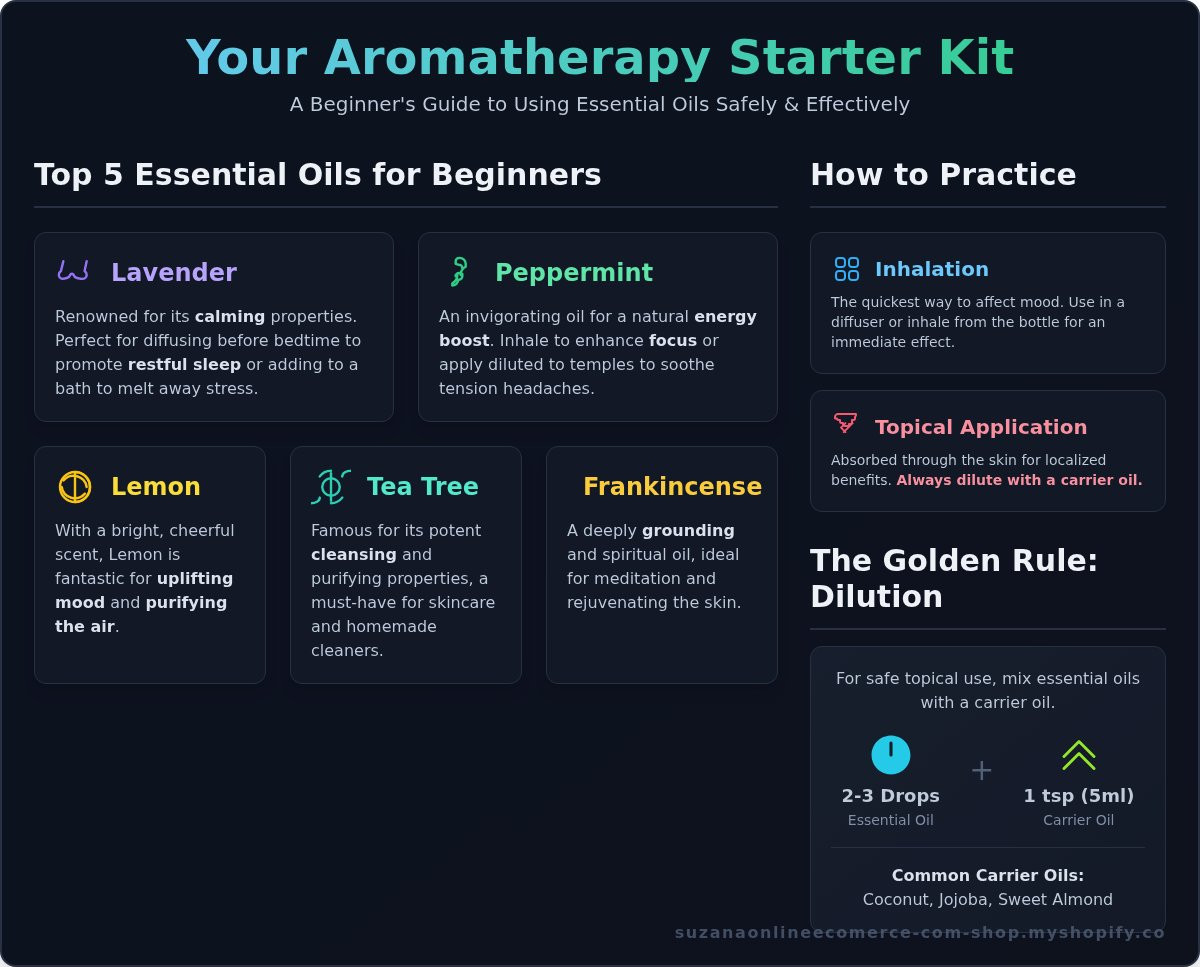
Top 5 Essential Oils for Beginners
This foundational collection provides a wide range of benefits, from promoting relaxation to purifying your living space. These five oils are the versatile workhorses of any aromatherapy kit.
- Lavender (Lavandula angustifolia): Renowned for its calming properties, Lavender is perfect for diffusing before bedtime to promote restful sleep or adding to a bath to melt away stress.
- Peppermint (Mentha piperita): This invigorating oil is a go-to for a natural energy boost. Inhale it directly from the bottle to enhance focus or apply it diluted to your temples to soothe a tension headache.
- Lemon (Citrus limon): With its bright, cheerful scent, Lemon is fantastic for uplifting your mood and purifying the air. It's also a powerful natural cleaner when added to DIY household sprays.
- Tea Tree (Melaleuca alternifolia): Famous for its potent cleansing and purifying properties, Tea Tree oil is a must-have for skincare, homemade cleaners, and supporting a healthy immune system.
- Frankincense (Boswellia carterii): A deeply grounding and spiritual oil, Frankincense is ideal for enhancing meditation and yoga practices. It's also prized for its ability to rejuvenate skin and reduce the appearance of blemishes.
What Are Carrier Oils and Why Do You Need Them?
Essential oils are highly concentrated and can cause skin irritation if applied directly. A carrier oil is a vegetable-based oil-like fractionated coconut, jojoba, or sweet almond oil-used to dilute essential oils for safe topical application. They "carry" the essential oil onto your skin, allowing it to be absorbed effectively without sensitivity.
A safe dilution ratio for beginners is to mix 2-3 drops of essential oil with one teaspoon (5ml) of your chosen carrier oil before applying it to your skin. This simple step is fundamental to practicing aromatherapy safely and enjoying its full benefits.
How to Practice Aromatherapy at Home: Simple and Effective Methods
You don't need expensive equipment or extensive training to enjoy the benefits of aromatherapy. Integrating essential oils into your daily wellness routine can be simple, enjoyable, and profoundly effective. Whether you want to create a calming atmosphere, soothe sore muscles, or simply refresh your mind, these accessible methods are the perfect place to start.
Inhalation: Breathing in the Benefits
Inhalation is the quickest way for the aromatic molecules of essential oils to influence your mood. When you breathe in a scent, olfactory receptors send immediate signals to your brain's limbic system, which governs emotions and memory. Research reviewed by Johns Hopkins on aromatherapy explains how this direct neural pathway can have a powerful effect on your well-being. The most common inhalation methods include:
- Diffusers: These devices disperse a fine, scented mist. For an ultrasonic diffuser, simply add water to the fill line and 3-5 drops of essential oil. Nebulizing diffusers use no water and provide a more potent aroma.
- Steam Inhalation: For respiratory support, add 1-2 drops of an oil like eucalyptus to a bowl of hot water. Drape a towel over your head, lean over the bowl, and inhale the steam for 5 minutes.
- Direct Inhalation: Place a single drop of oil onto a tissue or cotton ball and breathe deeply for a quick and portable mood boost.
Topical Application: Nourishing Your Body
Applying essential oils to your skin allows their therapeutic compounds to be absorbed. Crucial Safety Note: Always dilute essential oils with a carrier oil-such as jojoba, sweet almond, or fractionated coconut oil-before skin application to prevent irritation. A safe dilution is typically 2-3 drops of essential oil per teaspoon of carrier oil.
- Massage Oils: Combine your diluted essential oils and massage them into tense shoulders or sore muscles for targeted physical and aromatic relief.
- Rollerballs: Create a custom, on-the-go blend in a roller bottle. Apply to pulse points like your wrists, temples, and the back of your neck.
- Compresses: Add a few drops of diluted oil to a bowl of warm or cool water. Soak a cloth, wring it out, and apply it to the desired area for soothing comfort.
Aromatic Baths: Creating a Spa-Like Experience
A warm, aromatic bath is a luxurious way to unwind. However, since oil and water don’t mix, you must never add essential oils directly to the bathwater, as undiluted drops can irritate your skin. To enjoy a safe and fragrant soak, first blend 5-10 drops of your chosen essential oil into a tablespoon of a dispersant like Epsom salts, honey, or a carrier oil. Add this mixture to the running water to ensure it disperses evenly. For a deeply relaxing experience, try a blend of lavender and chamomile.
Creating Wellness Rituals: Aromatherapy for Common Goals
Let's move beyond simply knowing what an individual oil does. The true power of aromatherapy lies in creating intentional wellness rituals. By mindfully integrating specific scents into your daily routine, you can proactively manage your mood, energy, and overall well-being. This approach shifts the focus from reacting to stress to building a consistent foundation of calm, focus, and rest.
For Stress Relief and Relaxation
When daily pressures begin to mount, turn to grounding, calming scents to restore your sense of peace. These simple practices are designed to be easily woven into your day, helping you unwind, decompress, and recenter your mind in just a few moments.
- Calming Diffuser Blend: Add 4 drops of Lavender and 3 drops of Bergamot to your diffuser to create a tranquil atmosphere in your living space or office.
- Relaxing Bath Ritual: Mix 5-7 drops of Roman Chamomile or Frankincense with a tablespoon of a carrier oil (like jojoba or sweet almond) and add to a warm bath to melt away physical and mental tension.
- On-the-Go Rollerball: For immediate relief, create a personal rollerball with 10 drops of Lavender in a 10ml bottle topped with a carrier oil. Apply to your wrists or temples during stressful moments.
For Better Sleep
A restful night is the cornerstone of wellness, yet it can often feel elusive. Prepare your mind and body for deep, restorative sleep with these soothing aromatic routines that signal to your system it's time to power down.
- Bedside Diffuser Blend: Diffuse 4 drops of Lavender and 3 drops of Cedarwood in your bedroom 30-60 minutes before bedtime. The woody, floral scent is deeply calming.
- DIY Linen Spray: In a small spray bottle, combine 15-20 drops of a sleep-promoting oil like Clary Sage with 4 ounces of distilled water. Shake well and lightly mist your pillows and sheets.
- Soothing Foot Massage: Mix one drop of Vetiver or Sandalwood oil with your favorite unscented lotion and gently massage your feet before climbing into bed.
For an Energy and Focus Boost
Combat mental fatigue and sharpen your concentration with bright, uplifting essential oils. Whether you're starting your day or fighting a midday slump, these rituals can help clear the fog and improve productivity without the jitters of caffeine.
- Morning Motivation Blend: Diffuse an invigorating mix of 3 drops of Lemon, 2 drops of Peppermint, and 2 drops of Rosemary to energize your mind and awaken your senses.
- Instant Pick-Me-Up: Place a single drop of Peppermint oil on a tissue and inhale deeply three times for a quick, clarifying boost of focus.
- Invigorating Workspace: Keep a citrus oil like Sweet Orange or Grapefruit on your desk to diffuse or inhale directly when you need to stay on task and maintain a positive mindset.
By incorporating these simple practices, you transform your aromatherapy routine from using pleasant scents into wielding powerful tools for intentional self-care. Ready to build your own wellness kit? Explore our curated collection of premium essential oils to get started.
Safety First: Essential Guidelines for Using Aromatherapy
Embarking on your aromatherapy journey is exciting, but it’s crucial to remember that just because essential oils are natural, it doesn’t mean they can be used without caution. These highly concentrated plant extracts are powerful and require respect. By understanding and following fundamental safety rules, you can confidently harness their benefits while minimizing risks, ensuring your experience is both positive and effective.
The Golden Rules of Essential Oil Safety
Think of these as the non-negotiable principles for safe and responsible use. Adhering to them will protect you and allow you to enjoy the full wellness potential of your oils.
- Always dilute before applying to the skin. Never apply "neat" or undiluted essential oils directly to your skin. A safe dilution is typically 1-2% in a carrier oil like jojoba, almond, or coconut oil (about 6-12 drops of essential oil per ounce of carrier oil).
- Perform a patch test. Before using a new oil liberally, apply a small amount of the diluted oil to your inner forearm. Wait 24 hours to ensure there is no redness, itching, or irritation.
- Never ingest essential oils. Unless you are under the specific guidance of a certified clinical aromatherapist or medical doctor, do not swallow essential oils. They can be toxic if ingested improperly.
- Keep oils away from sensitive areas. Avoid contact with your eyes, inner ears, and other mucous membranes. If accidental contact occurs, flush with a carrier oil-not water.
Special Considerations: Pets, Children, and Pregnancy
When you use essential oils in your home, you must consider everyone who lives there. Many oils that are safe for adults can be harmful to more sensitive members of your family.
For pets, especially cats, many common oils are toxic even when diffused. Be cautious with the following:
- Tea Tree
- Peppermint
- Citrus Oils (Limonene)
- Wintergreen
- Pine & Eucalyptus
- Ylang Ylang
For children, always use a much higher dilution (0.5-1%) and stick to gentle oils like Lavender and Roman Chamomile. If you are pregnant, nursing, or have a chronic medical condition, always consult your healthcare provider before using essential oils.
Storing and Handling Your Oils
Proper storage maintains the therapeutic quality of your oils and is a key part of safety. Keep them in dark glass bottles, tightly sealed, and away from direct sunlight and heat, which can degrade them. Essential oils do expire; citrus oils can degrade in as little as a year, while others last longer. Using an oxidized oil increases the risk of skin sensitization.
By following these guidelines, you can confidently and responsibly explore the world of aromatherapy. Ready to begin your journey with pure, high-quality ingredients? Explore our starter collection today.
Embrace Your Wellness Journey with Aromatherapy
You now have the essential knowledge to begin your own aromatic adventure. As you've learned, this practice is far more than just pleasant scents-it’s a powerful, accessible tool for enhancing your mood, mind, and overall well-being. By starting with a few versatile oils and embracing simple, safe methods like diffusion, you can easily transform your daily routines and create a personal sanctuary for relaxation and rejuvenation.
Finding high-quality, pure products is the most important next step. As a trusted source for your lifestyle needs, we offer a wide selection of wellness and home products to support your aromatherapy journey. Create your perfect haven and unlock the full potential of natural wellness. Ready to begin your wellness journey? Explore our collection of wellness products. Your path to a more balanced and fragrant life is just a few drops away.
Frequently Asked Questions About Aromatherapy
What is the difference between an essential oil and a fragrance oil?
Essential oils are pure, concentrated plant extracts obtained through methods like distillation or cold pressing. They contain the natural aromatic compounds and therapeutic properties of the plant. Fragrance oils, however, are synthetic, lab-created scents. While they can mimic natural aromas, they lack the wellness benefits found in true essential oils. For therapeutic purposes, always choose 100% pure essential oils over synthetic fragrance oils to ensure you receive the intended benefits.
Can I ingest essential oils for health benefits?
Ingesting essential oils is generally not recommended without guidance from a qualified healthcare professional, such as a certified clinical aromatherapist. These oils are extremely potent and can be toxic if swallowed, potentially causing serious harm to your digestive system and internal organs. For safe and effective use, it is best to stick to inhalation through a diffuser or properly diluted topical application on the skin. Safety should always be the top priority.
How long should I run my essential oil diffuser?
For the best results, it is recommended to run your diffuser intermittently, not continuously. A common best practice is to diffuse for 30 to 60 minutes, then switch it off for at least the same amount of time. This prevents olfactory fatigue, where your brain stops noticing the scent, and reduces the risk of overexposure. Many modern diffusers include a built-in intermittent setting, which makes this cycle easy to follow and manage safely.
Are there any essential oils I should avoid if I have a specific health condition?
Yes, it is crucial to exercise caution. For example, individuals with high blood pressure should be careful with stimulating oils like rosemary or peppermint. If you have epilepsy, oils like fennel and sage should be avoided. Pregnant women should avoid a number of oils, including clary sage and wintergreen. Always consult your doctor before beginning an aromatherapy regimen, especially if you have a pre-existing condition, are pregnant, or are using oils around children and pets.
How can I tell if an essential oil is high quality?
A high-quality essential oil will list the plant's Latin botanical name on the label (e.g., Lavandula angustifolia for Lavender). It should be sold in a dark-colored glass bottle, such as amber or cobalt, to protect it from light degradation. Be wary of extremely low prices, as pure oils are resource-intensive to produce. Look for statements like "100% pure" or "therapeutic grade" and check if the company provides third-party testing reports for purity.
Why do I need to use a carrier oil for topical application?
Essential oils are highly concentrated and can cause skin irritation, burns, or sensitization if applied directly. A carrier oil-such as jojoba, sweet almond, or fractionated coconut oil-dilutes the essential oil to a safe concentration for your skin. This dilution does not weaken the oil's effects; in fact, it aids in absorption and allows you to cover a larger area of skin, making your aromatherapy practice both safer and more effective for topical use.