

Beyond Bubble Baths: 50+ Practical Self-Care Ideas for Real Life

Does the idea of ‘self-care’ feel like just another chore on your endless to-do list? We’re often shown images of luxurious spa days and elaborate bubble baths, but for most of us, that’s just not reality. When you're feeling overwhelmed and running on empty, you need practical solutions, not more pressure. That’s why we’re moving beyond the clichés to bring you a list of genuinely helpful and simple self care ideas that you can actually use in your real, busy life.
Get ready to discover over 50 actionable ways to nourish your mind, body, and soul-many of which are free and take just a few minutes. We'll not only provide the inspiration but also show you how to build a sustainable routine that finally sticks. It's time to ditch the guilt, reclaim your energy, and find the balance you deserve, one small, intentional act at a time.
What is Self-Care (And What It Isn't)?
Let's clear the air. When you hear "self-care," do you immediately picture expensive spa days and decadent treats? While those can be lovely, they represent a tiny fraction of the whole picture. At its core, Self-care is any intentional action you take to care for your physical, mental, and emotional well-being. It's not selfish or indulgent; it's a necessary practice for maintaining balance and health in a demanding world. It’s about checking in with yourself and asking, "What do I need right now?"
To get a better sense of what this looks like in practice, this video offers some excellent examples.
Why Self-Care Matters More Than Ever
In our "always-on" digital age, the lines between work, life, and rest are increasingly blurred, leading to chronic stress and burnout. Practicing self-care isn't about escaping life-it's about equipping yourself to handle it. Consistently tending to your needs helps lower stress, improves focus and productivity, and builds the mental and emotional resilience required to navigate challenges with greater ease.
Moving Beyond the 'Bubble Bath' Stereotype
While a bubble bath is a classic for a reason, the most effective self care ideas are deeply personal. What recharges one person might drain another. The key is to move beyond stereotypes and find what genuinely restores you. This doesn't require a huge time commitment. Self-care can be as simple as a 'micro-habit'-a five-minute stretch, a moment of mindful breathing, or stepping outside for fresh air.
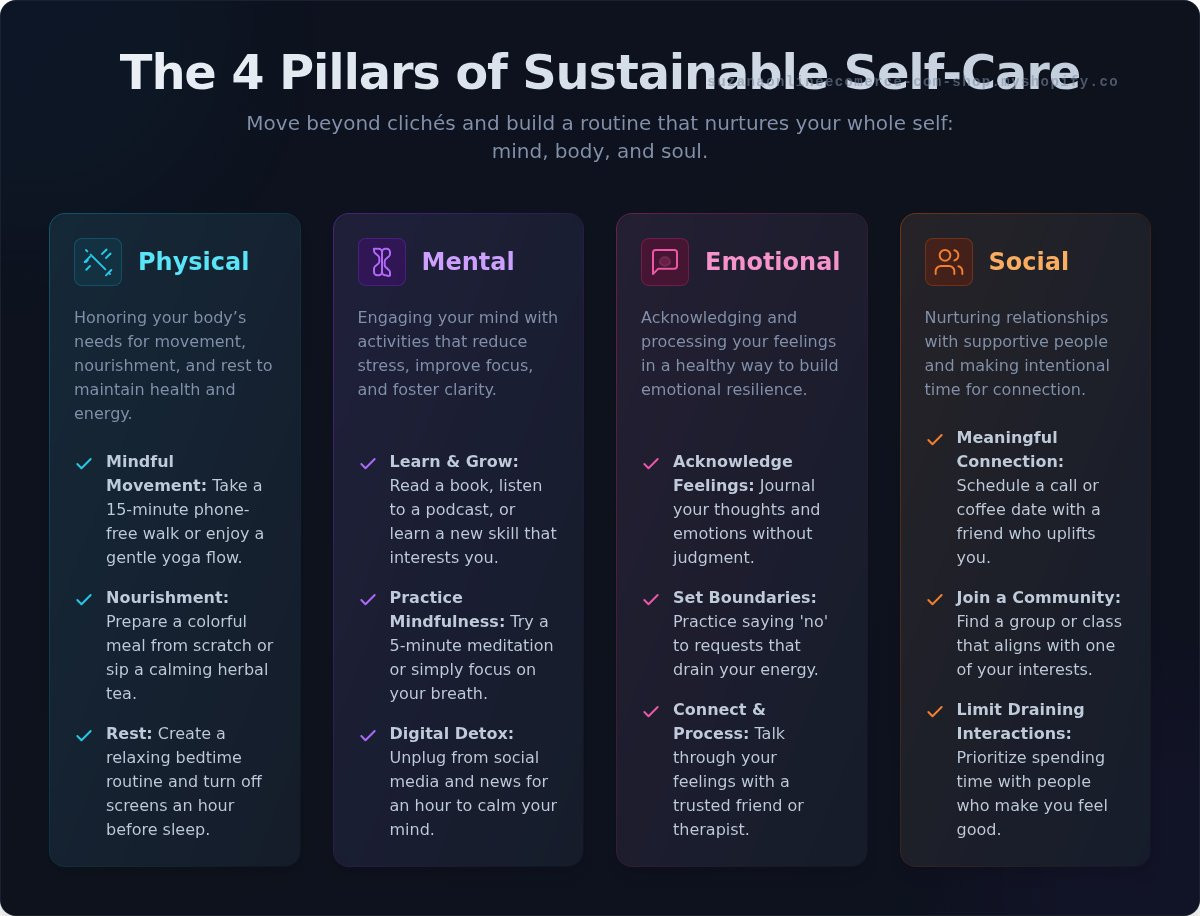
To build a truly sustainable practice, it helps to think of self-care across different areas of your life. These are often called the pillars of self-care, and they ensure you're nurturing your whole self, not just one part.
- Physical Self-Care: Moving your body, getting enough sleep, and eating nutritious food.
- Mental Self-Care: Engaging your mind with a hobby, learning something new, or practicing mindfulness.
- Emotional Self-Care: Acknowledging your feelings, setting boundaries, and talking with a friend or therapist.
- Social Self-Care: Nurturing relationships with people who uplift you and making time for connection.
Understanding these categories will help you find the right activities for your needs, which we'll explore next.
Physical Self-Care: Re-energize Your Body
Physical self-care is the practice of actively honoring your body’s needs to maintain your health and energy. It’s about listening to the signals your body sends-for movement, for nourishment, for rest-and responding with kindness rather than pressure. This isn't about grueling workouts or restrictive diets; it's about creating sustainable habits that make you feel strong and vibrant. Experts agree that tending to your physical well-being is a foundational component of Caring for Your Mental Health, as the mind and body are deeply interconnected.
Integrating small, intentional actions into your day can make a world of difference. Below are some practical physical self care ideas to help you reconnect with your body and recharge your batteries.
Ideas for Mindful Movement
Movement should be a celebration of what your body can do, not a punishment. Find joy in moving in ways that feel good to you. Even a few minutes of intentional activity can boost your mood and energy levels.
- Go for a 15-minute walk without your phone. Pay attention to your surroundings-the sounds, the sights, the feeling of your feet on the ground.
- Do a gentle stretching routine or a yoga flow. Release tension in your neck, shoulders, and back, especially if you sit at a desk all day.
- Have a solo dance party. Put on your favorite high-energy playlist and just let loose in your living room for a few songs.
- Try a new at-home workout. Roll out your favorite mat and explore a new routine with our curated fitness collection to keep things fresh and exciting.
Nourishment and Hydration
Fueling your body is a fundamental act of self-care. Focus on providing it with the nutrients it needs to thrive, but do so with enjoyment and without judgment. It’s about balance and mindfulness.
- Prepare a healthy, colorful meal from scratch. The act of chopping vegetables and combining ingredients can be incredibly meditative.
- Infuse your water. Add slices of lemon, cucumber, mint, or berries to a large pitcher to make hydration more appealing throughout the day.
- Sip a warm cup of herbal tea. Choose a calming blend like chamomile or peppermint and enjoy it without the distraction of a screen.
- Try a new healthy recipe you've been saving. Experimenting in the kitchen is a creative and rewarding way to nourish yourself.
Prioritizing Sleep and Rest
In our always-on culture, rest is often seen as a luxury, but it is a biological necessity. Quality sleep is crucial for cognitive function, emotional regulation, and physical repair. Prioritizing it is one of the most powerful self care ideas you can embrace.
- Create a relaxing bedtime routine. Read a chapter of a book, do some light stretching, or listen to calming music to signal to your body that it's time to wind down.
- Take a 20-minute power nap. If you feel a midday slump, a short nap can significantly improve alertness and performance.
- Turn off all screens at least an hour before bed. The blue light from phones, tablets, and TVs can interfere with your body's melatonin production.
- Ensure your bedroom is a sanctuary. Keep it dark, quiet, and cool for the most restorative sleep possible.
Mental Self-Care: Calm Your Mind and Reduce Overwhelm
Mental self-care involves activities that actively calm, stimulate, or organize your mind to reduce stress and improve focus. It’s a crucial pillar of overall well-being, as outlined in comprehensive guides on What is Self-Care?, that focuses on practices promoting clarity and creativity. The goal is to move from a state of overwhelm to one of intentional calm, whether that means engaging your intellect or giving it a much-needed break.
Activities to Declutter Your Thoughts
When your mind feels like a browser with too many tabs open, these simple exercises can help you reset. They offer an immediate sense of relief from mental chatter, allowing you to find a moment of peace in a busy day.
- Write a 'brain dump': Spend 10 minutes writing down every single thought, worry, or to-do item on your mind. Don't edit, just write.
- Practice 5 minutes of mindfulness: Sit quietly and focus only on your breath. Use an app like Calm or Headspace, or simply count your inhales and exhales.
- Organize a small space: Tidy up your desk, a kitchen drawer, or your nightstand. Creating external order can help create internal calm.
- Listen to a calming playlist: Put on instrumental music, ambient sounds, or nature recordings to soothe your nervous system.
Engage Your Mind Creatively
Self-care isn't always about being still; sometimes it's about shifting your focus to something stimulating and enjoyable. These creative self care ideas provide a healthy escape from daily worries and boost cognitive function without feeling like a chore.
- Read for pleasure: Pick up a novel or magazine that has nothing to do with work or self-improvement.
- Work on a puzzle: A jigsaw, crossword, or Sudoku puzzle engages your problem-solving skills and requires focused attention.
- Learn something new: Watch a short YouTube tutorial on a skill you've always been curious about, from learning a chord on the guitar to mastering a new recipe.
- Listen to an interesting podcast or audiobook: Let someone else tell you a story or teach you something new while you commute, cook, or relax.
The Power of a Digital Detox
In our hyper-connected world, our brains are constantly processing information. A digital detox is a non-negotiable practice for mental clarity. Intentionally disconnecting, even for short periods, reduces comparison, anxiety, and overstimulation, giving your mind the essential downtime it needs to recharge.
- Set a 'phone-free' time: Designate a specific time each day, like during dinner, to put all devices away.
- Turn off non-essential notifications: Go into your settings and silence alerts from social media and news apps for a day.
- Curate your feed: Unfollow any social media accounts that consistently make you feel anxious, inadequate, or angry.
- Declare a 'no-scroll' hour before bed: Swap scrolling for reading a book or listening to music to help your mind wind down for better sleep.
Emotional & Social Self-Care: Nurture Your Heart and Connections
True well-being isn't just about solo activities; it's also about how we process our feelings and connect with others. Emotional self-care means creating space to acknowledge your feelings without judgment, while social self-care involves intentionally nurturing the relationships that energize and support you. These two areas are deeply linked, as healthy connections often provide the safety needed to be emotionally vulnerable. These emotional and social self care ideas are designed to strengthen both your inner world and your support system.
Practices for Emotional Awareness
Tuning into your emotions is a foundational self-care practice. Instead of ignoring or suppressing feelings, these activities help you process them constructively. This builds emotional resilience and self-awareness over time.
- Journal without judgment: Write down whatever comes to mind. Let your thoughts and feelings flow freely onto the page to gain clarity.
- Practice gratitude: At the end of the day, list three specific things you were grateful for. This simple act can shift your perspective toward positivity.
- Allow for emotional release: Watch a movie or listen to music that allows you to have a good cry or a hearty laugh. Releasing pent-up emotion is incredibly cleansing.
- Create something: Channel your feelings into a creative outlet like drawing, painting, writing a poem, or playing an instrument. The focus is on expression, not perfection.
Nurturing Your Social Connections
Humans are wired for connection. Meaningful relationships are vital for mental health, providing a sense of belonging and support. Focus on quality interactions that leave you feeling seen and valued.
- Call a friend: Skip the text and have a real conversation. Hearing a loved one's voice can instantly boost your mood and strengthen your bond.
- Schedule a dedicated date: Put a coffee, lunch, or walk on the calendar with someone you enjoy. Making time for people shows they are a priority.
- Write a thoughtful letter or email: Express your appreciation for someone in your life. A heartfelt message is a powerful and memorable gift.
- Spend quality time with a pet: The unconditional love of an animal can lower stress and combat feelings of loneliness. Enjoy a cuddle session or a playful moment.
Setting Healthy Boundaries
Protecting your energy is a critical, yet often overlooked, form of self-care. Boundaries are not about shutting people out; they are about respecting your own needs so you can show up as your best self in your relationships. Implementing these self care ideas is an act of self-respect.
- Practice saying 'no': Politely decline requests or invitations that will overextend your time, energy, or resources. Your well-being comes first.
- Schedule 'me time': Block out non-negotiable time in your calendar for yourself, just as you would for an important meeting.
- Communicate your needs clearly: People aren't mind-readers. Express your needs and limits in a kind but firm way.
- Limit draining interactions: Be mindful of who you give your energy to. It's okay to distance yourself from people who consistently leave you feeling exhausted or negative.
How to Build a Self-Care Routine That Actually Works
Having a list of over 50 self care ideas is empowering, but the real magic happens when you turn inspiration into a sustainable practice. The goal isn’t to do everything at once. A successful self-care routine is built on consistency, not intensity. A few minutes of intentional care each day is far more impactful than a rare, elaborate spa day. Here’s a simple, three-step framework to build a plan that fits your real life.
Step 1: Identify Your Needs and Priorities
Effective self-care is personal. Before you choose an activity, check in with yourself. Ask: Where do I feel most drained? Is it physical, mental, social, or emotional? Don't pick what you think you "should" do. Choose activities you genuinely enjoy and that meet your current needs. Your plan is more likely to stick if it feels like a treat, not a chore.
- Feeling mentally cluttered? Try journaling or a 5-minute meditation.
- Feeling physically restless? A short walk or stretching might be perfect.
- Feeling disconnected? Schedule a quick call with a friend.
Step 2: Start Small and Schedule It
The biggest mistake is trying to do too much, too soon. Pick just one or two small activities and literally schedule them into your day, even if it’s only for 10-15 minutes. A great way to build a habit is to link it to an existing one-a technique called habit stacking. For example, practice mindful breathing for two minutes right after your morning coffee. By putting it on your calendar and making it tiny, you remove the friction. Find tools for your new routine in our wellness collection.
Step 3: Be Flexible and Forgive Yourself
Life is unpredictable, and your self-care needs will change daily. Some days you’ll need quiet solitude; other days you might need an energizing workout. The key is to listen to your body and mind. If you miss a day, don't let it derail you. Simply pick it back up the next day without judgment. Your self-care plan is a living document-review it every few weeks and adjust it to better serve you.
Embrace Self-Care That Truly Works for You
As we've explored, true self-care goes far beyond fleeting luxuries. It’s about intentionally integrating small, sustainable practices into your daily life to nurture your physical, mental, and emotional well-being. The key isn't to do everything at once, but to find a few practical self care ideas from our list that resonate with you and build a routine that feels authentic and supportive.
Ready to put these ideas into action? Building a consistent routine is easier when you have the right tools. Explore our wellness collection to support your self-care journey. We offer a curated selection of wellness and fitness products-everything you need to build a healthy routine at home. Plus, with worldwide shipping for your convenience, we make it simple to prioritize your well-being, no matter where you are.
Remember, your journey is unique. Start small, be consistent, and give yourself the gift of care. You absolutely deserve it.
Frequently Asked Questions About Self-Care
What are the 5 main types of self-care?
The five main pillars of self-care address your whole being. They are: Physical (movement, sleep, nutrition), Mental (mindfulness, learning, creativity), Emotional (journaling, setting boundaries, therapy), Social (connecting with loved ones), and Spiritual (meditation, time in nature, aligning with your values). A balanced approach involves nurturing each of these areas, not just focusing on one, to ensure you're caring for your complete well-being.
How can I practice self-care for free?
Self-care doesn’t have to be expensive. You can practice it for free by taking a walk in a local park, trying a guided meditation on YouTube, or journaling your thoughts to clear your mind. Other simple, no-cost options include calling a friend to connect, doing a 10-minute stretching routine at home, or simply sitting in silence for a few minutes to practice deep, calming breaths. True wellness is accessible to everyone.
Why do I feel guilty when I take time for self-care?
Guilt is a common feeling, often stemming from societal pressure to always be productive. Many of us are taught that resting is lazy, so we feel selfish for prioritizing our own needs. It's crucial to reframe this mindset. Think of self-care not as an indulgence, but as essential maintenance. Just as a car needs fuel to run, you need to recharge to function at your best and avoid burnout in your personal and professional life.
How do I create a self-care routine when I have no time?
When you're busy, focus on "micro-moments" of self-care. You don't need an hour; even five minutes can make a difference. Try habit stacking: add a two-minute stretching session after brushing your teeth, or practice deep breathing while your coffee brews. The key is to find small, manageable self care ideas that you can sprinkle throughout your existing daily schedule, making them feel effortless and sustainable over the long term.
What is an example of a simple daily self-care plan?
A simple plan could look like this: Morning: Spend 5 minutes stretching and drinking a full glass of water before checking your phone. Afternoon: Take a 10-minute walk outside during your lunch break to get fresh air and reset your mind. Evening: Dedicate 15 minutes before sleep to a screen-free activity, like reading a book or listening to calming music. This structure creates consistent moments of peace without overwhelming your schedule.
Can self-care really help with anxiety and stress?
Absolutely. Consistent self-care practices can significantly reduce symptoms of stress and anxiety. Activities like deep breathing, exercise, and mindfulness activate your body's parasympathetic nervous system, which promotes a state of calm and lowers cortisol (the stress hormone). Integrating simple self care ideas into your life helps build resilience, giving you better tools to manage stressful situations when they arise and improving your overall mental well-being.