

Choosing the Best Whitening Toothpaste for a Brighter Smile

Standing in the toothpaste aisle can feel overwhelming. You’re faced with a wall of boxes all promising a brighter, more brilliant smile, but the claims-"3D White," "Optic Glow," "Enamel Guard"-can leave you more confused than confident. You wonder: Will this actually work, or is it just marketing hype? Will it make my teeth sensitive or, worse, damage my enamel? The search for the perfect whitening toothpaste shouldn’t be a stressful guessing game that leaves you worried about the results.
This guide is here to cut through the noise. We're going to demystify the science behind how whitening toothpastes lift stains, break down the key ingredients you should look for, and help you choose the ideal formula for your specific goals. Whether you’re fighting stubborn coffee stains or need a gentle option for sensitive teeth, you’ll walk away with the knowledge to confidently select a product that delivers a visibly whiter smile safely and effectively, right from your own bathroom.
How Do Whitening Toothpastes Actually Work? The Science Behind the Smile
Ever wonder what's happening at a microscopic level when you use a whitening toothpaste? The magic isn't just one-size-fits-all; it’s a targeted approach to combatting two different types of tooth discoloration: extrinsic and intrinsic stains.
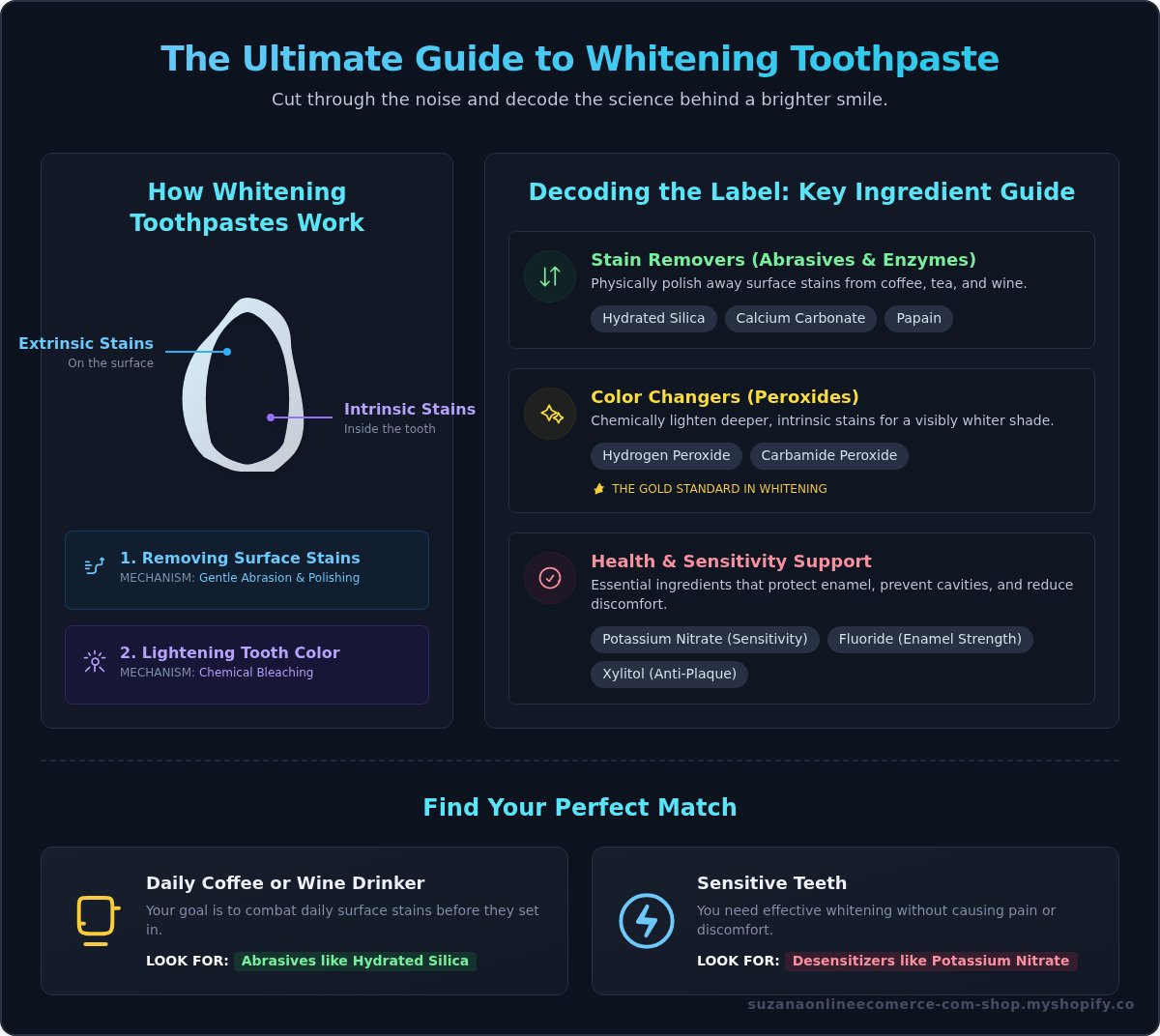
Extrinsic stains are the surface-level culprits caused by daily habits like drinking coffee, tea, or red wine. Intrinsic stains, on the other hand, are deeper, forming within the tooth's enamel. Think of it like this: cleaning extrinsic stains is like scrubbing a coffee ring off a mug, while tackling intrinsic stains is more like trying to bleach a stained white shirt back to its original brightness. Understanding this distinction is key to grasping The Science Behind the Smile and setting realistic expectations for what your toothpaste can achieve.
To better understand how these ingredients work in practice, this video from a dental hygienist offers a fantastic breakdown:
Mechanism 1: Removing Surface Stains (Extrinsic)
The primary way a whitening toothpaste works is by physically removing surface stains through gentle abrasion. These formulas contain mild abrasives that act like microscopic scrubbers to polish your enamel without causing damage. Key ingredients you might see include:
- Hydrated Silica: A common, gentle abrasive that effectively polishes away daily stain buildup.
- Calcium Carbonate: Another mild abrasive that helps remove plaque and surface discoloration.
Some advanced formulas also incorporate enzymes like papain (from papaya) or bromelain (from pineapple) to help break down the protein film on your teeth where stains love to cling.
Mechanism 2: Lightening Tooth Color (Intrinsic)
To address the more stubborn, deeper-set intrinsic stains, some toothpastes include low concentrations of chemical bleaching agents. The most common are hydrogen peroxide and carbamide peroxide. These ingredients release oxygen molecules that penetrate the enamel and break apart the discolored molecules within the tooth, making it appear lighter. While the concentration in toothpaste is much lower than in professional whitening treatments, consistent use can lead to a noticeable, albeit more subtle, brightening effect over time.
Decoding the Label: Key Whitening Ingredients to Look For (and Avoid)
Walking down the toothpaste aisle can feel overwhelming. To find the right whitening toothpaste for your goals, you need to become a label detective. Understanding the active ingredients is the first step toward making an informed choice for a brighter, healthier smile. This guide breaks down the key players, from gentle polishers to powerful bleaching agents.
The Stain Removers: Abrasives and Enzymes
Most whitening formulas work by physically removing surface stains caused by coffee, tea, and wine. These ingredients act as gentle exfoliants for your teeth. Common mild abrasives include:
- Hydrated Silica
- Calcium Carbonate
- Dicalcium Phosphate
The effectiveness and safety of these are measured by a Relative Dentin Abrasivity (RDA) score. The American Dental Association (ADA) states that understanding the different Key Whitening Ingredients is crucial, as some tackle surface stains while others work on a deeper level. For a gentler approach, look for enzymes like Papain (from papaya), which dissolve stain-causing proteins without harsh scrubbing.
The Color Changers: Peroxides and Alternatives
For deeper, set-in discoloration, you need ingredients that chemically alter the tooth's intrinsic color. Hydrogen Peroxide and Carbamide Peroxide are the gold standard, breaking down stain molecules to visibly lighten tooth shade. Newer alternatives include Hydroxyapatite, a mineral that helps remineralize enamel while providing a gentle whitening effect. While popular, use caution with Activated Charcoal, as some formulations can be highly abrasive and may damage enamel over time.
The Supporting Cast: Ingredients for Sensitivity and Health
An effective whitening toothpaste shouldn't just brighten; it must also protect your oral health. If you have sensitive teeth, look for formulas containing Potassium Nitrate or Stannous Fluoride to help block pain signals. Non-negotiable ingredients for overall health include Fluoride for strengthening enamel and preventing cavities, and Xylitol, which helps reduce plaque-causing bacteria for a cleaner mouth.
How to Choose the Right Whitening Toothpaste for Your Needs
Now that you understand the ingredients, it's time to find the perfect match for your smile. Not every whitening toothpaste is created equal, and the best choice depends entirely on your lifestyle, dental health, and goals. We've broken it down into common scenarios to help you decide.
For the Daily Coffee or Red Wine Drinker
If your daily routine includes staining culprits like coffee, tea, or red wine, your primary goal is to combat surface stains. Look for a formula with a gentle but effective physical abrasive, such as hydrated silica. These ingredients polish away new stains without damaging your enamel. Some advanced toothpastes also include stain-prevention technology, creating a protective barrier on your teeth. For an extra line of defense, make it a habit to rinse your mouth with water after consuming staining food or drinks.
For Those with Sensitive Teeth
Whitening and sensitivity don't have to be mutually exclusive. If your teeth are prone to sensitivity, prioritize toothpastes formulated with desensitizing agents like potassium nitrate or stannous fluoride. Understanding the science of tooth whitening shows that harsh abrasives and high concentrations of bleaching agents can cause discomfort. Opt for a low-abrasion (low RDA) formula and consider peroxide-free options that use ingredients like hydroxyapatite to gently lift stains and strengthen enamel.
For a Fast, Noticeable Boost Before an Event
Have a wedding, reunion, or important meeting on the calendar? For a quick and visible improvement, a whitening toothpaste containing hydrogen peroxide is your best bet. This ingredient works beneath the surface to break down deep-set stains, delivering more dramatic results than abrasive-only formulas. To avoid potential sensitivity, it's best to use this type of toothpaste for a limited period-typically a few weeks leading up to your event-as a short-term solution for a brilliantly bright smile.
Ready to find your match? Explore our curated selection of wellness products.
Are Whitening Toothpastes Safe? Myths vs. Facts
The quest for a brighter smile often leads to questions about safety. With so much information online, it's easy to get concerned about potential damage to your teeth. Let's separate fact from fiction and address the most common worries about using a whitening toothpaste so you can choose your product with confidence.
Myth: Whitening Toothpaste Destroys Your Enamel
Fact: This is a persistent fear, but it's largely unfounded with modern, reputable formulas. These toothpastes work by using mild abrasives to polish away surface stains, not by stripping away your enamel. The dental industry measures abrasiveness using the Relative Dentin Abrasivity (RDA) scale. Any toothpaste with an RDA score below 250 is considered safe for daily use. For an extra layer of assurance, look for products with the American Dental Association (ADA) Seal of Acceptance, which confirms the product is both safe and effective when used as directed.
Myth: You Should Feel Sensitivity for It to Work
Fact: Tooth sensitivity is a potential side effect, not a sign of effectiveness. The active ingredients that lift stains can sometimes cause temporary irritation for those with sensitive teeth. If you experience discomfort, it doesn’t mean the product is working better. Instead, try these tips:
- Alternate using your whitening formula with a toothpaste designed for sensitivity.
- Make sure you're using a soft-bristled brush and not applying too much pressure.
- If sensitivity becomes severe or painful, stop use and consult with your dentist.
Myth: Natural Whitening Toothpastes are Always Safer
Fact: The word "natural" is not regulated in the dental care industry and does not automatically equal "safe." Some natural ingredients, like certain types of activated charcoal or abrasive fruit acids, can be too harsh and may actually erode enamel over time. Whether a product is conventional or marketed as natural, it's essential to choose one from a trusted brand that has been scientifically tested for safety and efficacy.
Ultimately, when used as directed, the vast majority of commercial whitening toothpastes are a safe and effective way to achieve a brighter smile. By understanding the science and choosing products from reliable sources, you can work towards your smile goals without worry. Ready to find a formula that's right for you? Explore our curated collection of dentist-approved whitening products.
Beyond the Brush: How to Maximize Your Whitening Results
Choosing the right whitening toothpaste is a fantastic first step, but achieving and maintaining a truly radiant smile involves more than just what's in the tube. By incorporating a few simple lifestyle adjustments, you can amplify your results and protect your teeth from future discoloration. Think of these habits as the support system that helps your toothpaste work its best, ensuring your smile stays bright for the long haul.
Perfect Your Brushing Technique
Effective whitening starts with fundamental oral hygiene. Brushing for two full minutes, twice a day, ensures that the active ingredients have enough time to work on surface stains. Opt for a soft-bristled brush and use gentle, circular motions. Brushing too aggressively won't make your teeth whiter; instead, it can wear down precious enamel and irritate your gums, potentially making teeth appear more yellow over time.
Be Mindful of Staining Foods and Drinks
Even the best whitening routine can be undermined by what you consume. Certain foods and beverages are notorious for causing extrinsic stains. To protect your smile, try to limit your intake of these common culprits:
- Coffee and black tea
- Red wine
- Dark sodas and fruit juices
- Berries like blueberries and blackberries
- Soy sauce and balsamic vinegar
You don't have to give them up completely. Simple tricks like using a straw for cold drinks or rinsing your mouth with water immediately after consumption can significantly reduce their staining impact.
Consider a Complete Whitening System
For those seeking an extra boost, a high-quality whitening toothpaste can serve as the foundation of a comprehensive whitening system. You can enhance its daily maintenance power by pairing it with other at-home treatments. Products like whitening strips can target deeper, set-in stains, while a whitening mouthwash can help maintain your results and reach areas your brush might miss. Always follow the manufacturer's directions carefully for each product to ensure safe and effective use.
By combining the right products with smart habits, you are creating a powerful strategy for a lasting, confident smile. Ready to build your complete oral care routine? Explore our curated collection of oral wellness products today.
Your Journey to a Radiant Smile Starts Today
Choosing the right whitening toothpaste doesn't have to be complicated. By understanding the science behind key ingredients and matching a formula to your unique needs-whether you battle sensitivity or stubborn stains-you are empowered to make the best choice for your smile. Remember that achieving lasting results is a combination of using the right product and maintaining healthy oral habits.
We believe in supporting your wellness journey with products you can trust. That’s why we’ve carefully selected a range of oral care solutions with formulas designed for both effectiveness and safety. You'll find options for every concern, from gentle whitening to advanced stain removal.
Ready to brighten your smile? Shop our collection of oral wellness products today!
Here's to a brighter, more confident you. Your radiant smile is waiting!
Frequently Asked Questions
How long does it take for whitening toothpaste to show results?
Results from a whitening toothpaste are gradual and typically become noticeable within two to six weeks of consistent, twice-daily use. The effectiveness depends on the type of stains and the product's active ingredients. These toothpastes are primarily designed to remove extrinsic (surface) stains from things like coffee and tea. For deeper, intrinsic stains, the results will be more subtle. Patience and regular use are key to achieving a brighter smile.
Can I use whitening toothpaste every day?
Yes, most whitening toothpastes are formulated to be safe for daily use and can replace your regular toothpaste. However, it is always wise to check the product's packaging for specific instructions. If you experience any tooth sensitivity or gum irritation, consider alternating with a non-whitening toothpaste. This allows you to gain the whitening benefits while minimizing potential discomfort. Always follow the manufacturer's guidelines for the best and safest results.
Does whitening toothpaste work on dental work like crowns, veneers, or fillings?
No, whitening products do not change the color of dental restorations. Crowns, veneers, and fillings are made from materials like porcelain or composite resin that do not react to bleaching agents the way natural tooth enamel does. While the toothpaste can help remove surface stains from your dental work, it cannot lighten its original, manufactured shade. This can sometimes lead to a color mismatch between your natural teeth and your restorations.
What is the difference between whitening toothpaste and a professional whitening treatment?
The main difference is the strength of the whitening agent. Toothpastes primarily remove surface stains using mild abrasives or very low concentrations of chemicals like hydrogen peroxide. Professional treatments, administered by a dentist, use a much higher concentration of bleaching agents. This allows them to penetrate the tooth enamel and lighten the intrinsic color of the tooth itself, providing more dramatic and much faster results than any over-the-counter product can.
Is charcoal toothpaste a safe and effective way to whiten teeth?
While popular, many dental professionals advise caution with charcoal toothpaste. Its abrasive texture can remove some surface stains, but it can also be harsh enough to erode tooth enamel over time. This permanent damage can expose the yellowish dentin layer underneath and increase sensitivity. There is limited scientific evidence to support its long-term safety and effectiveness, so it's best to choose products with the American Dental Association (ADA) Seal of Acceptance.
Will whitening toothpaste make my teeth sensitive?
It's possible for some individuals to experience temporary tooth sensitivity. This is often caused by the abrasive particles or chemical whitening agents in the formula. If you are prone to sensitivity, look for a whitening toothpaste specifically designed for sensitive teeth, which often contains ingredients like potassium nitrate to soothe the nerves. If sensitivity develops or worsens, try alternating with a regular toothpaste or consult your dentist for a recommendation.