

Health and Wellness: A Beginner's Guide to a Balanced Life

Does the term 'health and wellness' conjure images of expensive gym memberships, complicated diets, and an endless stream of conflicting advice? If the thought of starting your journey feels more overwhelming than inspiring, you are not alone. So often, the path to a balanced life seems confusing and out of reach, reserved for those with endless time and resources. But what if it didn't have to be that way? What if wellness wasn't about a complete, radical overhaul, but about small, gentle steps that fit into the life you already have?
This guide is here to cut through the noise. We're breaking down holistic well-being into simple, understandable pillars that anyone can embrace. Forget the pressure and the fads. Here, you will find a clear framework for thinking about your personal wellness and discover actionable first steps you can take today-no grand gestures required. It’s time to feel empowered and start building a healthier, happier you, one manageable choice at a time.
What is Health and Wellness, Really? Beyond Diet and Exercise
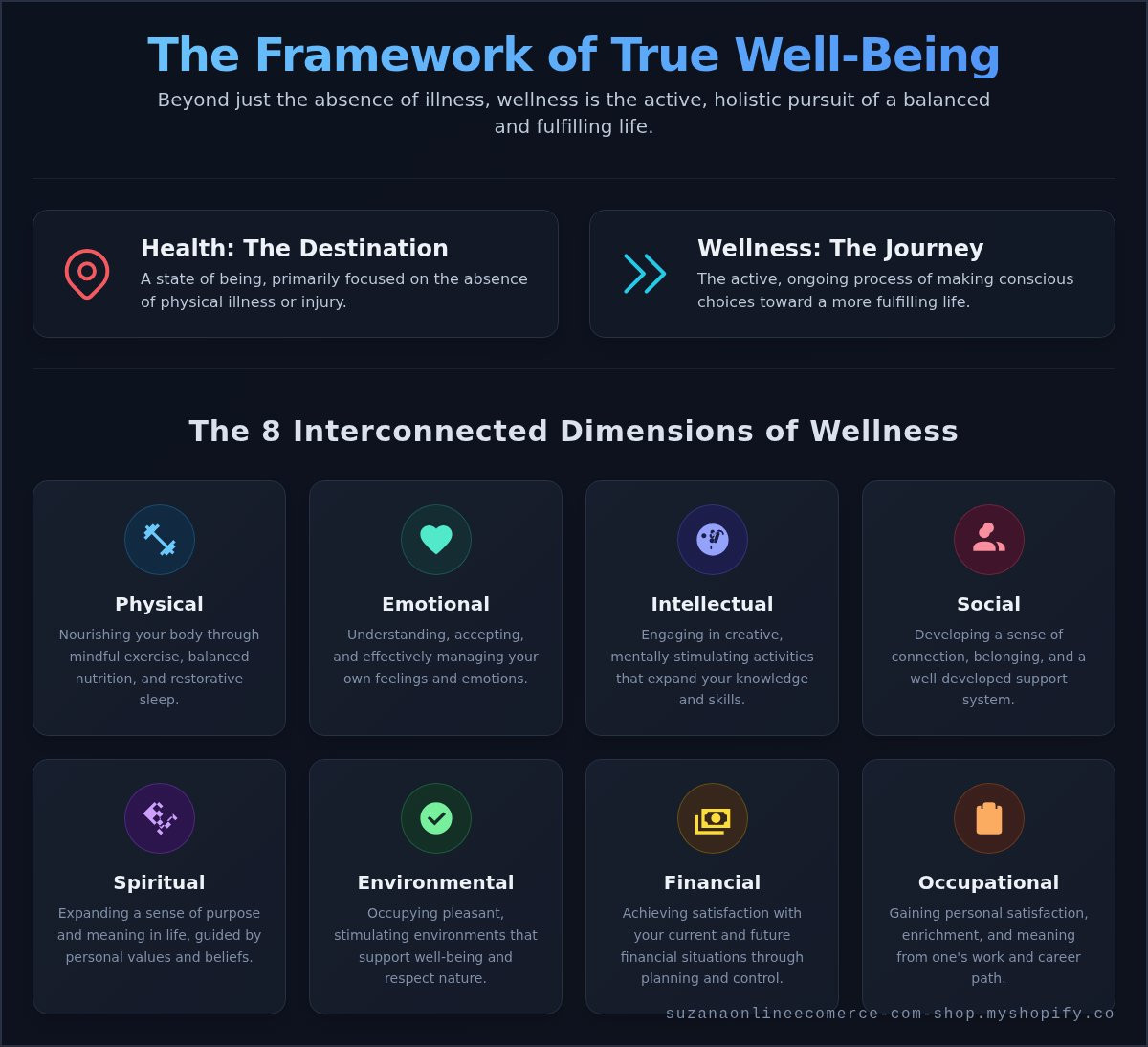
When we talk about health and wellness, it's easy to think they're the same thing. But they represent two different, yet deeply connected, ideas. At its most basic, health can be defined as a state of being free from illness or injury. For a deeper dive into the formal definitions, you can explore the question of What is Health?. Wellness, on the other hand, is the active process of making conscious choices toward a healthy and fulfilling life. Think of it this way: health is the destination, while wellness is the journey you actively take to get there and stay there.
To better understand how these concepts, especially mental wellness, fit together, watch this helpful video:
This journey of wellness is holistic, meaning it touches every part of your life. It’s not just about green smoothies and gym sessions; it’s about creating balance across multiple dimensions to achieve a state of true well-being.
The 8 Dimensions of Wellness: A Holistic Framework
Wellness is a multi-faceted concept, often broken down into eight interconnected dimensions. Think of them as spokes on a wheel-if one is weak, the entire wheel becomes unbalanced. The goal isn't perfection in all areas at once, but mindful attention to each.
- Physical: Nourishing your body through exercise, nutrition, and sleep.
- Emotional: Understanding and managing your feelings effectively.
- Intellectual: Engaging in creative and mentally-stimulating activities.
- Social: Developing a sense of connection and a well-developed support system.
- Spiritual: Finding purpose and meaning in your life.
- Environmental: Occupying pleasant, stimulating environments that support well-being.
- Financial: Feeling satisfied with your current and future financial situations.
- Occupational: Gaining personal satisfaction and enrichment from your work.
Why 'Just Being Healthy' Isn't Enough
So, why isn't a clean bill of health from your doctor the whole story? Because true well-being goes beyond the physical. Imagine a marathon runner who is in peak physical condition but is constantly overwhelmed by work stress, feels socially isolated, and is deeply unhappy. They are technically ‘healthy’ by many standards, but they are far from ‘well’. True, lasting health and wellness comes from nurturing all aspects of your life, not just your body. It’s about building a life that doesn’t just look good on paper, but feels good to live.
The Core Pillar: Mastering Your Physical Wellness
When people begin their health and wellness journey, the first steps often involve the body. This is a fantastic starting point because the connection between physical well-being and your overall quality of life is immediate and powerful. Better physical health translates directly to more energy, a brighter mood, and long-term vitality. The goal isn't perfection; it's about building consistent, positive habits across three key areas: nutrition, movement, and rest.
Fueling Your Body: A Simple Approach to Nutrition
Forget restrictive diets. Sustainable nutrition is about adding, not just subtracting. Start with foundational habits like drinking enough water and incorporating more whole foods-think colorful fruits and vegetables. Practicing mindful eating, where you pay attention to your body's hunger cues, can also transform your relationship with food. Having the right support can make all the difference; simple kitchen accessories can make healthy meal prep faster and more enjoyable. Discover kitchen tools that support your healthy eating goals.
The Power of Movement: Finding Joy in Fitness
Physical activity is not about punishing yourself at the gym. It's about finding movement you genuinely enjoy. This could be a brisk walk in the park, dancing in your living room, or gentle stretching. The benefits extend far beyond the physical; regular movement is a proven mood booster and stress reducer. In a world where the complex relationship between Social Media and Mental Health is a growing concern, movement offers a powerful, tangible way to care for your mind. Simple tools like a yoga mat or resistance bands can help you build a consistent at-home practice.
The Foundation of Health: Prioritizing Sleep and Recovery
Sleep is non-negotiable for a healthy life. It's during these crucial hours that your body repairs itself, consolidates memories, and regulates hormones. Most adults need 7-9 hours of quality sleep per night. To improve your rest, focus on creating a relaxing routine:
- Stick to a consistent sleep schedule, even on weekends.
- Create a dark, cool, and quiet bedroom environment.
- Avoid screens for at least an hour before bed.
Remember, rest days are just as important as active days for preventing burnout and allowing your muscles to recover, making you stronger over time.
Nurturing Your Mental and Emotional Wellness
True health and wellness isn't just about what you eat or how much you exercise; it’s a holistic state that includes your mental and emotional well-being. Mental wellness is your ability to cope with life's normal stresses, work productively, and realize your own potential. It’s a dynamic part of your overall health, just as important as your physical condition. For a deeper dive into this topic, the National Institutes of Health (NIH) wellness resources offer valuable toolkits and information. Remember, seeking professional help when you need it is a powerful sign of strength, not weakness.
Simple Stress Management Techniques for Daily Life
Building resilience against stress starts with small, consistent habits. You don't need a lot of time to make a big impact. Integrating simple practices into your day can help calm your nervous system and clear your mind. Consider trying these effective techniques:
- Mindful Breathing: Practice "box breathing" by inhaling for four seconds, holding for four, exhaling for four, and holding for four. Repeat this cycle a few times to center yourself.
- Journaling: Dedicate a few minutes to writing down your thoughts and feelings. This can help you process emotions and gain clarity without judgment.
- Spending Time in Nature: Even a 15-minute walk in a park can lower stress hormones and improve your mood.
The Role of Self-Care in Preventing Burnout
Self-care is any intentional action you take to care for your physical, mental, and emotional health. It's a crucial practice for preventing burnout and maintaining balance. Self-care looks different for everyone-it could be a quiet evening with a book, a warm bath, or dedicating time to a hobby you love. Creating a calming atmosphere with tools like aromatherapy and essential oils can further enhance these moments of peace. Explore our wellness collection for your self-care rituals.
Building Strong Social Connections
Humans are social beings, and meaningful relationships are fundamental to our emotional well-being. Strong social connections can reduce feelings of loneliness, provide a sense of belonging, and offer a crucial support system during challenging times. Nurture your relationships by scheduling regular catch-ups with friends, joining a local club, or volunteering. Even the companionship of a pet has been shown to significantly boost mental wellness by providing comfort and reducing stress.
Creating a Wellness-Focused Environment at Home
Your home should be a sanctuary, a place where you can recharge and focus on your well-being. The environment you live in has a profound impact on your mental and physical state. A cluttered, chaotic space can contribute to feelings of stress, while a clean, organized, and calming home promotes peace and clarity. Transforming your living space is a powerful step on your health and wellness journey.
Declutter and Organize for a Clearer Mind
An untidy environment can overstimulate your senses, making it difficult to relax and focus. To combat this, try a simple decluttering strategy:
- Start Small: Focus on one room, or even one drawer, at a time to avoid feeling overwhelmed.
- Set a Timer: Dedicate just 15-20 minutes a day to your task.
- Organize Intentionally: Use smart storage solutions in key areas like your kitchen and workspace to maintain order and create a sense of calm control.
Designing Spaces for Relaxation and Activity
Intentionally designing areas for specific wellness activities can transform your home. Create a dedicated 'calm corner' with a comfortable chair and a soft throw blanket for reading or meditation. Even a small nook can become an at-home gym with a yoga mat and resistance bands. Enhance the atmosphere with sensory details; use an essential oil diffuser with lavender for relaxation or adjustable lighting to energize your space.
The Wellness Benefits of Pet Ownership
Introducing a pet into your home can be one of the most rewarding additions to your health and wellness routine. The companionship of an animal is proven to reduce stress and combat loneliness. The responsibility of caring for a pet also establishes a consistent daily routine and encourages physical activity through walks and playtime. They offer unconditional love and a powerful sense of purpose. Find everything you need for your furry wellness partner in our pet supplies.
How to Start Your Wellness Journey Today: A 5-Step Plan
Embarking on a path toward better health and wellness can feel overwhelming. With so much information available, the most difficult step is often the first one. Forget drastic overhauls and intimidating routines. This simple 5-step plan is designed to be your customizable roadmap, built on the power of small, consistent actions. Progress, not perfection, is the goal.
Step 1: Identify Your 'Why' and Set One Small Goal
Before you do anything else, ask yourself: why do you want to focus on your well-being? Is it to have more energy for your kids? To feel more confident? To manage stress? Your 'why' is your anchor. Once you have it, choose one tiny, achievable goal that aligns with it. Don't aim for "run a marathon"; start with "walk for 5 minutes today." This builds momentum and proves you can succeed.
Step 2: Choose One Pillar to Focus On First
Trying to change your diet, exercise routine, and sleep schedule all at once is a recipe for burnout. Instead, pick one pillar of wellness that feels most manageable or exciting to you right now. This focused approach makes change feel less daunting.
- Physical: Go for a 10-minute walk during your lunch break.
- Mental: Dedicate 5 minutes to quiet meditation or journaling before bed.
- Nutritional: Add one vegetable to your dinner each night.
Step 3: Schedule It In
Treat your new wellness commitment like an important appointment. If your goal is a 10-minute walk, block it out on your calendar. If it's drinking more water, set an hourly reminder on your phone. Physically scheduling your new habit makes you significantly more likely to follow through and transforms it from a vague idea into a concrete action plan.
Step 4: Track Your Progress and Celebrate Wins
Acknowledge your effort! Use a simple notebook or a calendar to mark off the days you stick to your goal. Did you hit your water intake goal? That’s a win! Did you take a walk even when you didn't feel like it? Celebrate that. If you miss a day, don't see it as a failure. See it as a data point, learn from it, and get right back on track the next day.
Step 5: Practice Self-Compassion
Your wellness journey is a marathon, not a sprint. There will be great days and challenging days. Be kind to yourself through it all. The all-or-nothing mindset is the enemy of long-term success. The true power of building a healthier life lies in your ability to be patient, compassionate, and persistent, one small step at a time.
Finding the right tools can make these first steps even easier. Whether it's a journal to track your progress or supportive gear for your new activities, we have what you need. Explore our collection of wellness essentials to support your journey.
Your Journey to a Balanced Life Starts Now
You've learned that true health and wellness is a holistic journey, extending far beyond the gym and kitchen. It's a powerful combination of nurturing your physical, mental, and emotional well-being and intentionally creating an environment that supports your goals. Remember, the most important takeaway is that starting with small, manageable steps is the secret to building lasting, positive change.
As you begin to build these new habits, having the right tools can make all the difference. Our shop is here to support you with a wide selection of fitness and wellness products, from exercise equipment to relaxation aids. With everything you need to support a healthy lifestyle and worldwide shipping for your convenience, we make it easy to get started. Ready to start your journey? Explore our Health & Wellness collection today!
Your balanced, vibrant life is waiting. Take that first step with confidence.
Frequently Asked Questions About Health and Wellness
What is the difference between health and wellness?
Health primarily refers to your physical state-the absence of disease or illness. It’s a snapshot of your body's condition. Wellness, on the other hand, is a more holistic and active process. It involves making conscious choices toward a healthy and fulfilling life. It encompasses multiple dimensions, including physical, mental, emotional, and social well-being. Think of health as the goal and wellness as the active journey to reach and maintain it.
How can I practice wellness on a tight budget?
You don’t need expensive memberships or products to be well. Focus on free or low-cost activities. Go for walks or runs in a local park, find free workout videos online, and prioritize sleep. Cooking meals at home is cheaper and often healthier than eating out. You can also practice mindfulness and meditation using free apps or simply by sitting in a quiet space for a few minutes each day. Small, consistent habits are key.
How long does it take to feel the benefits of a new wellness routine?
It varies greatly depending on the change you make. You might feel immediate benefits, like a mood boost after a 20-minute walk or better focus after a good night's sleep. However, more significant changes, such as weight loss, increased muscle strength, or lower blood pressure, typically take several weeks or even months of consistent effort. The key is to be patient with yourself and focus on consistency rather than expecting overnight results.
Do I need supplements and special products to be healthy?
For most people, a balanced diet rich in whole foods like fruits, vegetables, lean proteins, and whole grains provides all the necessary nutrients. Supplements are not a substitute for a healthy diet. While they can be beneficial for specific deficiencies, you should always consult with a healthcare professional before adding them to your routine. Focus on building a strong nutritional foundation with real food first before considering special products.
What is the single most important thing I can do for my wellness today?
The best thing you can do is start small with one manageable action. Don't try to overhaul your entire life at once. Choose one simple thing, like going for a 15-minute walk, drinking an extra glass of water, or stretching for five minutes before bed. This initial step builds momentum and makes your long-term health and wellness goals feel much more achievable. The power is in starting, not in perfection.
How do I stay motivated on my health and wellness journey?
Staying motivated on your health and wellness journey involves a few key strategies. Set specific, realistic goals-instead of "get fit," aim for "walk 30 minutes, three times a week." Track your progress to see how far you've come, and don't be afraid to celebrate small victories. Finding a friend to join you or sharing your goals with family can also provide crucial support and accountability to keep you on track.