

How Often Should You Change Your Toothbrush? The Definitive Guide

Let's be honest, when was the last time you gave your toothbrush a second thought? It’s one of the most important tools for your health, yet it’s easy to forget about it until the bristles are splayed and sad. This uncertainty leads to a question we’ve all asked: how often should you change your toothbrush? You might worry that using an old one is harming your teeth and gums, or perhaps you toss yours frequently, wondering if you're just wasting money. It’s a simple question, but the answer is critical for maintaining a truly healthy smile and preventing the buildup of harmful bacteria.
If you're looking for a clear, expert-backed answer, you've come to the right place. In this definitive guide, we’ll cut through the confusion and provide you with a simple, trustworthy timeline for replacing your brush. We’ll also show you the key visual signs that scream "it's time for a new one" and explain the important health reasons behind making the switch. By the end, you’ll have the confidence to know exactly when to say goodbye to your old toothbrush and hello to a cleaner, healthier mouth.
The 3-Month Rule: The Expert Guideline for Changing Your Toothbrush
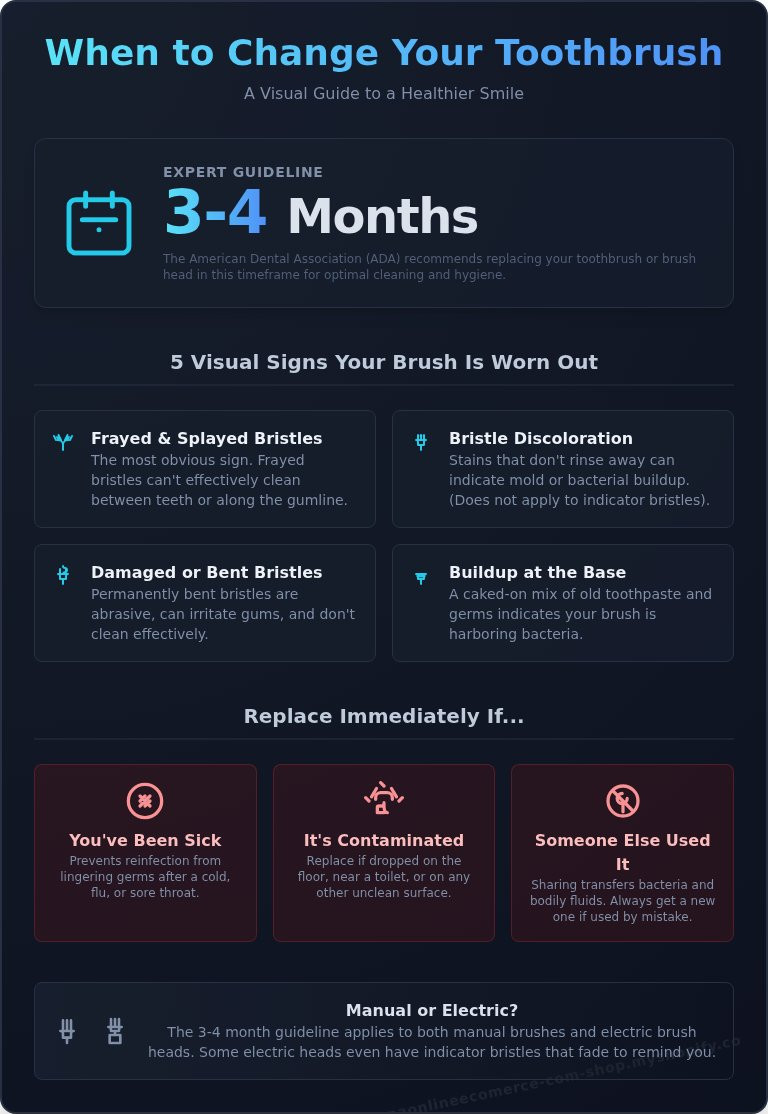
When it comes to your oral hygiene, knowing how often you should change your toothbrush is a fundamental first step. The consensus among dental professionals, including the American Dental Association (ADA), is clear: you should replace your toothbrush or toothbrush head approximately every 3 to 4 months, or sooner if the bristles become visibly frayed.
The science behind this recommendation is straightforward. Over time, the bristles on your toothbrush break down, losing their stiffness and effectiveness. While the modern toothbrush has a fascinating history of the toothbrush, its core function remains the same: to remove plaque. Frayed and worn-out bristles can't effectively clean the hard-to-reach areas around your teeth and along the gumline, leaving plaque and food particles behind.
To see why this timeframe is so important, watch this helpful video from dental experts:
Beyond simple wear and tear, your toothbrush can become a breeding ground for bacteria, fungi, and other microorganisms. While rinsing your brush after use helps, germs can still accumulate over weeks of use. Regularly swapping it out for a fresh one is a simple way to ensure your cleaning tool is actually clean.
Manual vs. Electric Toothbrushes: Is There a Difference?
This 3-4 month guideline isn't just for manual toothbrushes. The same rule applies to the replaceable heads on electric toothbrushes. In fact, due to the high-speed vibrations, some electric brush heads may show signs of wear even faster. Many modern heads, like those from Oral-B and Philips Sonicare, feature helpful indicator bristles that fade in color to visually remind you when it's time for a replacement.
Special Circumstances: When to Replace Your Toothbrush Sooner
While three months is the standard, there are several situations where you should toss your toothbrush immediately, regardless of its age. To protect your health, get a new toothbrush if:
- You've been sick. After recovering from a cold, the flu, a sore throat, or any other infection, replace your brush to prevent potential reinfection from lingering germs.
- It gets contaminated. If you accidentally drop your toothbrush on the floor, near a toilet, or on any other unclean surface, it's best to replace it.
- Someone else uses it. Sharing a toothbrush is a major no-go, as it can transfer bacteria and bodily fluids. If someone uses yours by mistake, get a new one.
Beyond the Calendar: 5 Visual Signs Your Toothbrush Is Worn Out
While the standard answer to how often should you change your toothbrush follows the American Dental Association recommendations of every 3-4 months, your toothbrush might be waving a white flag much sooner. Think of this as the "eye test" for your oral hygiene tool. Visual signs of wear and tear often appear before the 90-day mark, especially if you have braces, wear dentures, or tend to be an aggressive brusher.
Don't wait for the calendar to tell you it's time. Use this simple checklist to see if your toothbrush is past its prime.
Sign 1: Frayed, Splayed, or Matted Bristles
This is the most obvious sign that your toothbrush is finished. When the bristles lose their straight, uniform structure and start to splay outwards, their cleaning power is drastically reduced. They can no longer effectively reach the tight spaces between your teeth or clean along the gumline. Trying to clean with frayed bristles is like trying to sweep your floor with a worn-out, flattened broom-you're just moving the mess around.
Sign 2: Bristle Discoloration
Take a close look at the bristles. If you notice discoloration that doesn't rinse away, it could be a sign of mold or significant bacterial buildup from old toothpaste and food particles. A clean toothbrush should look clean. Note that this is different from "indicator bristles" on some models, which are specifically designed to fade over time to remind you when it's time for a replacement.
Sign 3: Damaged or Bent Bristles
Sometimes, it’s not the whole head but just a few rogue bristles that are the problem. If you see individual bristles that are permanently bent or crooked, they are no longer contributing to a proper clean. These errant bristles can be abrasive, potentially irritating your gums without providing any benefit. This type of damage often happens from improper storage or being crushed in a travel bag.
Sign 4: Buildup at the Base
Look at the very base of the bristles where they connect to the toothbrush head. Do you see a buildup of whitish, gunky residue? This is a caked-on mixture of old toothpaste and germs that can be difficult to rinse away completely. This buildup is a clear indicator that your brush is harboring bacteria and needs to be replaced for a truly clean mouth.
Sign 5: A Change in Texture
A new toothbrush has bristles that feel firm yet flexible. Over time, they can either become too soft and flimsy to clean effectively, or they can become hard and stiff from mineral deposits in your water. If the bristles feel noticeably different-either too mushy or too rigid-their ability to remove plaque is compromised, signaling it's time for a new one.
The Health Risks of Using an Old Toothbrush
While a worn-out toothbrush might seem harmless, continuing to use it past its prime can directly impact your oral and overall health. Understanding how often you should change your toothbrush is less about routine and more about protecting yourself from preventable issues. An old brush doesn't just stop working well; it can actively cause harm.
Ineffective Plaque Removal
The primary job of a toothbrush is to remove plaque-the sticky film of bacteria that causes cavities. When bristles become frayed, bent, and worn, they lose their ability to effectively scrub away this film, especially in hard-to-reach areas. This leftover plaque can harden into tartar (or calculus), a stubborn deposit that can only be removed by a dental professional. Using a worn brush essentially undermines the entire purpose of your daily routine.
Risk of Gum Disease (Gingivitis)
Healthy gums are the foundation of healthy teeth. An old toothbrush puts them at risk in two ways. First, splayed bristles can't properly clean along the gumline, which is where gingivitis, the earliest stage of gum disease, begins. Second, frayed and hardened bristles can be abrasive, potentially damaging sensitive gum tissue and causing irritation or recession over time. This can lead to sensitivity and more serious periodontal problems down the line.
Bacterial Buildup and Sickness
Your toothbrush is exposed to a host of microorganisms every time you use it. Over time, it can become a breeding ground for harmful bacteria, including E. coli and staphylococci (staph). This is why it's crucial to replace your brush after you've been sick with a cold, flu, or other infection. Continuing to use the same brush can reintroduce pathogens into your system. Following the CDC toothbrush replacement guidelines, especially after an illness, is a simple but powerful step to protect your health. When you consider the risks, the small cost of a new toothbrush every three months is a worthy investment in your well-being.
How to Properly Care for Your Toothbrush Between Replacements
Knowing how often should you change your toothbrush is only half the battle. The other half is ensuring it stays clean and effective during its three-to-four-month lifespan. A well-maintained toothbrush does a better job of removing plaque and protecting your smile. By adopting a few simple habits, you can maximize your brush's performance and support your overall oral hygiene.
Rinsing and Drying Best Practices
Your post-brushing routine is critical for preventing bacterial growth. A damp, enclosed environment is a breeding ground for germs, so proper rinsing and drying are your first line of defense.
- Rinse Thoroughly: After each use, hold the brush head under strong, running tap water. Use your thumb to gently work through the bristles to dislodge any remaining toothpaste and food debris.
- Store Upright: Place your toothbrush in an upright holder, not lying flat on a counter. This allows water to drain away from the bristles and head.
- Let It Air-Dry: Ensure your brush has access to open air to dry completely between uses. Avoid covering it with a cap or storing it in a closed cabinet while it's still wet.
Correct Storage to Avoid Contamination
Where you store your toothbrush matters just as much as how you dry it. The bathroom can be a hub for airborne particles, so protecting your brush is essential for good health.
- Avoid Closed Containers: Travel caps and closed containers are great for travel, but for daily use, they trap moisture and encourage mold and bacteria.
- Keep a Safe Distance: Store your toothbrush as far away from the toilet as possible. Flushing can release aerosolized particles (a "toilet plume") that can land on nearby surfaces.
- Give It Space: If you share a holder with family members, make sure the brush heads don't touch, as this can cause cross-contamination.
The Truth About Sanitizing Your Toothbrush
You might be tempted by gadgets that promise a perfectly sterile toothbrush, but the truth is, simple care is sufficient. You should never put your toothbrush in a dishwasher or microwave, as the intense heat will damage the bristles and handle. While devices like UV sanitizers exist, the American Dental Association (ADA) confirms that proper rinsing and air-drying are enough for everyday use. Ultimately, this daily routine complements, but doesn't change, the guidelines for how often should you change your toothbrush. When that three-month mark arrives, ensure you have a fresh, effective tool ready. For your next replacement, consider exploring our collection of premium oral care products.
The Fresh Start Your Smile Deserves
Ultimately, maintaining a healthy smile starts with the simple, yet crucial, habit of regularly replacing your toothbrush. Understanding how often should you change your toothbrush is more than just a date on the calendar; it's a fundamental part of your overall wellness routine. Remember the expert-recommended three-month rule, but also trust your eyes-frayed or discolored bristles are clear signs it's time for a change. Ignoring these signs can expose you to harmful bacteria and undermine your oral health.
If your brush is past its prime, don't wait. Ready for a refresh? Explore our collection of Health & Wellness products. We offer a wide selection of wellness items to support your health journey. With secure and easy checkout and worldwide shipping available, upgrading your routine has never been simpler.
Here's to a brighter, healthier smile-starting with your very next brush!
Frequently Asked Questions
Is the 3-month toothbrush replacement rule just a marketing tactic?
While it certainly benefits manufacturers, the 3-month rule is primarily based on dental health recommendations. The American Dental Association (ADA) advises this timeline because toothbrush bristles become frayed and less effective at removing plaque after about three months of regular use. Worn-out bristles can't clean your teeth properly, and the brush head can also harbor bacteria over time. Following this guideline ensures your toothbrush is always performing optimally for your oral hygiene.
Does a hard-bristled toothbrush last longer than a soft one?
Not necessarily, and dentists almost universally recommend soft-bristled brushes anyway. Hard bristles can be abrasive, potentially damaging your tooth enamel and sensitive gum tissue over time. The key factor for replacement is bristle wear, not hardness. A soft-bristled brush with frayed, splayed bristles is just as ineffective as a hard one in the same condition. You should replace any toothbrush, regardless of its bristle type, every 3-4 months or when it shows signs of wear.
Should I change my child's toothbrush more often than my own?
Yes, it's often a good idea to replace your child's toothbrush more frequently. Children can be less gentle when brushing, causing the bristles to fray and wear out faster. It's also wise to replace their toothbrush after any illness, such as a cold, flu, or strep throat, to prevent reinfection from lingering germs. Check their brush weekly for signs of wear and aim to replace it at least every three months, or sooner if needed.
What is the most hygienic way to store a toothbrush when traveling?
When traveling, use a dedicated travel case or a cover that has ventilation holes. This protects the brush head from dirt and cross-contamination inside your luggage while still allowing air to circulate. Trapping a wet toothbrush in a sealed, non-ventilated container creates a moist environment where bacteria can thrive. Once you reach your destination, remove the brush from its case and store it upright in the open air so it can dry completely.
How should I dispose of my old plastic toothbrush?
Most municipal recycling programs cannot process toothbrushes due to their small size and mixed materials. Instead, look for specialized recycling programs. Companies like TerraCycle offer free oral care recycling programs with public drop-off locations. Some dental care brands also have their own mail-in take-back programs. Before recycling, check the program's guidelines, as you may need to remove the bristles from the plastic handle using pliers.
Can I clean my toothbrush with mouthwash or hydrogen peroxide?
Soaking your toothbrush in antibacterial mouthwash or a 3% hydrogen peroxide solution for about 15 minutes can help reduce bacteria. This is a good sanitizing practice, especially if you've been sick. However, cleaning does not repair worn-out bristles. The primary reason determining how often should you change your toothbrush is the physical wear of the bristles, as frayed ones cannot effectively remove plaque, regardless of how clean they are. Replacement is always necessary.