

How to Use a Tongue Scraper: A Beginner's Guide to Fresher Breath

Do you brush, floss, and rinse, yet still feel like your breath isn't as fresh as it could be? You're not alone. The secret to unlocking truly lasting freshness might not be in your toothpaste, but hiding in plain sight on your tongue. That fuzzy, whitish coating is a breeding ground for odor-causing bacteria, and while a toothbrush helps, it often just moves the gunk around. This is where a simple tongue scraper comes in, offering a powerful, centuries-old solution to a modern problem.
If you've been curious about this tool but felt unsure if it actually works, worried about gagging, or felt confused by materials like copper and steel, you're in the right place. In this beginner's guide, we'll demystify the entire process. You’ll learn the simple, 30-second technique to effectively combat bad breath and elevate your daily oral hygiene routine. Get ready to discover the incredibly clean sensation, enhanced sense of taste, and long-lasting confidence that comes with a truly clean mouth.
What Is a Tongue Scraper and Why Do You Need One?
Ever notice that white or yellowish film on your tongue, even after a thorough brushing? That's where a tongue scraper comes in. A tongue scraper is a simple but powerful oral hygiene instrument designed specifically to clean the surface of your tongue. Its purpose is to remove the buildup of bacteria, food debris, and dead cells that your toothbrush can't effectively tackle. This practice is far from a modern trend; it has deep roots in ancient health traditions like Ayurveda, where it's known as Jihwa Prakshalana. The modern Tongue cleaner is an evolution of this concept, recognized for its critical role in maintaining a balanced oral microbiome-the community of good and bad bacteria living in your mouth-and combating bad breath.
To see exactly what this coating looks like and how a scraper works, check out this helpful overview:
The Problem: The Coating on Your Tongue
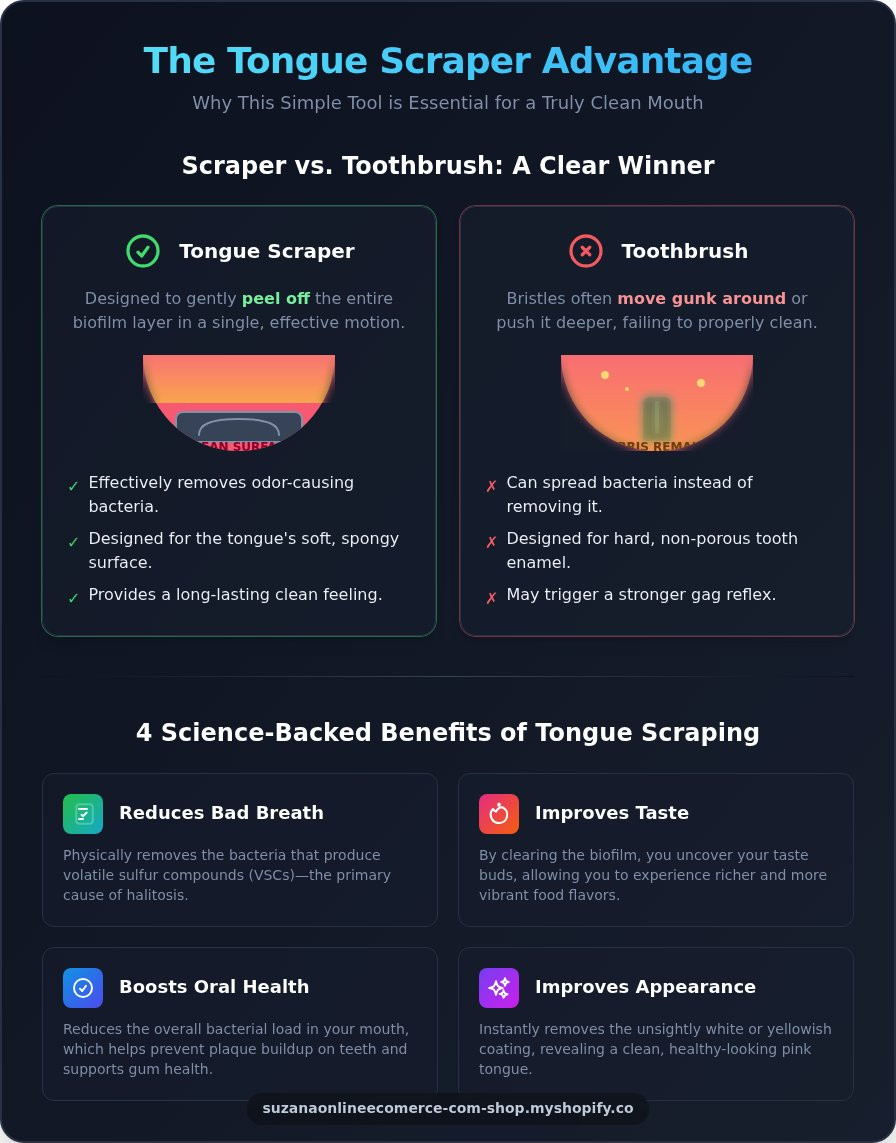
That film you see on your tongue is more than just discoloration. It's a complex biofilm-a sticky community of bacteria, leftover food particles, fungi, and dead cells that thrive in the warm, moist environment of your mouth. This buildup is a primary cause of halitosis (chronic bad breath). The bacteria on your tongue break down proteins and release volatile sulfur compounds (VSCs), which are responsible for that distinct, unpleasant odor. Beyond just breath, this thick coating can also cover your taste buds, leading to a dulled sense of taste and preventing you from fully enjoying your food.
Tongue Scraper vs. Toothbrush: What's the Difference?
While it might seem convenient to just use your toothbrush on your tongue, there's a significant difference in effectiveness. Toothbrushes are engineered with bristles to scrub the hard, non-porous enamel of your teeth. Your tongue, however, is a soft, spongy muscle covered in tiny bumps (papillae) where debris can get trapped. A tongue scraper is designed with a smooth, firm edge to gently peel this biofilm off the tongue's surface in a single motion. In contrast, toothbrush bristles can sometimes just move the gunk around or even push it deeper into the tongue's surface, failing to provide a truly clean feeling.
The Top 4 Science-Backed Benefits of Tongue Scraping
Adding tongue scraping to your daily routine is more than just a wellness trend; it's a practice backed by dental science. While the concept is simple, its impact is significant. Major health publications have detailed the proven Benefits of Tongue Scraping, showing how this small step leads to major improvements. Here are the top four reasons to start today.
1. Reduces Bad Breath (Halitosis)
The vast majority of bad breath doesn't come from your stomach-it originates in your mouth, specifically from bacteria on the surface of your tongue. These microbes release foul-smelling volatile sulfur compounds (VSCs). While mouthwash can temporarily mask the odor, a tongue scraper physically removes the bacteria responsible for VSCs, providing a more effective and longer-lasting solution for fresh breath.
2. Improves Your Sense of Taste
A thick coating of bacteria and food debris can act like a barrier, covering your taste buds and dulling your perception of flavors. By scraping away this film, you expose your taste buds, allowing you to experience food more fully. You may notice that sweet, salty, bitter, and savory tastes become more vibrant and nuanced. Your morning coffee might taste richer and your food more satisfying.
3. Boosts Overall Oral Health
Your mouth is a complex ecosystem, and the tongue is a major reservoir for bacteria. When left unchecked, this bacteria can spread to your teeth and gums, contributing to plaque buildup and other dental issues. By reducing the overall bacterial load with a tongue scraper, you help promote a more balanced oral microbiome. This simple act supports the long-term health of your teeth and gums as part of a complete oral care routine.
4. Improves Tongue Appearance
A healthy tongue should be a consistent pink color. An unsightly white or yellowish coating is a clear visual sign of accumulated bacteria, dead cells, and debris. Scraping your tongue instantly removes this film, revealing a cleaner, healthier-looking tongue. This not only boosts your confidence but also serves as a visible indicator of a truly clean mouth.
How to Use a Tongue Scraper Correctly: A 5-Step Guide
You've got your new tool, and you're ready for a cleaner mouth and fresher breath. But what’s the right way to use it? The good news is that using a tongue scraper is incredibly simple and takes less than a minute. The key is to be gentle and consistent. Mastering the correct technique is easy, and as this comprehensive guide to tongue scraping from Healthline explains, a gentle but firm approach is crucial for effective results without causing irritation.
Follow these five simple steps to get the most out of every scrape.
Step-by-Step Instructions
- Prepare and Position: Stand in front of a mirror and stick your tongue out as far as is comfortable. This helps you see what you're doing and prevents the back of your tongue from bunching up.
- Place the Scraper: Gently place the rounded edge of the tongue scraper at the very back of your tongue. If you're worried about gagging, start from the middle and gradually work your way back as you get more comfortable.
- Scrape Forward Gently: With light but firm pressure, pull the scraper forward from the back of your tongue to the tip in one smooth motion. You should see a layer of white or yellowish gunk (biofilm) collect on the tool. This is exactly what you want to remove!
- Rinse and Repeat: Rinse the collected residue off the scraper with warm water. Repeat the scraping motion 3-5 times, or until you no longer see any residue being removed. Make sure to cover the entire surface of your tongue, including the sides.
- Final Rinse and Clean: Once you're finished, rinse your mouth thoroughly with water. Wash your scraper with warm water and soap, dry it completely, and store it in a clean, dry area.
Tips for Avoiding the Gag Reflex
The fear of gagging is a common concern for beginners, but it’s easy to manage. If you have a sensitive gag reflex, try these tips:
- Start in the middle. Don't try to place the scraper at the very back on your first try. Start from the middle of your tongue and, over several days, gradually place it further back as you become accustomed to the sensation.
- Don't press too hard. Let the tool do the work. Excessive pressure is not only unnecessary but can also trigger the gag reflex and irritate your tongue.
- Exhale as you scrape. Slowly exhaling as you pull the scraper forward can help suppress your gag reflex.
When and How Often Should You Scrape?
For best results, incorporate tongue scraping into your daily oral hygiene routine. The ideal time is first thing in the morning to remove the bacteria and toxins that have built up on your tongue overnight. You can scrape either before or after brushing your teeth-find what feels best for you. For most people, scraping once a day is sufficient to maintain a clean tongue and fresh breath.
Choosing the Best Tongue Scraper for You: Materials Compared
Once you’ve decided to add tongue scraping to your daily routine, the next step is choosing the right tool for the job. The market is filled with options, but the most significant difference comes down to material. Your choice will impact the tool's effectiveness, lifespan, and ease of cleaning. Let's break down the most common materials to help you find the perfect fit.
Stainless Steel Scrapers
Praised for its durability and hygienic properties, stainless steel is a top choice for dental and medical instruments-and for good reason. It offers a firm, effective scrape that removes buildup efficiently.
- Pros: Exceptionally durable, rust-proof, and non-porous, making it incredibly easy to clean and sterilize. A single stainless steel scraper can last a lifetime with proper care.
- Cons: The upfront cost is typically higher than plastic alternatives.
- Best for: Anyone seeking a long-term, highly effective, and hygienic wellness tool.
Copper Scrapers
Copper has a long history in oral care, particularly within Ayurvedic traditions. It's valued not just for its function but for its perceived holistic benefits.
- Pros: Copper is naturally antimicrobial, which helps inhibit the growth of bacteria on the tool itself. Many users appreciate its connection to ancient wellness practices.
- Cons: It can tarnish over time and requires more dedicated care-often a polish with lemon and salt-to maintain its condition.
- Best for: Those interested in Ayurvedic principles or who value the natural antimicrobial properties of copper.
Plastic Scrapers
Plastic is the most accessible and budget-friendly option, making it a common entry point for people new to tongue scraping.
- Pros: Very inexpensive and often sold in multi-packs. The material can feel gentler, which some beginners prefer.
- Cons: Plastic is porous and can develop microscopic scratches that harbor bacteria. It's less durable and needs to be replaced every few months, much like a toothbrush.
- Best for: Beginners who want to try a tongue scraper without a significant investment or for travel purposes.
Our Recommendation for Beginners
While a plastic scraper is a fine way to test the waters, we highly recommend starting with stainless steel. Its superior hygiene, durability, and effectiveness provide the best long-term value and a more authentic scraping experience. It’s a one-time purchase that elevates your daily oral care ritual from the very first use. Making a small investment in a quality tool ensures you get the maximum benefits for your health.
Ready to upgrade your oral hygiene routine? Find the perfect wellness tools in our collection.
Care and Maintenance: Keeping Your Tongue Scraper Clean
You’ve just scraped away bacteria, food debris, and dead cells from your tongue. The last thing you want is to reintroduce that buildup during your next use. Proper care and maintenance of your tongue scraper are non-negotiable for ensuring it remains a hygienic and effective tool in your oral health arsenal. A clean tool not only works better but also prevents the transfer of old bacteria back into your mouth. Following a simple routine will protect your health and extend the life of your scraper.
Daily Cleaning Routine
Cleaning your scraper after every use is a simple but crucial habit. Immediately after you finish, rinse it thoroughly under hot running water to wash away all the visible debris. Next, use a small amount of soap and water to give it a more thorough wash, ensuring no residue is left behind. Finally, pat it dry completely with a clean towel. This last step is vital, as a dry environment prevents the growth of mold and bacteria.
How to Store Your Scraper
Where you store your scraper matters just as much as how you clean it. Keep it in a clean, dry location, such as a medicine cabinet or a dedicated drawer, away from airborne bathroom particles. Avoid leaving it in a damp shower caddy or on the sink counter where it can be exposed to moisture and germs. For travel, a dedicated case or pouch will keep it clean and protected while you're on the go.
When to Replace Your Tongue Scraper
The lifespan of your tongue scraper depends on the material it’s made from. Just like toothbrushes, they don't last forever, and knowing when to get a new one is key to maintaining hygiene. Pay attention to the condition of your tool and follow these general guidelines:
- Plastic Scrapers: These are more porous and can harbor bacteria over time. It's best to replace them every 3-4 months, similar to your toothbrush.
- Metal Scrapers (Copper or Stainless Steel): With proper care, these are built to last. A high-quality metal scraper can last for years without needing replacement.
- Signs of Damage: Regardless of the material, replace your scraper immediately if you notice it is bent, cracked, rusted, or has any rough edges that could harm your tongue.
If your current tool is showing signs of wear, it's time for an upgrade. Explore our collection of durable, high-quality metal tongue scrapers to ensure your oral hygiene routine is always at its best.
Your Journey to a Healthier Mouth Starts Now
Embracing the simple practice of tongue scraping is a game-changer for your oral hygiene. As we've covered, this quick daily ritual goes beyond just fighting bad breath; it enhances your sense of taste and removes harmful bacteria that brushing often leaves behind. By following the simple steps outlined in this guide, you can unlock a new level of clean and confidence in just a few seconds each day.
Finding the right tongue scraper is the first exciting step on this path to improved wellness. When you're ready to elevate your routine, we're here to help. We invite you to discover our range of health and wellness products today! At Suzana Online, we pride ourselves on a wide selection of premium wellness tools, a strong commitment to customer satisfaction, and reliable worldwide shipping to support your health goals.
Take control of your oral health and start enjoying the incredible benefits. A fresher, healthier you is just one scrape away!
Frequently Asked Questions
Does tongue scraping hurt or cause bleeding?
Tongue scraping should be a gentle, painless process. If you experience pain or bleeding, you are likely applying too much pressure. A quality scraper is designed to glide smoothly. Start with light pressure, pulling from the back of your tongue to the front. You can gradually increase the pressure as you get comfortable, but it should never hurt. Consistent, gentle strokes are far more effective and safer than aggressive scraping.
What is the gunk that comes off on the scraper?
The white or yellowish film removed by the scraper is a biofilm. This gunk is a mixture of dead skin cells, food particles, fungi, and bacteria that cause bad breath. Specifically, it contains volatile sulfur compounds (VSCs), which are the primary culprits behind halitosis. Removing this layer is essential for achieving fresher breath, improving your sense of taste, and supporting overall oral hygiene by reducing harmful bacteria in your mouth.
Can children use a tongue scraper?
Yes, children can use a tongue scraper, but adult supervision is crucial. Generally, once a child is old enough to brush their own teeth effectively (often around age 8), they can learn to scrape their tongue. It is important to teach them the correct, gentle technique to avoid triggering their gag reflex or causing irritation. Start with just a few gentle passes to help them get used to the sensation.
I brush my tongue, do I still need to scrape?
While brushing your tongue is better than doing nothing, it's not as effective as scraping. Toothbrush bristles are designed for hard enamel and can sometimes just smear the biofilm around on the soft surface of the tongue. A dedicated tongue scraper is specifically designed with a smooth edge to efficiently shave off and remove this entire layer of buildup, providing a much deeper and more effective clean for truly fresh breath.
How long does it take to see results from tongue scraping?
You will notice results immediately after your first use. Your tongue will likely look pinker and feel cleaner, and your breath will be instantly fresher. For more lasting benefits, such as an improved sense of taste and consistently better oral hygiene, consistency is key. Most people experience the most significant and sustained improvements within the first week of incorporating tongue scraping into their daily routine, usually once or twice a day.
Can tongue scraping help with tonsil stones?
While it cannot remove existing tonsil stones, tongue scraping can help prevent their formation. Tonsil stones are made of the same debris and bacteria that accumulate on your tongue. By regularly removing this buildup, you reduce the overall bacterial load in your mouth. This means there are fewer materials available to get trapped in the crevices of your tonsils (tonsil crypts) and form into stones, promoting better oral health.