

The Complete Guide to Oil Pulling Benefits
What if one of the most effective oral care habits takes just 10 minutes and requires nothing more than a spoonful of oil? It sounds almost too simple, yet oil pulling has been practiced for centuries and is now drawing serious attention from people looking for natural ways to support their oral health.
If you've been struggling with persistent bad breath, worried about plaque buildup, or simply searching for a natural addition to your wellness routine, you're not alone. Many people are looking beyond conventional products for solutions that feel gentler and more holistic.
The good news is that the oil pulling benefits are well worth exploring. This guide covers exactly how this ancient practice works, what it can do for your oral health, and how to build it into your daily routine without the guesswork. From fresher breath to reduced plaque, you'll come away with a clear, practical understanding of whether oil pulling deserves a place in your wellness toolkit.
Key Takeaways
- Oil pulling is an ancient oral care practice that uses common oils like coconut, sesame, or sunflower to cleanse the mouth and support overall oral health.
- The oil pulling benefits backed by research include measurable reductions in bad breath and plaque levels, making it a credible addition to your daily routine.
- Not all oils are equal — coconut and sesame oil each bring distinct properties, and choosing the right one can make a real difference in your results.
- The technique is straightforward, requiring just one tablespoon of oil and 15–20 minutes of swishing to see potential benefits.
- Oil pulling works best as part of a broader wellness strategy, pairing well with healthy hydration, nutrition, and other natural health habits.
What is Oil Pulling and How Does It Work?
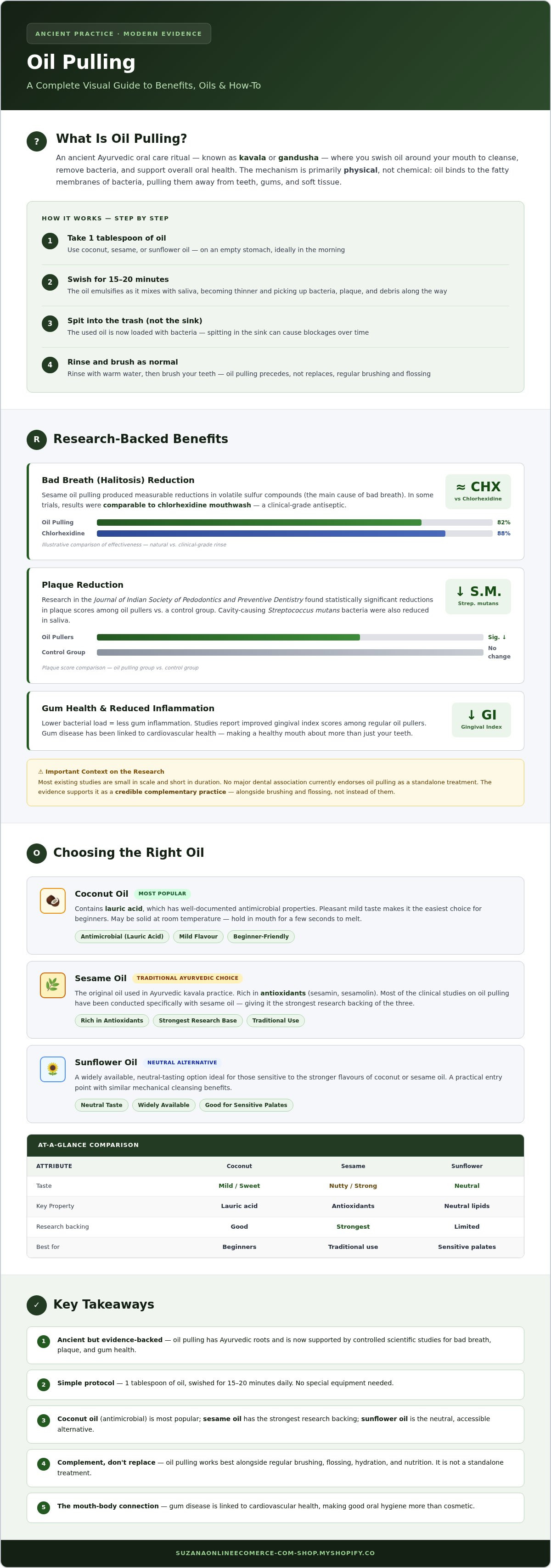
Oil pulling is exactly what it sounds like: you take a tablespoon of oil, swish it around your mouth for 10 to 20 minutes, then spit it out. That's the core of it. Simple in practice, yet the mechanism behind it is genuinely interesting and worth understanding before you commit to making it a daily habit.
The oils most commonly used are coconut, sesame, and sunflower oil. Each has a distinct composition, but all three share the ability to interact with the lipid membranes of oral bacteria, essentially binding to microorganisms and pulling them away from teeth, gums, and soft tissue. As you swish, the oil emulsifies and becomes thinner, picking up bacteria, debris, and other compounds along the way. When you spit it out, you're removing a significant portion of that microbial load from your mouth.
The History and Cultural Significance of Oil Pulling
Oil pulling originates from Ayurveda, the traditional Indian system of medicine that dates back thousands of years, where it was known as kavala or gandusha and used to treat everything from headaches to systemic disease. Oil pulling holds deep cultural significance in Ayurvedic tradition, representing a holistic philosophy that treats the mouth as a gateway to overall bodily health. Its resurgence in modern wellness circles reflects a broader shift toward natural, low-intervention health practices that complement rather than replace conventional care.
This philosophy of natural, low-intervention care is shared by Agapé Wellness By Essossima Tchéou, a family-run boutique that offers a variety of beauty and wellness products to support a holistic lifestyle.
How Oil Pulling Affects Oral Health
The mechanism is largely physical rather than chemical. Oil has a natural affinity for the fatty outer membranes of bacteria. As the oil moves through the mouth, it disrupts bacterial colonies that cling to teeth and gum lines, making it harder for plaque to form and accumulate. Streptococcus mutans, one of the primary bacteria linked to tooth decay, is among the microorganisms that oil pulling has been studied for its ability to reduce.
Gum health also stands to benefit. Reduced bacterial load means less inflammation, which is relevant because gum disease has been linked in research to systemic conditions including cardiovascular health. The mouth isn't isolated from the rest of the body, and that connection is central to why oil pulling benefits extend beyond fresh breath alone.
- Coconut oil contains lauric acid, which has documented antimicrobial properties
- Sesame oil is the traditional Ayurvedic choice and is rich in antioxidants
- Sunflower oil is a neutral, widely available alternative for those sensitive to the taste of other oils
Understanding how oil pulling works makes it easier to use correctly and set realistic expectations for what it can deliver as part of a broader oral wellness routine.
Benefits of Oil Pulling: What Research Says
The evidence behind oil pulling isn't just anecdotal. While the research base is still developing, several controlled studies have produced results that are difficult to dismiss, particularly when it comes to bad breath, plaque, and gum health.
Halitosis, or chronic bad breath, is largely driven by volatile sulfur compounds produced by oral bacteria. Studies examining oil pulling with sesame oil found measurable reductions in these compounds after consistent use, with results comparable to chlorhexidine mouthwash in some trials. That's a meaningful benchmark, given that chlorhexidine is a clinical-grade antiseptic.
Plaque reduction is another area where the data is encouraging. Research published in the Journal of Indian Society of Pedodontics and Preventive Dentistry found that adolescents who practiced oil pulling showed statistically significant reductions in plaque scores compared to a control group. Cavity-causing bacteria, particularly Streptococcus mutans, were also reduced in saliva samples, suggesting a genuine antimicrobial effect rather than simple mechanical rinsing.
Gum inflammation is closely tied to bacterial load, so it follows that a practice reducing oral bacteria would also support healthier gum tissue. Some studies have reported improvements in gingival index scores among regular oil pullers, pointing to reduced inflammation along the gum line.
Scientific Evidence Supporting Oil Pulling
The honest picture is this: the existing studies show real promise, but most are small in scale, short in duration, and conducted without the rigorous blinding standards of pharmaceutical trials. No major dental association currently endorses oil pulling as a standalone treatment. What the research does support is oil pulling as a credible complementary practice, one that can work alongside brushing and flossing rather than replacing them. If you're exploring natural wellness products that support a health-conscious lifestyle, browse wellness essentials that pair well with daily oral care habits.
Common Myths vs. Real Benefits
Oil pulling is sometimes marketed as a cure-all capable of detoxifying the entire body or reversing systemic disease. That's an overreach the evidence simply doesn't support. What oil pulling can realistically deliver includes fresher breath, modest plaque reduction, and improved gum health with consistent practice. The oil pulling benefits are real but specific. Treating it as a targeted oral care tool, rather than a miracle remedy, is both the more accurate and more useful framing.
- Myth: Oil pulling can replace brushing and flossing. Reality: It works best as a supplement, not a substitute.
- Myth: Any oil works equally well. Reality: Coconut and sesame oil have distinct properties that may influence results.
- Myth: Results are immediate. Reality: Consistent daily practice over several weeks is typically needed to notice a difference.
Choosing the Right Oil for Pulling: A Comparison
Not all oils perform the same way inside your mouth, and the one you choose will influence both your results and your willingness to stick with the practice. The three most commonly used oils each bring a distinct profile of properties, flavor, and texture, so understanding those differences is the most practical starting point for anyone new to oil pulling.
Coconut Oil vs. Sesame Oil vs. Sunflower Oil
Coconut oil is currently the most popular choice, and there are solid reasons for that. Its high lauric acid content gives it documented antimicrobial activity, and its mild, slightly sweet flavor makes the 15 to 20 minute swishing window far more tolerable for most people. One practical consideration: coconut oil solidifies at room temperature, so you'll either need to let it melt in your mouth for the first 30 seconds or store it somewhere slightly warmer. It's a minor inconvenience that most users adapt to quickly.
Sesame oil is the original Ayurvedic choice, and it remains highly regarded for good reason. It's rich in antioxidants including sesamin and sesamol, and its liquid consistency at room temperature makes it immediately ready to use. The flavor is more pronounced and earthy compared to coconut oil, which some people find off-putting at first. Those who do adapt to the taste often report that it feels more effective, likely because the thinner texture allows it to move more freely between teeth.
Sunflower oil sits at the opposite end of the flavor spectrum. It's almost entirely neutral, which makes it the lowest-friction option for beginners who are sensitive to strong tastes. Its antimicrobial properties are less studied than coconut oil's, but it still functions through the same physical mechanism of binding to and removing oral bacteria.
- Coconut oil: Best antimicrobial profile, pleasant taste, mild texture once melted
- Sesame oil: Traditional choice, antioxidant-rich, liquid at room temperature, stronger flavor
- Sunflower oil: Neutral taste, widely available, good entry point for beginners
Factors to Consider When Choosing an Oil
Allergies are the first filter to apply. Anyone with a tree nut sensitivity should approach coconut oil cautiously, while those with sesame allergies should avoid sesame oil entirely. Sunflower oil is generally well tolerated and is a safe default if sensitivities are a concern.
Taste matters more than people expect. If the flavor makes you want to stop after two minutes, you won't build a consistent habit, and consistency is what drives the oil pulling benefits over time. For most beginners, coconut oil offers the best balance of effectiveness and palatability. If you're exploring wellness products that support a health-conscious daily routine, browse the wellness range for natural health essentials that complement practices like oil pulling.
The honest recommendation: start with coconut oil. It's forgiving on taste, well-researched, and easy to find. If you find the texture or flavor doesn't work for you after a couple of weeks, sesame oil is a natural next step.
How to Oil Pull: A Step-by-Step Guide
The practice itself is straightforward, but small technique details make a real difference in how comfortable and effective each session feels. Follow these four steps consistently and you'll have a solid foundation from day one.
- Step 1: Measure one tablespoon of your chosen oil. A full tablespoon is the right amount. Less than that and the oil won't coat your mouth adequately or build up enough volume to move effectively between teeth and along the gum line.
- Step 2: Swish the oil gently for 15 to 20 minutes. The oil will thin out and become more liquid as it mixes with saliva. That's normal and a sign the process is working. Keep the movement slow and deliberate, pushing and pulling the oil through your teeth rather than aggressively rinsing.
- Step 3: Spit into a trash can, not the sink. The oil accumulates bacteria and debris throughout the session. Spitting into the sink risks clogging pipes over time, particularly with coconut oil, which re-solidifies as it cools.
- Step 4: Rinse with warm water, then brush your teeth. A thorough rinse clears any remaining oil residue from your gums and cheeks. Follow immediately with brushing to complete your oral care routine.
Tips for Effective Oil Pulling
Timing matters. The best window for oil pulling is first thing in the morning, before eating or drinking anything. Bacteria accumulate overnight, so pulling before breakfast targets the highest concentration of oral microorganisms and lets you experience the full oil pulling benefits each session can offer.
If gagging is a concern, start with a slightly smaller amount of oil and keep your head tilted slightly forward rather than back. Focusing on slow, rhythmic swishing rather than large mouth movements also helps. For beginners, starting with 5 to 10 minutes and working up to the full 15 to 20 minutes over the first week is a practical way to build tolerance without discomfort.
Common Mistakes to Avoid
Swishing too vigorously is the most common beginner error. It tires the jaw quickly, makes the full session harder to complete, and isn't necessary. The oil does the work through contact, not force.
Using too little oil reduces the practice's effectiveness. A partial tablespoon won't emulsify properly or reach all areas of the mouth, limiting how much bacterial matter gets removed.
Skipping the rinse step leaves a thin film of oil and loosened bacteria in your mouth. Always rinse thoroughly with warm water before brushing to ensure you're clearing rather than redistributing what the oil has collected.
Building a consistent daily habit is what drives results over time. If you're looking to support your routine with quality wellness essentials, explore the wellness range for natural health products that complement practices like oil pulling.
Integrating Oil Pulling into Your Wellness Routine
Building any new habit is easier when it slots naturally into something you're already doing. Oil pulling works best not as a standalone experiment but as one component of a deliberate morning routine, where it reinforces and amplifies the other choices you're making for your health each day.
The connection between oral health and systemic wellbeing is well established in the research. What happens in your mouth influences inflammation levels, digestive health, and even cardiovascular markers. Treating oral care as part of a holistic strategy, rather than an isolated hygiene task, shifts the entire framing of why a practice like oil pulling is worth your time.
Creating a Morning Ritual
A practical morning sequence that incorporates oil pulling might look like this:
- Wake up, before anything else: Measure one tablespoon of your chosen oil and begin swishing immediately. Your bacterial load is highest after sleep, which means this window delivers the most concentrated oil pulling benefits of the day.
- While pulling: Use the 15 to 20 minutes to hydrate. Drink a full glass of water after spitting, which supports digestion and helps flush the system after the overnight fast (to find the best filtration systems for your home, click here).
- After rinsing and brushing: Follow with a nutrient-dense breakfast. Starting the day with a clean mouth and proper hydration sets a positive tone that tends to carry through other health decisions.
A fresh mouth in the morning isn't just more pleasant; it's a tangible signal that you've already done something meaningful for your health before the day has properly started. That sense of momentum is underrated as a motivator for consistency.
If you're building out a complete morning wellness kit, explore the wellness range at Suzana Shop for natural health essentials that pair well with daily oral care habits.
Sustainable Practices in Oral Care
Sustainability is worth considering as you establish this routine. Choosing cold-pressed, minimally processed oils reduces your exposure to additives and supports more responsible sourcing. Spitting into the trash rather than the sink, as already covered in the technique section, also prevents unnecessary drain buildup and keeps your plumbing clear.
For a curated selection of wellness products designed for a healthier home, browse the full wellness range and find essentials that support a natural, health-conscious lifestyle from the ground up.
Start Your Oil Pulling Journey Today
Oil pulling is one of those rare practices where the effort required is genuinely low and the potential upside is meaningful. The oil pulling benefits supported by research are specific and achievable: fresher breath, reduced plaque, and healthier gum tissue with consistent daily practice. It won't replace your toothbrush, but as part of a broader wellness routine, it earns its place.
The most important thing is simply starting. Pick an oil, commit to the morning window, and give it a few weeks before drawing conclusions. Consistency is what separates people who notice results from those who don't.
If you're ready to build out a natural wellness routine that goes beyond oral care, Suzana Shop offers a curated selection of wellness products with global shipping, so you can access health essentials wherever you are. Discover our natural wellness products for oil pulling and beyond!
Your healthiest habits start with one small, deliberate choice each morning. This could be yours.
Frequently Asked Questions About Oil Pulling Benefits
What type of oil is best for oil pulling?
Coconut oil is the most practical starting point for most people. Its lauric acid content gives it well-documented antimicrobial properties, and its mild flavor makes the swishing window far more tolerable than stronger-tasting alternatives. Sesame oil is the traditional Ayurvedic choice and works well for those who prefer a liquid consistency at room temperature. If taste sensitivity is a concern, sunflower oil's neutral flavor makes it the easiest option to stick with consistently.
How long should I oil pull for noticeable benefits?
Most people who practice oil pulling consistently report noticeable changes within two to four weeks of daily use. Each session should last 15 to 20 minutes to allow the oil to emulsify fully and collect bacteria effectively. Shorter sessions reduce contact time and limit how much microbial matter gets removed. The oil pulling benefits compound over time, so daily consistency matters far more than occasional longer sessions.
Can oil pulling replace my regular dental hygiene routine?
No. Oil pulling is a complementary practice, not a substitute for brushing and flossing. It doesn't remove calcified tartar, reach the mechanical cleaning depth that a toothbrush achieves, or replace the fluoride protection that toothpaste provides. Think of it as an additional layer of oral care that works alongside your existing routine rather than standing in for it. Regular dental checkups remain essential regardless of how consistently you practice oil pulling.
Is it safe to oil pull every day?
Daily oil pulling is considered safe for most healthy adults when practiced correctly. The key is keeping the swishing motion gentle to avoid jaw fatigue, and always spitting the oil out rather than swallowing it. There's no established evidence that daily practice causes harm to teeth or soft tissue. If you have existing dental work such as crowns, bridges, or fillings, it's worth checking with your dentist before starting a daily routine.
What happens if I swallow the oil while pulling?
Swallowing the oil isn't dangerous in small amounts, but it's something to avoid intentionally. By the end of a session, the oil contains the bacteria and debris it's collected from your mouth, so swallowing it reintroduces those microorganisms rather than removing them. If you find yourself at risk of swallowing during the session, try using a slightly smaller amount of oil until you're comfortable with the practice. Keeping your head tilted slightly forward also helps.
Are there any side effects to oil pulling?
Side effects are uncommon but worth knowing about. Jaw soreness is the most frequently reported issue, usually caused by swishing too vigorously rather than the oil itself. Starting with gentler, slower movements resolves this quickly. Some people experience mild nausea when first starting, particularly if they're sensitive to the taste or texture of oil early in the morning. Beginning with a smaller amount and building up gradually over the first week typically addresses this.
Can children practice oil pulling safely?
Oil pulling isn't recommended for young children, primarily because the risk of accidentally swallowing the oil is higher and the 15 to 20 minute session requires a level of oral control that most young children haven't developed. For older children and teenagers, some studies have included adolescent participants without reporting safety concerns, but parental supervision and a pediatric dentist's guidance are advisable before introducing the practice to anyone under 16.
What noticeable changes should I expect after a few weeks of oil pulling?
Fresher breath is typically the first change people notice, often within the first week or two of consistent practice. After three to four weeks, some people report that their teeth feel cleaner throughout the day and that gum sensitivity has reduced. These results align with what the research on oil pulling benefits suggests: gradual, measurable improvements in breath odor, plaque levels, and gum inflammation rather than dramatic overnight changes. Setting realistic expectations from the start makes it easier to stay consistent long enough to see results.