

The Ultimate Guide to Dog Toys: How to Choose the Perfect Toy for Your Pup

Is your home a graveyard for shredded squeakers and fluff-filled carnage? If you’ve ever spent a small fortune on a new toy only to see it destroyed in minutes, you’re not alone. The endless options at the pet store can be overwhelming, leaving you wondering which toys are safe, which will last more than a day, and which will actually keep your bored pup engaged. Finding the perfect dog toys shouldn't be a frustrating guessing game, and it doesn't have to be.
This is your ultimate guide to making playtime smarter, safer, and more fun. We're here to help you navigate the world of chew toys, puzzles, and fetch balls with confidence. You’ll discover exactly how to choose the right toy for your dog's specific breed, age, and chewing intensity-from the gentle nibbler to the certified power chewer. Get ready to learn about the safest materials, find toys that provide real mental stimulation, and finally invest in playthings that your furry friend will love for more than five minutes.
Why Dog Toys Are Essential: More Than Just a Fun Distraction
Many owners see a basket full of toys as a simple luxury, but for a dog, they are an absolute necessity. The right dog toys are powerful tools that shape behavior, improve health, and strengthen the bond you share with your furry companion. They provide a proper outlet for instinctual behaviors like chewing, preventing your favorite shoes or furniture from becoming the next target. More than just a way to pass the time, a good toy is fundamental to a dog's physical and mental wellbeing.
This video from a professional trainer offers a fantastic checklist for what makes a toy safe and effective:
Mental Stimulation: A Cure for Boredom and Anxiety
A bored dog is often a destructive dog. Behaviors like excessive barking, digging, or chewing on baseboards can signal a mind that isn't getting enough of a workout. Interactive toys, such as puzzle feeders or treat-dispensing balls, challenge your dog to think, problem-solve, and work for a reward. This mental exercise is crucial for building confidence and can significantly reduce stress and separation anxiety by keeping their mind engaged when you're away.
Physical Exercise: Keeping Your Dog Fit and Healthy
Daily activity is vital for preventing obesity and related health issues. While walks are essential, active play with toys supercharges your dog's fitness routine. A simple game of fetch or a vigorous round of tug-of-war provides excellent cardiovascular exercise. With so many different types of dog toys available, from frisbees to durable balls, you can easily facilitate an engaging workout, even in a small backyard or living room, helping your dog burn off excess energy in a positive way.
Dental Health and Instinctual Chewing
Chewing is a natural, hardwired instinct for dogs. Providing appropriate chew toys channels this behavior productively. The abrasive action of chewing on a durable, textured toy helps scrape away plaque and tartar, promoting healthier teeth and gums. This satisfies their innate need to chew while teaching them the crucial difference between their approved toys and off-limits items like furniture, cables, or shoes, protecting both their health and your home.
A Guide to the 5 Main Types of Dog Toys
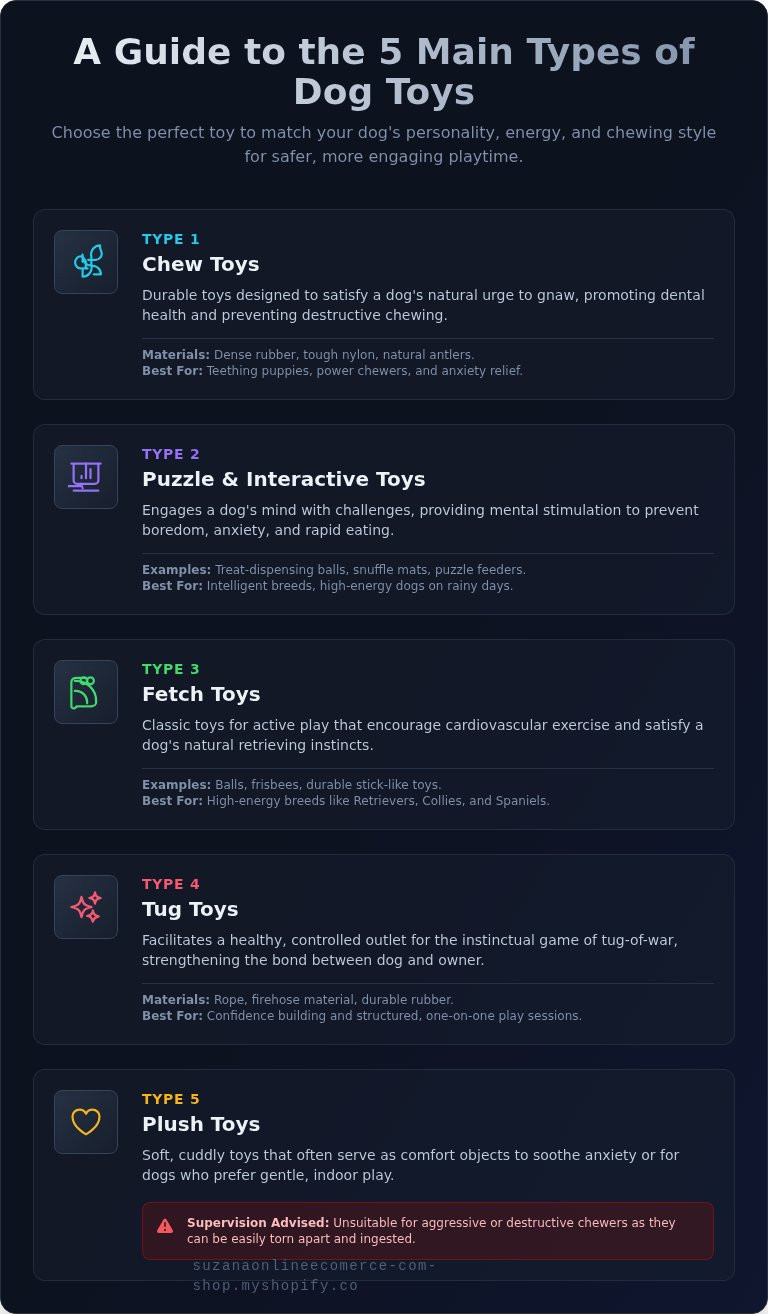
Navigating the world of dog toys can be overwhelming, but understanding the main categories helps you choose the perfect match for your pup's personality and play style. Each type serves a unique purpose, from satisfying primal instincts to providing mental stimulation. Before you buy, it's always wise to review expert Dog toy safety tips to ensure every play session is a safe one. Let's break down the five essential types of toys every owner should know.
Chew Toys: For Healthy Teeth and Power Chewers
Designed for durability, chew toys are built to satisfy your dog's natural urge to gnaw. They are typically made from ultra-strong materials like dense rubber, tough nylon, or natural antlers and bones. Beyond keeping your dog occupied, these toys are fantastic for promoting dental hygiene by scraping away plaque and tartar. They are an absolute must-have for teething puppies and aggressive chewers who need a safe outlet for their powerful jaws.
Puzzle & Interactive Toys: For Boosting Brain Power
These toys are designed to engage your dog's mind. This category includes everything from treat-dispensing balls and intricate puzzles to snuffle mats that encourage foraging. Their primary goal is to provide mental stimulation, prevent boredom, and reduce anxiety. They are also an excellent tool for slowing down dogs who eat too quickly. Puzzle toys are perfect for intelligent breeds, high-energy dogs on rainy days, or any pup who needs a fun cognitive challenge.
Fetch Toys: For Endless Energy
The classic choice for active play, fetch toys are all about encouraging exercise. This group includes balls, frisbees, and stick-like toys designed for throwing and retrieving. When selecting a fetch toy, it's crucial to choose one that is size-appropriate to prevent choking and durable enough to withstand repeated use. These are ideal for high-energy breeds with a natural retrieving instinct, such as Retrievers, Border Collies, and Spaniels.
Tug Toys: For Bonding and Instinctive Play
Tug-of-war is an instinctual behavior that, when channeled correctly, can be a fantastic bonding activity. Tug toys, often made from rope, firehose material, or durable rubber, provide a safe and appropriate outlet for this drive. This interactive play helps build your dog's confidence and strengthens your connection. They are excellent for controlled, one-on-one play sessions and help burn off physical energy in a structured way.
Plush Toys: For Cuddling and Comfort
Soft, stuffed, and often equipped with a squeaker, plush toys are the go-to for dogs who love to cuddle or gently carry their toys around. They often serve as comfort objects, helping to soothe anxiety. While beloved by many dogs for light play and snuggling, they are generally unsuitable for aggressive or destructive chewers, as they can be torn apart and ingested easily. Reserve these for gentle players and supervised sessions.
How to Choose the Perfect Toy for Your Unique Dog
While our list features the toughest toys on the market, the "perfect" toy is never one-size-fits-all. Every dog is an individual with unique needs and preferences. To avoid wasting money and keep your pup safe, you need to become a savvy shopper. Taking a moment to assess your dog's specific profile is a critical step, and expert sources agree that choosing the right toys involves a thoughtful look at their size, age, and play style. This simple framework will help you find a toy your aggressive chewer will love safely.
Matching the Toy to Your Dog's Size and Breed
Size is the most critical safety factor. A toy that is too small poses a serious choking hazard, especially for a powerful chewer who can break it down quickly. Always follow the manufacturer's weight guidelines. A Great Dane needs a large, substantial toy that can't be swallowed, whereas the same toy would be unmanageable for a Jack Russell Terrier. As a rule of thumb, the toy should be large enough that it cannot fit entirely inside your dog's mouth.
Understanding Your Dog's Chewing Style
Not all "aggressive chewers" are the same. Identifying your dog's style helps you select the right material and avoid instant destruction. Most dogs fall into one of three categories:
- Gentle Nibblers: These dogs are easy on their belongings. They may lick, mouth, or lightly carry their toys. Softer materials like plush or vinyl are usually safe for them.
- Average Chewers: Most dogs fit here. They love to chew and play but won't typically destroy a durable rubber toy in one sitting. They can enjoy a wide variety of dog toys.
- Power Destroyers: This is the dog with a mission: to annihilate. They have powerful jaws and are determined to rip, tear, and shred. For these pups, you must stick to ultra-durable materials like dense, hard rubber, and tough nylon compounds.
Age-Appropriate Toys: From Puppy to Senior
A dog's needs change dramatically throughout their life. A teething puppy requires toys made from softer rubber that can soothe their sore gums without damaging developing teeth. An adult dog in their prime needs toys that match their full strength and energy level. Conversely, a senior dog may have more brittle teeth or a weaker jaw, making extra-hard nylon toys a potential risk. For seniors, consider durable but slightly more forgiving rubber toys that satisfy their need to chew without causing dental harm.
Dog Toy Safety: What Every Owner Must Know
Choosing the right toy for an aggressive chewer goes beyond durability-it's about ensuring their safety during every play session. As pet parents, we have a responsibility to provide stimulating and safe enrichment. Understanding the basics of toy safety not only protects your furry friend from potential harm but also gives you peace of mind. Here’s what you need to know to keep playtime fun and accident-free.
Decoding Materials: What's Safe and What to Avoid
The material of a toy is your first line of defense against potential health hazards. Not all plastics and rubbers are created equal. Always check the product description or packaging for information on the materials used. Reputable brands are transparent about what goes into their dog toys, making it easier to choose wisely.
- Safe Choices: Look for toys made from 100% natural rubber, durable nylon, and high-quality, BPA-free plastics. These materials are non-toxic and built to withstand serious chewing.
- What to Avoid: Steer clear of toys containing harmful chemicals like BPA, phthalates, and lead, which can leach out and be ingested by your dog. If a toy has a strong chemical smell, it's best to avoid it.
The Importance of Supervised Play
It's a crucial truth of pet ownership: no toy is 100% indestructible. That's why supervision is key, especially when introducing a new toy. Watch how your dog interacts with it. Do they try to rip off small pieces? Are they chewing appropriately? Supervision helps you learn your dog's chewing style and allows you to intervene before a piece can be swallowed. It's also the perfect time to reinforce what is a toy and what isn't (like your new shoes!).
When to Retire a Worn-Out Toy
Even the toughest toys have a lifespan. Regularly inspecting your dog's toys is a non-negotiable part of your routine. A damaged toy can quickly become a choking or digestive hazard. Remember the golden rule: when in doubt, throw it out.
Look for these signs it's time for a replacement:
- Cracks, deep punctures, or missing chunks.
- Pieces of rubber or plastic that are breaking off.
- Stuffing or squeakers becoming exposed in plush toys.
- The toy has been worn down to a size that could be swallowed.
Replacing a $15 toy is always cheaper and less stressful than an emergency vet visit. For a collection of rigorously tested, pet-safe options, you can explore our durable chew toys here.
Our Top Toy Picks for Every Type of Dog
Finding the perfect toy means understanding your dog's unique personality and play style. While durability is crucial for aggressive chewers, the type of toy matters just as much for keeping them happy and engaged. To help you choose, we’ve categorized our favorite durable dog toys based on how your pup loves to play. Think of these as a starting point to discover your dog's next obsession.
For the Power Chewer: Built to Last
If your dog's mission is to destroy, you need a toy that can withstand the pressure. We recommend ultra-durable options made from solid, pet-safe rubber or tough nylon. These toys often feature satisfying textures that promote healthy chewing habits and help clean teeth. Their rugged construction is specifically designed to challenge even the most determined jaws, providing hours of safe, destructive fun. Explore our collection of virtually indestructible chew toys.
For the Smart Pup: Brain-Teasing Puzzles
An intelligent dog needs a mental workout just as much as a physical one. Interactive puzzles and treat-dispensing toys are fantastic for channeling that brainpower. These toys challenge your pup to sniff, nudge, and paw to release a tasty reward, which combats boredom and can prevent destructive behaviors. They are also an excellent tool for slow feeding, promoting better digestion for dogs who eat too quickly. Challenge your clever pup with our interactive toys.
For the Fetch Fanatic: Go the Distance
For the dog that lives for a good game of fetch, durability is key to endless fun. Look for aerodynamic frisbees that are gentle on the mouth but tough enough to resist cracking, or high-bounce rubber balls that can withstand session after session of high-impact play. Many of our fetch toys are also made from water-friendly materials, making them perfect for a day at the beach or lake. Find the perfect gear for your game in our fetch toy section.
For the Gentle Cuddler: Soft and Squeaky
Not every dog is a power chewer. Some prefer a softer companion for gentle play and naptime snuggles. For these pups, we suggest plush dog toys with reinforced seams and durable inner linings to add an extra layer of toughness. A protected squeaker inside provides that satisfying sound without being easily destroyed, making it the perfect pal for light play and cozy cuddles. Find your dog's new best friend in our plush toy collection.
Unleash the Perfect Playtime for Your Pup
Choosing the right dog toys is about more than just fun; it's a vital part of your dog's mental and physical health. As we've explored, the key to unlocking the perfect playtime is understanding your dog's unique personality-whether they're a power chewer, a puzzle master, or a gentle cuddler. Most importantly, always prioritize safety by supervising play and regularly inspecting their toys for wear and tear.
Ready to put this knowledge into action and see that tail wag? Explore our full collection of dog toys for every good boy and girl! You'll discover a wide selection designed for every need, from tough chewers to clever pups, all made from durable and safe materials. Plus, with free shipping on qualifying orders, it's the perfect time to treat your best friend.
Investing in the right toy is an investment in your dog's happiness. Here's to creating more joyful moments and strengthening that special bond you share!
Frequently Asked Questions
How many toys does a dog actually need?
There is no magic number, as the focus should be on variety rather than quantity. A good rule of thumb is to have a rotation of 4-6 different toys available. This selection should include various types to keep your dog engaged, such as a durable chew toy for solo play, a puzzle toy for mental stimulation, an interactive toy for fetch, and a soft comfort toy for cuddling. Rotating them weekly helps prevent boredom.
Is it okay for my dog to swallow small pieces of a toy?
No, it is never safe for a dog to swallow pieces of a toy, no matter how small. Ingested fragments can pose a serious choking hazard or lead to a life-threatening intestinal blockage. It is crucial to supervise your dog during playtime, especially aggressive chewers. Inspect toys regularly for signs of wear and tear, and discard any that are breaking apart to ensure your dog's safety.
How can I make my dog's toys more interesting to them?
To reignite your dog's interest, try a toy rotation system. By hiding some toys for a week or two, they will feel new and exciting when reintroduced. You can also increase a toy's appeal by stuffing it with a high-value treat like xylitol-free peanut butter, plain yogurt, or their favorite kibble. Actively playing with your dog using the toys, such as a game of tug or fetch, also makes them far more engaging.
Are rope toys safe for dogs to play with?
Rope toys can be safe for interactive games like tug-of-war, but only under strict supervision. The primary danger is that aggressive chewers may shred the toy and swallow the long strings, which can cause a severe and dangerous internal blockage. Never leave your dog unattended with a rope toy. If you notice it starting to unravel or fray, it's time to take it away and replace it.
How often should I clean my dog's toys?
You should clean your dog's toys regularly to prevent the buildup of bacteria. Hard rubber and nylon dog toys can be washed weekly with hot water and mild, pet-safe soap. Porous or plush toys should be cleaned more frequently, especially if they become saturated with slobber. Always check the manufacturer's care label, as many fabric toys are machine washable. A clean toy is a safe toy.
Are squeaky toys bad for dogs?
Squeaky toys are not inherently bad; in fact, they can be highly stimulating by appealing to a dog’s natural prey drive. The risk comes from powerful chewers who may be determined to destroy the toy to get to the internal squeaker. Once a toy is ripped open, the small squeaker can become a serious choking hazard. Always supervise play with squeaky dog toys and remove them if they become damaged.