

Weighted Vests: The Ultimate Guide to Supercharge Your Workouts

Are your bodyweight workouts starting to feel more like a warm-up than a challenge? You've hit that frustrating plateau where push-ups, squats, and lunges just don't deliver the same burn. You're ready to add serious intensity, but your living room isn't ready for a bulky squat rack. If you're looking for a powerful, space-saving tool to completely transform your training, it’s time to discover the game-changing potential of a weighted vest. This one piece of gear is the key to unlocking new levels of fitness, but knowing where to begin can feel overwhelming.
This is your ultimate guide. We're here to cut through the confusion and show you how to safely add resistance to burn more calories, build incredible functional strength, and finally shatter those performance barriers. We’ll answer all your questions-from choosing the right starting weight to protecting your joints-so you can confidently select the perfect vest for your goals. Get ready to supercharge every movement, whether you're training for a specific challenge like the Murph or simply want to maximize the results of every single workout.
What Is a Weighted Vest and Why Should You Use One?
A weighted vest is a simple yet powerful piece of fitness equipment designed to add external resistance to your body. Unlike dumbbells or resistance bands that occupy your hands, a vest distributes weight evenly across your torso, allowing for complete freedom of movement. This makes it an incredibly versatile tool for amplifying everything from bodyweight strength circuits to cardiovascular conditioning. To get a foundational understanding of what weighted vests are and their history in resistance training, you can explore their broader category of weighted clothing. Its effectiveness is why it's a staple in functional fitness, military, and firefighter training programs.
To see this concept in action, check out this helpful overview:
The Science of Progressive Overload, Simplified
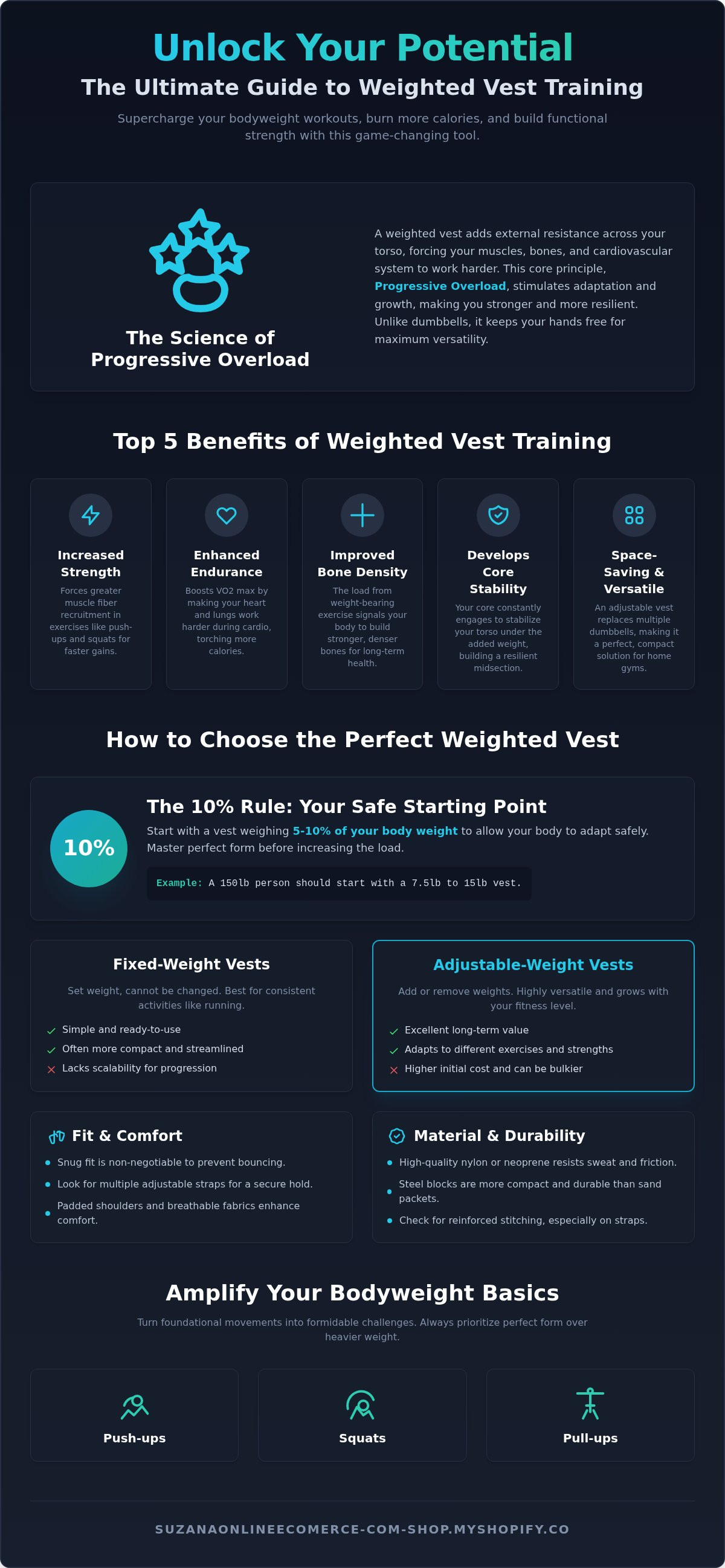
The magic behind the weighted vest lies in a core fitness principle: progressive overload. Think about carrying groceries. The first time, a heavy bag feels challenging. But as you get stronger, it feels lighter. To challenge yourself again, you’d need to carry more. A vest applies this same logic to your workouts. By adding weight, you force your muscles, bones, and cardiovascular system to work harder than they're used to, stimulating adaptation and growth.
Top 5 Benefits of Training with a Weighted Vest
By consistently applying this principle, you can unlock a range of significant fitness gains:
- Increased Strength and Muscle Mass: Supercharge bodyweight exercises like push-ups, squats, and pull-ups. The added resistance forces greater muscle fiber recruitment, leading to faster strength gains.
- Enhanced Cardiovascular Endurance: Wearing a vest during a walk, run, or HIIT session increases the intensity, forcing your heart and lungs to work harder. This boosts your VO2 max and torches more calories in less time.
- Improved Bone Density: The additional load is a form of weight-bearing exercise, which signals your body to build stronger, denser bones. This is crucial for long-term skeletal health.
- Develops Core Stability: Your body must constantly engage your core muscles to stabilize your torso and maintain proper posture under the extra weight, leading to a stronger, more resilient midsection.
- A Space-Saving and Versatile Alternative: A single adjustable vest can replace a wide range of dumbbells or kettlebells, making it a perfect, space-efficient solution for home gyms or taking your workout on the go.
How to Choose the Perfect Weighted Vest: A Buyer's Guide
Selecting the right weighted vest isn’t about finding the heaviest or most expensive option; it’s about matching the gear to your specific fitness goals and current ability. The perfect vest feels like a natural extension of your body, providing resistance without compromising your form or safety. To find your ideal match, consider these key factors: weight, type, fit, and material.
Before you buy, ask yourself:
- What exercises will I be doing most often (running, pull-ups, squats)?
- Do I need a vest that can scale with my progress?
- How important are comfort and breathability for my workouts?
How Much Weight Should You Start With? (The 10% Rule)
A smart and safe starting point is a vest that weighs 5-10% of your total body weight. For example, a 150lb person should begin with a 7.5-15lb vest. This allows your body to adapt to the new load without risking injury. Focus on mastering perfect form with a lighter weight before even thinking about going heavier. You can increase the weight once you can comfortably complete your full workout without your form breaking down.
Fixed vs. Adjustable Vests: Pros and Cons
Weighted vests come in two main types. Fixed-weight vests are simple, often more compact, and have a set weight that cannot be changed. They are great for specific, consistent activities like running. In contrast, adjustable-weight vests allow you to add or remove weight blocks or bags, offering incredible versatility. While they have a higher initial cost, their ability to grow with you makes them the best long-term value for most home gym enthusiasts.
Finding the Right Fit and Style
A proper fit is non-negotiable. Your vest should be snug against your torso, preventing it from bouncing or shifting during dynamic movements like burpees or box jumps. Look for styles with multiple adjustable straps to secure the vest tightly. Common styles include full torso vests for maximum weight distribution and more compact, shoulder-style vests that offer greater mobility. Prioritize features like padded shoulders and breathable fabrics for enhanced comfort during intense sessions.
Material and Durability: What to Look For
The longevity of your weighted vest depends on its construction. High-quality materials like durable nylon or neoprene will withstand sweat and friction. The weights themselves are typically small steel blocks or sand-filled packets; steel is more compact and durable. Always check for reinforced stitching, especially around the shoulder straps and weight pockets, as this is where the most strain occurs.
Ready to find your fit? Explore our fitness accessories!
Top Exercises to Maximize Your Weighted Vest Workout
The true power of a weighted vest lies in its ability to amplify the exercises you already know and perform. By applying the principle of progressive overload directly to your body, it turns familiar movements into formidable challenges. The absolute key to success is maintaining perfect form; never sacrifice technique for the sake of adding more weight. Always begin with a lighter load to master the movement before increasing the resistance.
Bodyweight Basics, Amplified
Transform foundational exercises into powerful strength-builders. Adding resistance to your torso forces your muscles to work harder through every repetition, accelerating gains in both strength and definition.
- Push-ups: The added load directly overloads your chest, shoulders, and triceps. Focus on keeping your core braced to prevent your lower back from sagging.
- Squats & Lunges: Build serious lower-body power and muscle. The vest helps you engage your core while you focus on keeping your chest up and sinking deep into each rep.
- Planks: Take your core stability to the next level. The extra weight will force every muscle in your midsection to fire intensely to keep your hips aligned.
Cardio and Endurance Boosters
Looking to skyrocket your calorie burn and cardiovascular conditioning? A weighted vest increases the energy demand of any activity, turning simple cardio into a high-intensity, fat-melting session.
- Walking & Hiking (Rucking): This is the most accessible way to boost workout intensity. It turns a simple walk into a full-body conditioning tool that builds endurance and strength simultaneously.
- Stair Climbing: A brutally effective workout for your glutes, quads, and cardiovascular system. Each step becomes a test of power and will.
- Box Jumps & Burpees: For maximum metabolic impact, adding weight develops explosive power and pushes your conditioning to its absolute limit.
Advanced Movements for Serious Athletes
When you're ready to shatter strength plateaus, the vest is your ultimate ally. It’s an essential tool for advanced calisthenics athletes and anyone preparing for elite fitness challenges.
- Pull-ups & Chin-ups: If you've mastered bodyweight reps, adding weight is the proven path to building a stronger, more powerful back and biceps.
- Dips: Forge diamond-hard triceps and a chiseled chest by increasing the resistance on this classic upper-body movement.
- Murph Prep: This iconic CrossFit workout requires a vest (20lb for men, 14lb for women). Training with one is non-negotiable for building the specific muscular endurance needed to conquer it.
Ready to elevate your training? Find the perfect vest for your goals and start building a stronger, more resilient you.
Safety First: How to Use Your Weighted Vest Correctly
Unlocking new levels of strength with added resistance is exciting, but your long-term health is the ultimate prize. Let's address the biggest concern head-on: safety. Used correctly, a weighted vest is a powerful tool for accelerating results. Used incorrectly, it can strain your joints and back. This guide ensures you stay on the right side of that line, building elite fitness while protecting your body.
Proper Form is Non-Negotiable
Think of added weight as a magnifying glass for your technique. Any slight wobble in your squat or dip in your push-up becomes a major issue under load, increasing the risk of injury. Before you even consider adding weight, you must be able to perform the bodyweight version of an exercise with perfect form. As a rule of thumb, master 15-20 flawless reps first. Unsure? Record yourself or ask a knowledgeable partner to watch your form.
Warming Up, Cooling Down, and Listening to Your Body
Never start a workout by immediately strapping on your vest. Always perform a 5-10 minute dynamic warm-up-think leg swings, arm circles, and torso twists-to increase blood flow and prepare your joints for the load. After your session, remove the vest and cool down with static stretches. Most importantly, learn the difference between productive discomfort and pain. The deep burn of muscle fatigue is your goal; sharp, pinching, or sudden joint pain is a stop sign. If you feel the latter, stop the exercise immediately.
When NOT to Use a Weighted Vest
This powerful tool isn't for everyone, and prioritizing your health is key. You should avoid or be extremely cautious with weighted vest training if you have:
- Pre-existing or chronic back, neck, or joint injuries (especially in the knees and ankles).
- Recently recovered from surgery.
- Been advised against load-bearing exercise by a medical professional.
Additionally, avoid jumping directly into high-impact activities like long-distance running with a heavy vest without a proper conditioning phase. If you have any doubts, consulting a doctor or physical therapist is the smartest first step you can take. By prioritizing these safety principles, you can ensure your training is both effective and sustainable for years to come.
Unleash Your Potential and Elevate Your Training
You now have the complete blueprint for supercharging your workouts. From understanding the core benefits of increased resistance to selecting the perfect gear for your body and goals, you're ready to break through plateaus. Remember, the key is choosing a vest that fits securely and starting with a weight that challenges you without compromising your form. Incorporating this single piece of equipment can redefine your strength, endurance, and overall fitness results.
When you're ready to make that leap, finding the right weighted vest and other essentials is your first step. At **SUZANA SHOP**, we're here to help with a wide selection of high-quality home fitness gear designed for every level. With a secure and easy online checkout process and worldwide shipping available, upgrading your routine has never been simpler.
Ready to level up? Shop SUZANA SHOP's full range of fitness equipment now! Your next personal best is within reach.
Frequently Asked Questions
Can you run in a weighted vest?
Yes, running in a weighted vest is an advanced training method that can significantly boost cardiovascular intensity and muscular endurance. However, it's crucial to start with a light weight, typically no more than 5-10% of your body weight, to avoid excessive strain on your joints. Always prioritize perfect running form, ensuring your posture remains upright and your stride is natural. If you experience any pain in your back, hips, or knees, reduce the weight or discontinue use.
Is a weighted vest effective for weight loss?
Absolutely. A weighted vest can be a powerful tool for weight loss by increasing the caloric expenditure of your workouts. By adding extra resistance to activities like walking, jogging, or bodyweight circuits, you force your body to work harder and burn more calories. This also helps build lean muscle mass, which in turn boosts your resting metabolism. For best results, combine weighted vest training with a balanced diet and a consistent exercise routine to maximize your progress.
How heavy should my weighted vest be for walking or rucking?
For general fitness walking, a great starting point is a vest that is approximately 10% of your body weight. For example, if you weigh 180 pounds, start with an 18-pound vest. For more intense activities like rucking, you can gradually work your way up to 20% or more, but it's essential to build up your strength and endurance over time to prevent injury. Always listen to your body and start lighter than you think you need.
Are weighted vests bad for your back or knees?
When used correctly, weighted vests are not inherently bad for your back or knees. The risk of injury arises from using a vest that is too heavy, fits poorly, or when using improper form during exercises. It's crucial to select a weight that challenges you without compromising your technique and to ensure the vest is snug. Individuals with pre-existing back or knee conditions should consult with a doctor or physical therapist before incorporating a weighted vest into their routine.
Can women use the same weighted vests as men?
Yes, most weighted vests are designed to be unisex. However, the best vest is one that fits your body securely and comfortably, regardless of gender. Some brands now offer models specifically designed to accommodate a woman's anatomy, often with a shorter torso length or a cut that provides more room in the chest area. The primary goal is to find a vest that fits snugly without chafing or shifting excessively during movement, allowing for a full range of motion.
How do I clean my weighted vest?
Always check the manufacturer's care label first. For most vests, you will need to remove all weight plates or sandbags. You can then typically hand wash the vest shell in cold water with a mild detergent, though some may be machine washable on a gentle cycle. Never put the vest in a machine dryer; always hang it to air dry completely to prevent mildew and damage to the fabric. Regularly wiping it down after sweaty sessions can also help maintain freshness.
Is an adjustable or fixed weight vest better for a beginner?
For a beginner, an adjustable weighted vest is almost always the better choice. It offers the crucial ability to start with a very light load and gradually increase the resistance as your strength and endurance improve. This principle of progressive overload is key to making safe, effective progress. An adjustable vest also provides greater versatility, allowing you to use different weights for different exercises, which offers much more long-term value than a fixed-weight option.