

Essential Pet Supplies for New Pet Owners: The 2026 Ultimate Checklist

What if the first 48 hours with your new companion didn't involve a frantic, late-night trip to the store because you forgot a basic necessity? Finding the right essential pet supplies for new pet owners is often the most stressful part of the adoption process. It's common to feel overwhelmed by the thousands of products available or to worry that a low-quality item might fail when you need it most. You want to create a safe environment, but the fear of forgetting a critical safety tool can often overshadow the excitement of a new arrival.
Preparation is the foundation of a healthy home life for any animal. This guide provides a professional, objective look at exactly what you need to prepare your space, from nutritional basics to wellness essentials. We focus on durable, functional products that ensure a smooth transition for both you and your pet. You'll gain a clear, prioritized checklist that replaces uncertainty with confidence. This approach ensures you spend less time worrying about gear and more time bonding with your new companion in a safe, welcoming, and well-equipped home.
Key Takeaways
- Understand why proactive preparation is essential to preventing common stressors when bringing a new companion home.
- Learn to evaluate nutritional labels and select durable, hygienic materials for daily feeding essentials.
- Identify the essential pet supplies for new pet owners that focus on long-term wellness, including grooming and dental health tools.
- Gain a clear understanding of safety gear, from microchipping to selecting the right harness for maximum control.
- Follow a tactical first-48-hour checklist and the 3-3-3 rule to manage expectations during the transition period.
What are Essential Pet Supplies for New Pet Owners?
We define essential pet supplies for new pet owners as the foundational items required to maintain a safe, nutritious, and comfortable environment from the moment an animal enters your home. These aren't luxury additions; they're the functional tools that allow you to meet a pet's biological and emotional needs. Professional preparation is non-negotiable because it eliminates the stress of reactive shopping and ensures you've selected durable, high-quality goods that last.
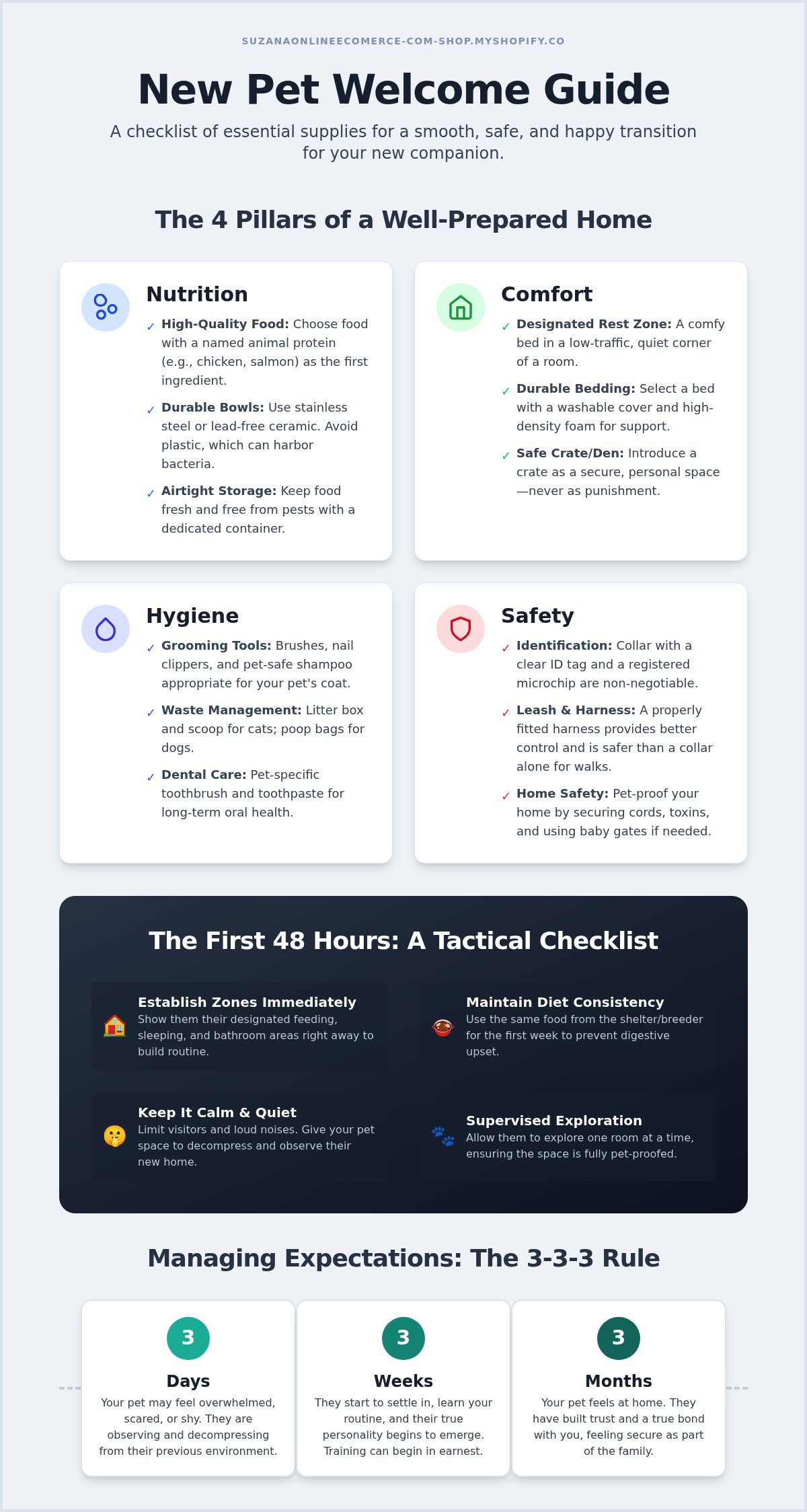
A well-prepared home serves as a pillar of wellness. When your space is organized with the right equipment, you reduce the animal's cortisol levels and prevent the behavioral issues that often stem from a chaotic transition. Most experts categorize these necessities into four primary pillars:
- Nutrition: High-quality food and hygienic feeding stations.
- Comfort: Designated resting areas and crates.
- Hygiene: Grooming tools and waste management systems.
- Safety: Identification tags, leashes, and home barriers.
The Importance of Early Preparation
Last-minute shopping usually leads to poor decisions. When you're rushed, you're more likely to pick up low-quality items that don't offer the durability your pet needs. Setting up specific zones before the pet arrives is a professional way to manage the transition. You should establish a feeding zone, a quiet rest zone, and a bathroom zone before you bring them through the door. This structure helps the pet understand their new environment immediately. Budgeting for these items as an initial welcome home investment prevents financial surprises and ensures you don't cut corners on safety essentials.
Assessing Your Pet's Specific Needs
When preparing for a new animal, it is vital to recognize that different species have unique requirements; for example, horse owners can find specialized equipment and health solutions at HorsePlay NZ.
Essential pet supplies for new pet owners vary significantly based on the species, breed, and age of the animal. A puppy requires specific chew toys for teething and high-sided crates, whereas a senior cat might need low-entry litter boxes and orthopedic support. Small animals like rabbits or guinea pigs have entirely different requirements for bedding and enclosure security. You should always consult with your breeder or shelter to learn what specific food brand they're currently using. Maintaining dietary consistency during the first few days prevents digestive upset while the pet adjusts to their new surroundings.
Core Nutrition and Comfort: The Day One Basics
The first 24 hours are critical for establishing trust and routine. Within the broader category of essential pet supplies for new pet owners, nutrition and sleep infrastructure form the core of your daily operations. You don't need the most expensive gadgets, but you do need equipment that is safe, easy to clean, and appropriately sized for your animal's current physical development.
Choosing the right bowl material is your first technical decision. Stainless steel is the industry standard because it's non-porous and resists bacteria growth. Ceramic options are acceptable if they are lead-free and chip-resistant, but they require more frequent inspection. Avoid plastic bowls; they often harbor microscopic scratches where bacteria thrive, leading to skin irritations like chin acne in cats. For high-quality gear that meets these professional standards, you can browse the curated pet supplies available in our store.
Nutrition requires an analytical approach to ingredient labels. Beginners should prioritize recipes where a named animal protein, like chicken or salmon, is the first ingredient listed. Avoid products heavy in "by-products" or generic "animal fats" without a specified source. Additionally, introduce a crate as a safety tool rather than a punishment. A correctly sized crate acts as a natural den, providing a secure space for the pet to retreat when they feel overwhelmed by their new surroundings.
Feeding Station Essentials
An ergonomic feeding station prevents long-term health issues. For larger dog breeds, raised bowls can reduce strain on the neck and joints. For cats, wide, shallow bowls prevent whisker fatigue, a common source of stress during mealtime. We recommend using airtight food storage containers to maintain the nutritional integrity of the kibble and protect it from pests. Consistency is vital. Always start with the specific food the pet was eating at the shelter or breeder to prevent gastrointestinal distress during the first week.
Creating a Safe Sleep Environment
Place pet beds in a low-traffic corner that still allows the animal to observe the room. This placement encourages a sense of security without making them feel isolated. Durability is the primary factor when selecting bedding. Look for beds with high-density foam that won't flatten over time. For new owners, washable covers are a functional necessity. You will inevitably face accidents or mud, and the ability to sanitize the entire sleeping surface is crucial for home hygiene. Adding a familiar-smelling blanket from the pet's previous home can significantly ease the transition.
Hygiene and Wellness: Building a Healthy Routine
Hygiene is more than just maintaining a clean home. It is a fundamental part of preventive medicine. For those gathering essential pet supplies for new pet owners, the hygiene category includes tools that prevent infection and identify health issues before they become emergencies. A proactive routine reduces long-term veterinary costs and improves the animal's quality of life. You don't need a professional salon setup, but you do need functional, durable equipment that makes maintenance efficient.
Basic grooming gear must include a brush suited to your pet's coat type, professional-grade nail clippers, and pH-balanced, pet-safe shampoos. Human products are too acidic and can damage a pet's skin barrier. Dental health is another critical component. Periodontal disease affects a high percentage of adult pets, yet it's often the most overlooked part of a starter kit. Incorporating toothbrushes and pet-safe enzyme toothpaste from the start is a professional standard for long-term wellness. Integrating wellness products into your daily schedule ensures these tasks become a seamless part of your lifestyle.
Waste management requires a systematic approach. For dog owners, high-tensile poop bags and portable dispensers are mandatory for public health and local compliance. Cat owners must prioritize a litter box setup that the cat feels safe using. This usually means a box that is 1.5 times the length of their body. Regular cleaning prevents house-soiling issues and keeps your living environment sanitary.
Grooming and Skin Care
Regular brushing serves two purposes. It prevents painful matting and allows you to check for lumps, ticks, or skin irritations. Short-haired breeds benefit from rubber curry brushes, while long-haired animals require slicker brushes or de-shedding tools. Introduce these tools gently during the first week. Use short, positive sessions to build trust. This ensures the pet views grooming as a calm interaction rather than a stressful event. Consistency here is the key to a healthy coat.
Health Monitoring and Preventive Care
Every home needs a dedicated pet first aid kit. At a minimum, this should contain antiseptic wipes, gauze, blunt-ended scissors, and a digital thermometer. Professional owners also consider the role of supplements and vitamins to support joint health or coat shine, depending on the animal's specific needs. By linking these habits to overall home wellness, you create a balanced environment that supports the health of every household member.
Safety and Mental Enrichment: Keeping Your Pet Engaged
Safety equipment is the physical foundation of your relationship with a new pet. It provides the control necessary for training and the protection required for public environments. When selecting essential pet supplies for new pet owners, prioritize high-tensile materials and secure fastening systems. A failure in a leash or collar during the first week can lead to dangerous situations before your pet has learned reliable recall commands.
Identification acts as your ultimate safety net. While a visible collar tag provides immediate contact information for neighbors, a microchip offers a permanent digital record that cannot be lost. Ensure your contact details are updated in the manufacturer's database immediately upon adoption. Mental enrichment is equally vital for a balanced home. Boredom often manifests as destructive chewing or excessive barking. You can prevent these issues by providing interactive tools that engage the pet's natural instincts. Explore our professional selection of durable pet supplies to secure your home and keep your new companion engaged.
Training aids facilitate clear communication between you and your animal. Clickers provide a distinct sound to mark desired behaviors, while long-lead leashes allow for safe recall practice in open spaces. High-value treats should be part of your initial kit to reinforce positive habits during the critical first 48 hours.
Walking and Travel Safety
A standard six-foot leash is ideal for daily walks and basic obedience. However, a training lead (often 15 to 30 feet) is necessary for teaching distance commands. Car safety is a professional requirement for modern owners. Use crash-tested seatbelt attachments or secured travel crates to prevent injury during sudden stops. To maintain a pleasant environment during these trips, products from Flava Car Scents can help manage natural pet odors in your vehicle. For evening visibility, select gear with integrated reflective stitching. This small detail ensures you and your pet remain visible to motorists in low-light conditions.
Chew toys and puzzle toys serve different psychological needs. Chew toys help manage stress and maintain oral health; puzzle toys challenge the pet's cognitive abilities by requiring them to "work" for treats. We recommend rotating toys every few days. Keeping only three or four items available at once makes the environment feel fresh and interesting. Always inspect toys for safe materials. Avoid cheap plastics that can shatter or small parts that pose choking hazards. Durable rubber or double-stitched fabrics are the professional choice for longevity.
The First 48 Hours: A Tactical Checklist for Success
The first 48 hours represent a critical adjustment period where your planning meets reality. To ensure success, you must follow a tactical approach that prioritizes stability over excitement. Having all essential pet supplies for new pet owners ready before the animal arrives allows you to focus entirely on their behavior rather than logistics. Your immediate priority is setting up a designated quiet zone. This is a low-traffic area where the pet can retreat to their crate or bed without being disturbed. This zone should have fresh water and their first meal already prepared to establish a sense of provision.
Professional owners use the 3-3-3 rule to manage expectations. In the first 3 days, your pet is likely feeling overwhelmed and may not eat much. By 3 weeks, they begin to settle into your routine and show their true personality. After 3 months, they finally feel a complete sense of security and bond deeply with the household. During the initial 48-hour window, you should also schedule the first veterinary wellness check and verify that all identification tags are physically attached to the collar. You can browse our comprehensive guide on pet supplies to refine your inventory during this transition.
Home-Coming Day Protocol
Don't overwhelm the animal by granting access to the entire house immediately. Introduce them to their new environment one room at a time, starting with the area where they will sleep. This prevents sensory overload. Establish a strict feeding and bathroom schedule from hour one. Predictability is the fastest way to reduce an animal's anxiety. Monitor their behavior closely for signs of stress. While some hiding is normal, persistent refusal to drink water or extreme lethargy requires a professional consultation.
Long-Term Supply Management
Consistency requires a structured approach to inventory management. Perform a monthly check on consumables like food, treats, and waste bags. Annual checks should focus on the integrity of durable goods such as leashes, harnesses, and bedding. If a strap shows fraying or a bed has lost its orthopedic support, replace it immediately to maintain safety and comfort standards. Setting up digital reminders or subscriptions for wellness items ensures you never run out of necessities. For a professional selection of all your pet and home essentials, visit SUZANA SHOP to complete your setup.
Preparing Your Home for a Lifetime of Wellness
Successful pet ownership begins long before you bring your new companion through the front door. By shifting from reactive shopping to a professional, wellness-first mindset, you eliminate the stressors that often disrupt the first week of adoption. Focusing on the four pillars of nutrition, comfort, hygiene, and safety ensures that your home environment supports the physical and emotional development of your pet from day one. Remember that the 3-3-3 rule provides a tactical timeline for decompression and bonding, allowing you to manage expectations with patience and precision.
Securing high-quality, durable equipment is a non-negotiable investment in your pet's future. Whether you're selecting ergonomic feeding stations or professional grooming tools, choosing the right essential pet supplies for new pet owners creates a foundation of trust and safety. SUZANA SHOP offers a curated selection of quality goods designed for new owners, supported by global shipping for all your home essentials. Shop the full range of essential pet supplies at SUZANA SHOP to complete your checklist today. You now have the tools and the knowledge to provide a welcoming environment; it's time to enjoy the journey with your new companion.
Frequently Asked Questions
What are the most important supplies for a new dog?
High-quality food, stainless steel bowls, a secure harness, and a durable leash are the top priorities for a new dog. You also need identification tags, a comfortable bed, and waste management tools like poop bags. These items provide the immediate safety and nutrition required for a successful first day. Establishing these basics helps the dog feel secure in their new environment while allowing you to maintain control during initial walks and training sessions.
How much should I expect to spend on initial pet supplies?
The initial investment varies significantly based on the species, breed size, and the quality of goods selected. While we don't quote specific prices, owners should budget for a complete starter kit that includes nutrition, safety gear, and bedding. High-quality, durable goods often save money over time by reducing the frequency of replacements. It is better to prioritize functional essentials over decorative items during the first month of ownership to ensure your budget covers safety-critical items.
Do I really need a crate for a new puppy?
A crate is a highly effective safety and training tool when used correctly. It provides a den where a puppy can feel secure and helps with house training by tapping into their natural instinct to keep their sleeping area clean. Crates also prevent destructive chewing and keep the puppy safe when you cannot supervise them directly. It should never be used as a punishment, but rather as a designated quiet zone for rest.
What grooming tools are essential for short-haired pets?
Even short-haired animals require regular maintenance. Essential tools include a rubber curry brush to remove loose fur, professional-grade nail clippers, and a pet-safe shampoo. Brushing helps distribute skin oils, which keeps the coat healthy and reduces shedding around the home. You should also include dental hygiene tools, such as a pet toothbrush and enzyme toothpaste, to prevent long-term health issues that are common even in low-maintenance breeds.
How many toys should a new pet have at once?
Providing three to four toys at a time is usually sufficient to prevent boredom without overwhelming the animal. Rotating these toys every few days keeps the environment interesting and mentally stimulating. When gathering essential pet supplies for new pet owners, it is wise to select a variety of textures, such as one durable rubber chew toy, a puzzle feeder, and a soft comfort toy. This variety addresses different instinctual needs like chewing and problem-solving.
Is it better to buy pet supplies online or in-store?
Online shopping offers a professional, objective way to compare product specifications and read durability reviews from other owners. Platforms like SUZANA SHOP provide a diverse range of essential pet supplies for new pet owners with the convenience of global shipping. This allows you to research materials, such as stainless steel versus plastic, and have all necessary items delivered before your pet arrives. Online platforms often provide a broader selection of specialized wellness and fitness products for animals.
What should be in a pet's first aid kit?
A basic kit should contain antiseptic wipes, sterile gauze, medical tape, and blunt-ended scissors. It is also helpful to include a digital thermometer and a spare leash. Having these items organized in one accessible location allows for quick responses to minor scrapes or emergencies. While this kit is a vital part of home wellness, it is a supplement to, not a replacement for, professional veterinary care and regular check-ups.
How do I choose the right size bed for my pet?
Measure your pet from the tip of their nose to the base of their tail while they are sleeping in a stretched-out position. Add approximately six to ten inches to this measurement to ensure they have enough room to move comfortably. A bed that is too small can cause joint discomfort, while one that is too large may not provide the nesting security many animals crave. Always prioritize beds with removable, washable covers for long-term hygiene.