

What to Do With Unused Gym Equipment

Is that stationary bike in the corner a fitness tool or just the world's most expensive clothes rack? It's a common sight in many households. You likely invested in your health with the best intentions, but now that bulky equipment takes up valuable square footage and collects dust. The guilt of seeing an unused investment can feel just as heavy as the machinery itself. Understanding how to choose the right home gym equipment for your space is essential to avoid this cycle of clutter and reclaim your environment for a more mindful wellness routine.
You can restore your living area and your peace of mind by learning how to handle these items effectively. This guide provides clear instructions on how to turn physical clutter into extra cash, tax deductions, or a more functional setup. We'll explore practical steps for selling, donating, or repurposing your gear. You'll find out how to transition from bulky, single-use machines to versatile, compact accessories like yoga mats and resistance tools that actually fit your home and your daily habits. It's time to stop letting your gear dictate your floor plan and start building a space that supports your goals.
Key Takeaways
- Apply the "Six-Month Rule" to objectively identify which equipment pieces are serving your goals and which are simply occupying valuable floor space.
- Increase the resale value of your used gear by up to 20% through strategic cleaning, minor repairs, and effective market research on digital platforms.
- Discover creative ways to repurpose heavy items, such as turning weight benches into entryway seating or using kettlebells as industrial-style bookends.
- Learn how to choose the right home gym equipment for your space to ensure future purchases are multi-functional and easy to store.
- Navigate the logistics of donating bulky equipment to local charities and understand the potential tax benefits associated with your contribution.
Auditing Your Home Gym: Keep, Sell, or Donate?
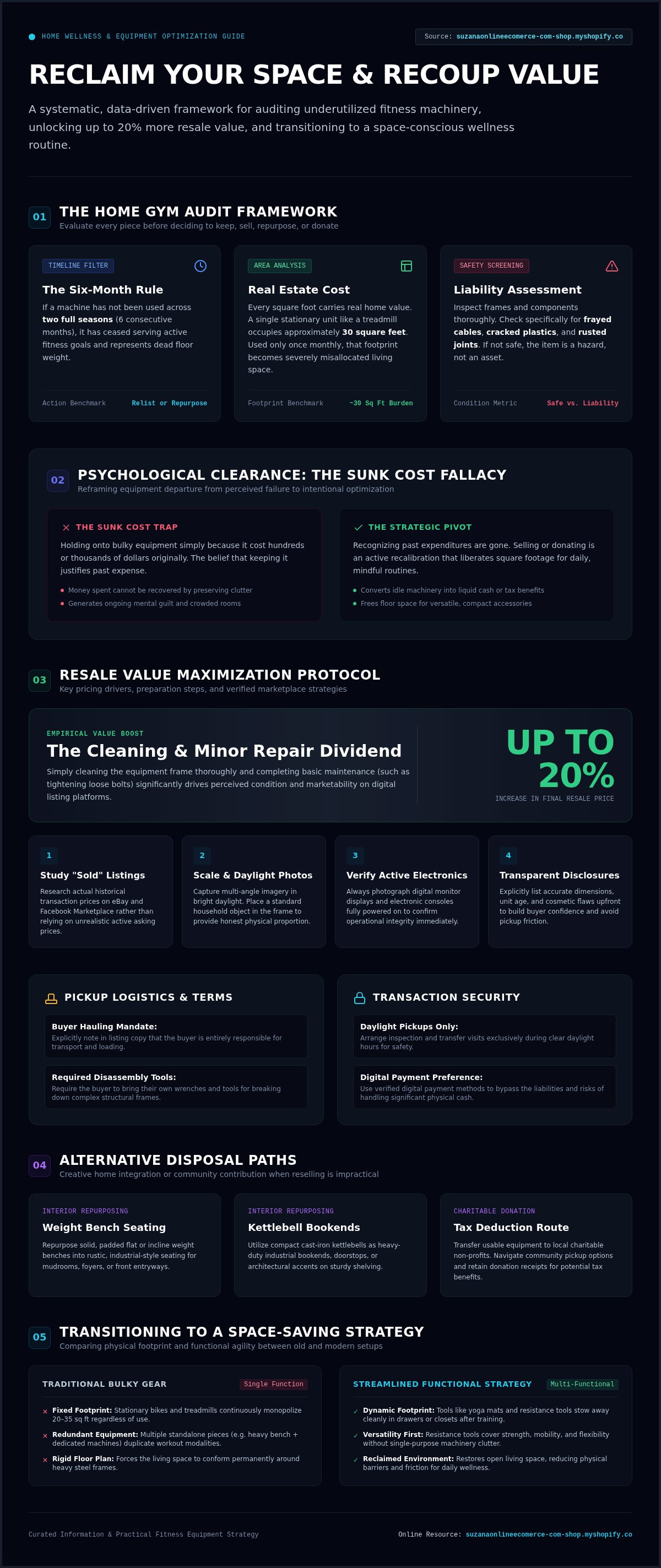
Before you can optimize your wellness area, you must address the inventory you already have. Many homeowners find themselves surrounded by bulky machines that no longer serve their needs. The first step is identifying why certain pieces are gathering dust. Was it a shift in your workout style, a past injury, or does the item simply take up too much room? Apply the "Six-Month Rule" here. If you haven't used a specific piece of exercise equipment in two full seasons, it's likely time to move on.
Assessing the physical condition is equally vital. Check for frayed cables, cracked plastic, or rusted joints. If a machine is no longer safe to operate, it's a liability, not an asset. Beyond safety, calculate the "Real Estate Cost" of your gear. Every square foot of your home has a value. If a treadmill occupies thirty square feet but you only use it once a month, that space is being poorly utilized. Reclaiming that area allows you to transition toward more efficient, space-saving tools.
Performing a Fitness Needs Assessment
Your fitness journey evolves, and your gear should too. Start by defining your current objectives. Are you prioritizing strength, flexibility, or cardiovascular health? Compare these goals to your current inventory. You might find redundant gear, such as owning both a heavy weight bench and several sets of kettlebells that perform similar functions. Learning how to choose the right home gym equipment for your space involves stripping away these redundancies to focus on multi-functional tools that offer the highest return on your effort.
The Emotional Hurdle: Overcoming 'Sunk Cost' Fallacy
It's difficult to let go of items that cost hundreds or thousands of dollars. This is the "sunk cost" fallacy in action. You feel that keeping the machine justifies the original price, but the money is already spent. Holding onto it only costs you more in terms of lost space and mental clutter. Reframing the exit is key. Selling or donating your gear isn't a failure of discipline; it's a strategic pivot. By clearing the room, you create a more mindful environment. This allows you to master how to choose the right home gym equipment for your space by focusing on items you'll actually use daily, like yoga mats or resistance bands.
How to Sell Used Gym Equipment for the Best Value
Selling your gear is the most effective way to recoup your investment and fund a more streamlined setup. Start by researching current market values on platforms like eBay and Facebook Marketplace. Focus on "sold" listings to see actual transaction prices rather than optimistic asking prices. A well-maintained appearance is a significant value driver. Simply cleaning the frame and performing minor repairs, like tightening loose bolts, can add approximately 20% to your final sale price.
High-quality photography is essential for heavy items. Position your equipment in a well-lit area and capture multiple angles. Include a common object in the frame to provide a sense of scale, and always photograph the electronic console while it is powered on. Your description should be transparent. List the dimensions, age, and any minor cosmetic flaws. Honesty builds buyer trust and prevents wasted time during pickups. Once you've cleared the space, you can better understand how to choose the right home gym equipment for your space by focusing on compact alternatives.
Top Platforms for Selling Fitness Gear
Local marketplaces are ideal for heavy machinery because they eliminate the need for complex shipping. Facebook Marketplace and Craigslist are the standard choices for reaching local buyers. For high-end or niche items, consider specialized fitness forums or local cycling groups. If you prefer a hands-off approach, some consignment shops handle the listing and pickup for a percentage of the sale. This is a practical choice if you value your time over the maximum possible profit.
Safety and Logistics for Heavy Pickups
Managing the removal of heavy gear requires clear communication. Explicitly state in your listing that the buyer is responsible for hauling the item and must bring their own tools for disassembly. This prevents awkward situations on the day of the sale. For safety, arrange pickups during daylight hours and use digital payment methods to avoid handling large amounts of cash. When dealing with low-ball offers, stay firm but polite. If you aren't in a rush, wait for a buyer who recognizes the value of a well-maintained machine. After the sale, you'll have the budget to browse versatile fitness equipment that better suits your current lifestyle.
Creative Ways to Repurpose Unused Fitness Gear
If you aren't ready to sell your equipment, consider integrating it into your home's functional decor. A sturdy weight bench, for instance, can be transitioned into mudroom or entryway seating. Its industrial build often matches modern home aesthetics and provides a durable place to sit while putting on shoes. Similarly, smaller items like kettlebells can serve as high-end, industrial-style bookends or decorative doorstops. These items are designed to be heavy and stable, making them perfect for these secondary roles without requiring any modification.
Before you commit to a full removal, try habit stacking to give your gear one final opportunity. This involves pairing your workout with an existing daily habit, such as walking on the treadmill only while listening to a specific podcast or watching the morning news. This approach helps you decide if the equipment is truly redundant or if you simply lacked a structured routine. Understanding how to choose the right home gym equipment for your space often starts with testing your current habits to see what truly sticks.
Giving Your Gear a Second Chance
Location often dictates usage. Moving a stationary bike from a dark basement to a sunlit living area can significantly increase the likelihood of use. You can also add a tablet mount to older cardio gear to make sessions more engaging with streaming content. If you're still undecided, set a 30-day challenge to use the item for just ten minutes a day. If you can't maintain this habit for a month, it confirms that the item no longer aligns with your lifestyle.
Repurposing the Space for Wellness
Removing a single bulky machine, like a treadmill, often provides enough room to create a dedicated yoga or meditation corner. This shift transitions your room from a "cluttered gym" into a "wellness sanctuary." A clean, open environment reduces visual stress and has a documented positive impact on mental health. Space Optimization in the context of home wellness is the strategic selection and arrangement of multi-functional tools to maximize the utility of a room while maintaining a clear, inviting atmosphere. By prioritizing space, you refine your knowledge of how to choose the right home gym equipment for your space, focusing on items like yoga mats that can be easily stored.
Responsible Disposal: Donating and Recycling Fitness Equipment
When equipment reaches the end of its functional life or cannot be sold, responsible disposal becomes the priority. Sending electronic fitness gear, such as treadmills with digital consoles, to landfills has a significant environmental impact. These machines often contain heavy metals and non-biodegradable plastics that can leach into the soil. Choosing a sustainable exit strategy ensures that your old gear doesn't become a long-term environmental burden. By clearing these items correctly, you finalize the process of learning how to choose the right home gym equipment for your space, ensuring your next purchase is more sustainable.
Donating high-value fitness items to registered non-profits can also provide financial benefits. In many regions, such as the United States or the United Kingdom, these contributions may qualify for a tax deduction. It's essential to obtain a written receipt from the organization that includes a description of the item and its estimated fair market value. Consult with a tax professional to verify the current regulations in your specific market, as rules regarding non-cash donations can change annually.
Where to Donate Your Unused Gear
Local schools, youth clubs, and community centers are often in need of functional exercise equipment but lack the budget to buy new. Physical therapy centers or senior living facilities may also accept specific items like stationary bikes or light resistance tools. Before transporting heavy machinery, always contact the organization to verify they have the space and the staff to receive it. Digital "Buy Nothing" groups are another excellent resource for finding neighbors who can put your gear to immediate use, often handling the pickup themselves.
Recycling Electronics and Metal Components
For broken equipment, specialized recycling is the only responsible option. Treadmills and elliptical trainers are classified as e-waste because of their circuit boards and motorized components. Many municipalities offer specific "bulky item" pickup days or designated drop-off points for electronics. If you have broken weight plates or iron dumbbells, contact a local scrap metal recycler. These facilities can process the raw metal, keeping it out of the waste stream. Always remember to remove batteries and drain any hazardous hydraulic fluids before handing items over for recycling. Once your space is clear of outdated machinery, you can browse our collection of sustainable fitness gear to find multi-functional tools that better align with a mindful home environment.
Transitioning to a Space-Saving Home Fitness Strategy
Positioning wellness as a daily habit rather than a bulky room requirement changes your relationship with exercise. When your tools are easy to access and simple to store, you remove the friction that often leads to skipped workouts. This minimalist approach allows you to maintain a clean home while prioritizing your health. Mastering how to choose the right home gym equipment for your space means selecting items that serve your body without overwhelming your environment.
Building Your New Wellness Routine with SUZANA SHOP
A successful routine extends beyond the workout itself. Integrating curated wellness products into your post-workout recovery helps sustain your progress and prevents burnout. At SUZANA SHOP, we emphasize a mindful approach to fitness. We believe in selecting workout equipment that you'll actually use every day, rather than items that look impressive but remain idle. By focusing on quality over quantity, you can build a more effective and less cluttered wellness sanctuary. We invite you to browse our curated collection of space-saving fitness essentials to find the perfect match for your home and your goals.
Reclaiming Your Space and Your Fitness Goals
Clearing out bulky, unused machinery is the first step toward a more functional home. By auditing your current inventory and utilizing secondary markets or local charities, you remove the physical and mental barriers to a consistent wellness routine. This process isn't about giving up on your health; it's about refining your environment to better support your current lifestyle. You've seen that a minimalist approach can actually lead to more frequent workouts when the friction of a cluttered room is removed.
Mastering how to choose the right home gym equipment for your space ensures that every future purchase adds value without adding clutter. Focus on professional-grade, multi-functional tools that provide versatility for your daily movement. At SUZANA SHOP, we provide a wide selection of versatile yoga and fitness accessories designed for at-home enthusiasts. With global shipping for all wellness items, we make it simple to build a high-quality setup that fits perfectly in any room. Upgrade to space-saving fitness gear at SUZANA SHOP today and transform your living area into a true wellness sanctuary. You deserve a home that feels open, organized, and fully aligned with your health journey.
Frequently Asked Questions
Can I get a tax deduction for donating my old treadmill?
Yes, you can typically claim a tax deduction for donating fitness gear to a registered non-profit organization. To qualify, you must obtain a written receipt from the charity that describes the item and its current fair market value. It's important to consult with a tax professional to ensure you meet the specific legal requirements for non-cash donations in your local market. This approach allows you to clear space while supporting community wellness programs effectively.
Where is the best place to sell heavy weight plates locally?
Local digital marketplaces like Facebook Marketplace or Craigslist are the most effective options for selling heavy weight plates. These platforms allow you to connect with buyers in your immediate area, eliminating the need for expensive shipping. You can also contact local independent gyms or powerlifting clubs, as they occasionally purchase used iron plates to expand their inventory. Always specify that the buyer is responsible for the heavy lifting and transport during the pickup.
What should I do with a broken elliptical machine?
A broken elliptical should be recycled rather than sent to a landfill due to its electronic components and metal frame. You can contact a local scrap metal recycler who may pay a small amount for the raw materials. Alternatively, check your municipal waste schedule for bulky item pickup days or designated e-waste drop-off locations. Ensure you remove any batteries or hydraulic fluids before disposal to minimize the environmental impact of the machinery.
How do I know if my gym equipment is worth selling or if I should toss it?
Your equipment is worth selling if it's fully functional and safe to operate. Check for frayed cables, cracked consoles, or rusted joints; if these exist, the item is likely a liability. Research similar items on secondary markets to see if there's active demand. If the repair costs exceed half of the resale value, recycling is often the more practical choice. Understanding how to choose the right home gym equipment for your space helps you avoid low-value investments.
Are there companies that will come and pick up my unwanted gym equipment?
Professional junk removal companies specialize in hauling away heavy items like treadmills and weight benches for a fee. Some local charities may offer pickup services for high-quality, functional gear, though this is less common for bulky machinery. You can also list the item for free on Buy Nothing groups, where neighbors often agree to handle the disassembly and transport themselves. Always verify the company's disposal methods to ensure they prioritize recycling or donation over landfills.
How can I make my home gym space more inviting so I actually use it?
Creating an inviting space starts with removing visual clutter and improving lighting. Natural light and mirrors can make a small room feel larger and more energizing. Organize your smaller accessories in accessible bins and add a dedicated area for recovery, such as a high-quality yoga mat. By focusing on a clean, mindful environment, you transition the room from a storage area into a wellness sanctuary. This shift makes daily movement feel like a reward rather than a chore. To explore adding a premium home sauna or spa from American Sauna Store to your new space, click here.
Resistance bands and high-quality yoga mats are the most effective space-saving alternatives. These tools allow for a full-body workout while fitting easily into a single drawer or closet. You can replace a full rack of weights with adjustable dumbbells to maximize your floor space. Learning how to choose the right home gym equipment for your space involves prioritizing these multi-functional items over bulky, single-use machines that only serve one specific exercise or muscle group.
Is it safe to buy used gym equipment from online marketplaces?
Buying used gear is generally safe if you perform a thorough physical inspection before completing the transaction. Always test motorized equipment, such as treadmills, to ensure the belt moves smoothly and the electronics function correctly. Check weight-bearing items for structural cracks or signs of metal fatigue. It's best to meet in a public place or bring a friend for home pickups. Using digital payment methods also provides a record of the transaction for your personal security.