

2026 Guide: Choosing a Power Tower for Your Home Gym

You don't need a sprawling commercial facility to build a professional-grade physique. A single, well-chosen power tower for home gym use can effectively replace four separate machines, making it the most space-efficient investment for bodyweight strength. Many athletes struggle with limited floor space or feel anxious about lightweight equipment tipping during intense pull-ups and dips. It's common to feel confused when a product's weight capacity doesn't seem to match its actual stability during a workout.
We understand that safety and functionality are your top priorities when investing in your health. This guide helps you navigate technical specifications, such as the ASTM F2276-23 safety standards, to find a station that offers a stable, wobble-free environment. You'll discover how to select the perfect model to maximize your upper body and core strength without sacrificing precious living space. We'll examine current weight capacities ranging up to 450 lbs and identify the multi-functional features that provide the best exercise variety for your specific fitness goals.
Key Takeaways
- Learn why a power tower for home gym setups is the ultimate space-saving solution for consolidating pull-up, dip, and core stations into one footprint.
- Identify critical stability features like H-shaped bases and understand the distinction between static and user weight capacities for maximum safety.
- Master the proper form for the "Core Four" exercises to effectively target your chest, triceps, and back while avoiding common training injuries.
- Ensure a safe installation by calculating necessary ceiling clearance and using high-density rubber mats to protect your flooring from heavy equipment.
- Discover how to complement your strength training with wellness products and professional-grade accessories to support muscle recovery and long-term progress.
What is a Power Tower? The Vertical Strength Solution
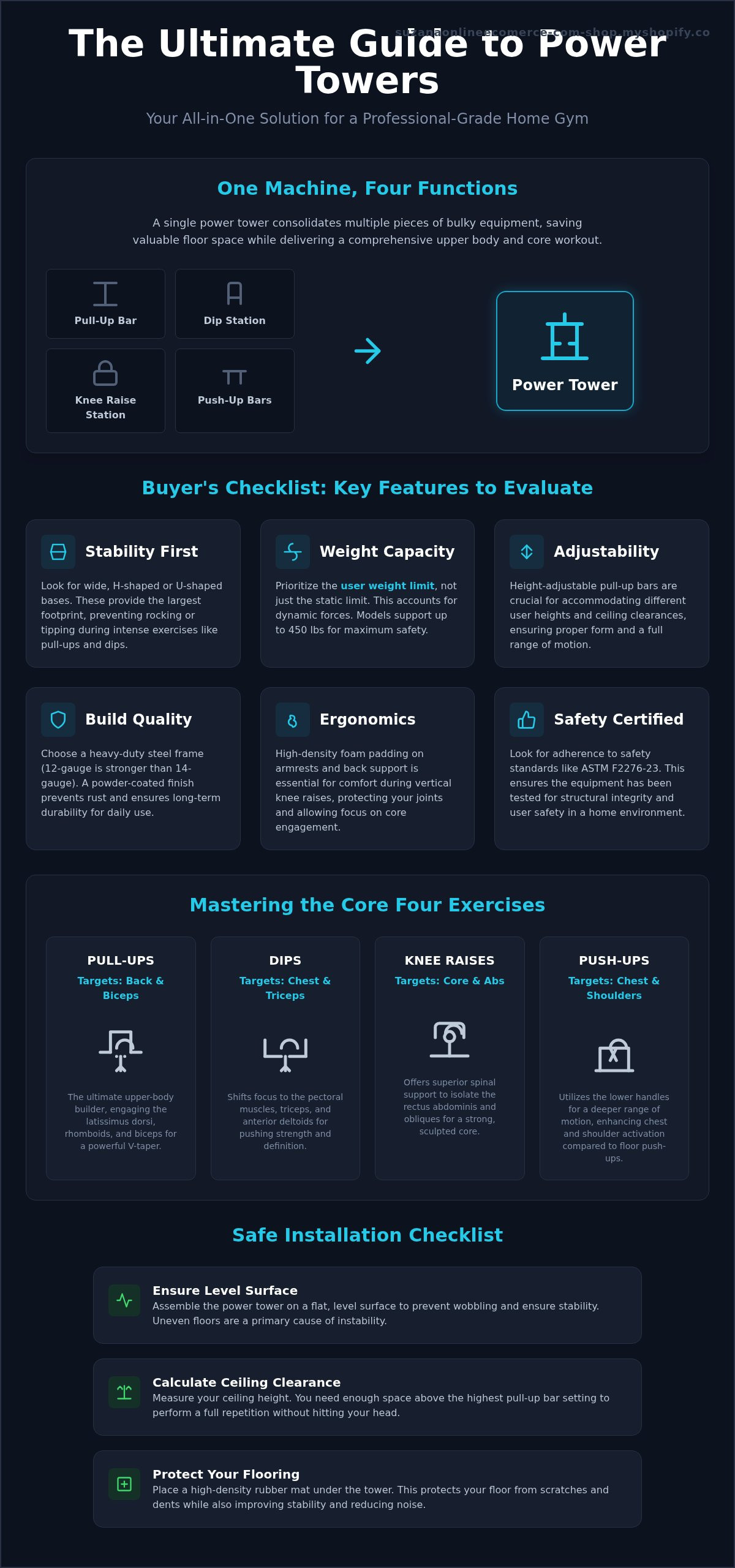
A power tower is a freestanding frame specifically engineered for performing compound upper-body movements. It serves as a multi-functional station that consolidates several pieces of specialized equipment into a single, compact footprint. By integrating a pull-up bar, a dip station, and a vertical knee raise (VKR) component, it provides a comprehensive bodyweight training solution without the need for multiple bulky machines. If you are looking for a definitive answer to What is a Power Tower?, it's essentially a vertical gym that facilitates pull-ups, dips, and core work. The primary advantage of a power tower for home gym environments is its vertical orientation. This design saves significant floor space compared to individual machines, making it an efficient choice for enthusiasts who want professional-grade equipment in a residential setting.
Primary Muscle Groups Targeted
This equipment allows you to target multiple muscle groups with high intensity through functional movements. The upper pull-up bar effectively engages the latissimus dorsi, rhomboids, and biceps. Transitioning to the dip handles shifts the mechanical load toward the pectoral muscles, triceps, and anterior deltoids. The VKR station is particularly effective for core development. Using the padded armrests and back support, you can perform leg raises or knee tucks to strengthen the rectus abdominis and obliques. This provides much better spinal support than traditional floor-based abdominal exercises and allows for a greater range of motion.
Power Tower vs. Pull-Up Bars and Dip Stands
Stability is the most significant differentiator when comparing these options. Doorway pull-up bars rely on the integrity of your door frame and often limit your range of motion due to the narrow opening. A power tower for home gym use offers a dedicated, freestanding base that eliminates the risk of property damage or equipment slippage. While single-purpose dip stands provide portability, they lack the multi-functional versatility of a tower. A high-quality tower ensures the frame remains stationary even during high-repetition sets. It's a foundational piece for any vertical strength setup. To see how these stations integrate with other equipment, consult our resource on Machines for Weight Training: The Ultimate Beginner's Guide. This helps you build a balanced routine that combines bodyweight mastery with traditional resistance training.
Key Features to Evaluate Before Buying Your Power Tower
Selecting the right power tower for home gym use involves more than just checking the price tag. You must evaluate the structural engineering to ensure the frame remains stable during high-intensity training. Stability is the most critical factor for safety. Look for H-shaped or U-shaped bases because these configurations offer the widest contact points with the ground. A wide base prevents the unit from rocking or tipping during wide-grip pull-ups or aggressive dips. If the base is too narrow, the equipment may wobble, which breaks your concentration and compromises your form.
Weight capacity is another area where many buyers feel uncertain. Manufacturers often list a static weight limit, which refers to the maximum load the frame can support while stationary. However, you should prioritize the user weight limit. This accounts for the dynamic forces generated when you move. If you weigh 200 lbs and perform explosive pull-ups, the force applied to the bar can significantly exceed your body weight. A high-quality power tower for home gym environments should also feature height-adjustable pull-up bars. This adjustability allows you to customize the station to your specific height and the constraints of your ceiling.
Comfort plays a massive role in consistent training. High-density foam padding on the armrests and back supports is essential for the vertical knee raise station. This padding protects your elbows and prevents bruising during core work. When you consider the advantages of body-weight exercise, such as improved functional strength and balance, having ergonomic support ensures you can focus on muscle engagement rather than joint discomfort.
Material Quality and Build
Durability depends largely on the steel gauge. A 12-gauge steel frame is thicker and more robust than a 14-gauge alternative, making it better suited for heavier users or daily sessions. Ensure the unit features a powder-coated finish. This treatment protects the metal from moisture and sweat, which is vital if your gym is located in a garage or basement. Check the hardware as well. Professional-grade towers use high-tensile bolts and locking nuts to prevent the frame from loosening over time.
Footprint and Dimensions
Space management is a common hurdle for home athletes. Most towers require a footprint of approximately 3x4 feet. However, vertical clearance is just as important as floor space. You should leave at least 15 to 20 inches of head space between the pull-up bar and your ceiling. This prevents you from hitting your head during the top phase of a repetition. If you need to rearrange your space frequently, look for models with transport wheels. You can find professional-grade fitness equipment that balances these dimensions with the stability needed for a safe home workout.
The Core Four: Mastering Exercises on Your Home Station
The pull-up is the definitive measure of upper-body pull strength. To master it on a power tower for home gym use, you must focus on scapular retraction. Pulling your shoulder blades down and back before bending your elbows ensures the latissimus dorsi performs the primary work rather than the biceps. This technique prevents the common error of "shrugging" at the top of the movement. For the dip, your body angle determines the muscle emphasis. A slight forward lean shifts the load to the pectoral muscles, while an upright posture isolates the triceps. Professional-grade stations provide stable handles that allow for deep repetitions without the frame swaying under your weight.
Vertical knee raises are superior for abdominal isolation because the back pad provides a fixed point of resistance. Keep your back flat against the pad to prevent swinging and ensure the lower abs are lifting your legs. This eliminates the momentum that often ruins floor-based leg raises. At the base of the machine, the push-up handles offer a significant advantage over traditional floor exercises. They allow for a deeper range of motion, which increases muscle fiber recruitment. These handles also keep your wrists in a neutral, more comfortable position to reduce joint strain during high-volume chest sessions.
Programming for Beginners
If you can't perform a full pull-up yet, loop resistance bands over the top bar for assistance. This allows you to build the necessary strength while maintaining proper form. A basic 3-day full-body split might involve 3 sets of each "Core Four" movement on Monday, Wednesday, and Friday. This frequency provides enough stimulus for growth while allowing for recovery. For more accessory ideas to round out your space, check out The Ultimate Guide to Workout Equipment for Your Home Gym. This helps you integrate your tower with other essential tools.
Advanced Progressions
Once bodyweight movements become easy, you can increase intensity with weighted pull-ups and dips using a dedicated belt. You must verify that your power tower for home gym has a user weight capacity that can handle the combined load of your body and the added plates. For those pursuing calisthenics mastery, L-sits and straight-leg raises on the VKR station build elite core strength. If you plan to practice explosive muscle-up transitions, ensure your tower has a heavy, wide-base design to prevent tipping during the turnover phase. Progressing to these movements requires a station that doesn't wobble under dynamic force.
Installation and Safety: Maximizing Stability in Small Spaces
Proper installation is the foundation of a safe workout environment. When you integrate a power tower for home gym use, you must first address floor protection. High-density rubber mats are essential. They prevent the heavy steel frame from shifting during explosive movements and protect your flooring from permanent indentations. If your gym is located in a garage, the floor might not be perfectly level. You can use specialized shims or the unit's adjustable feet to ensure the base is flush with the ground. A slight tilt can lead to uneven wear on the frame and cause the tower to wobble during pull-ups.
Ceiling clearance is a safety factor that many users overlook until the first repetition. You need at least 15 to 20 inches of "head space" above the pull-up bar. This ensures you don't strike the ceiling at the peak of your movement. Beyond the initial setup, you should perform stability checks every 3 to 6 months. Vibrations from repeated use can loosen hardware. Tightening the bolts regularly ensures the structure remains as rigid as the day you assembled it. Following the ASTM F2276-23 safety standards for fitness equipment helps maintain a professional-grade environment in your home.
Preventing Tipping and Shifting
Weight distribution is critical for preventing accidents. You should always face the center of the tower when performing dips or vertical knee raises. This keeps your center of gravity over the base stabilizers. While most home models are freestanding, some advanced units offer anchoring options to bolt the frame directly to a concrete floor. If bolting isn't an option, ensure your model features wide-base stabilizers. These lateral extensions prevent the tower from tipping sideways during wide-grip movements. Safety is paramount, and choosing professional-grade fitness equipment ensures the engineering supports these dynamic forces.
Maintenance for Longevity
Routine maintenance extends the life of your investment. Sweat is corrosive; you must wipe down the high-density foam pads after every session to prevent the material from cracking or peeling. Periodically inspect the welds for any signs of stress or fatigue, especially if you use added weights. If your tower has adjustable pins or moving parts for height settings, apply a small amount of lubricant to keep the operation smooth. These simple steps ensure your equipment remains safe and functional for years of training.
Completing Your Home Gym Setup with SUZANA SHOP
Building a high-performance space requires more than just a single machine. While a power tower for home gym use serves as the ultimate vertical gym, surrounding it with the right accessories ensures a balanced routine. You should integrate high-quality yoga mats for floor-based exercises performed adjacent to the tower. These mats provide the necessary grip and cushioning for warm-ups, cool-downs, and supplemental core work. Additionally, you can explore our fitness equipment category to find resistance bands. These are vital for assisted pull-ups and chin-ups, allowing you to maintain high volume even as your muscles fatigue during a session.
Recovery is just as important as the workout itself. You can pair your strength training with professional-grade wellness products to support faster muscle repair. A comprehensive approach to fitness includes both high-intensity gear and recovery accessories. By addressing muscle soreness and joint health, you ensure that your home gym remains a place of consistent progress rather than injury. This holistic view of training separates a basic setup from a professional-grade home facility. Creating a balanced environment is the most effective way to reach your long-term strength and body composition goals.
Why Shop with SUZANA SHOP?
SUZANA SHOP provides a professional-grade catalog curated specifically for the home user. Our selection bridges the gap between commercial durability and residential space constraints. We offer a comprehensive range of products covering fitness, wellness, and home essentials, ensuring you can source everything for your journey in one place. With global shipping coverage and a focus on at-home workout enthusiasts, we provide the support needed to build a world-class training environment regardless of your location. Our commitment to quality ensures that every piece of equipment meets the high standards required for daily, intense use.
Next Steps for Your Home Gym
To continue refining your space, read our Home Gym Equipment: The Ultimate Buyer's Guide for more setup tips. You can also browse our latest fitness arrivals to upgrade your training area with the newest tools. If you need help choosing the right accessories for your specific goals, contact our support team for professional guidance. Taking these steps ensures your power tower for home gym remains the centerpiece of a functional, safe, and effective workout space that evolves with your fitness level.
Build a Professional-Grade Training Foundation
Building a high-performance space starts with selecting equipment that balances structural stability with functional variety. You now understand that a high-quality power tower for home gym use is the most efficient way to master bodyweight movements like pull-ups and dips without overcrowding your floor space. By prioritizing H-shaped bases, verifying user weight capacities, and maintaining strict safety standards, you create a secure environment for consistent progress.
Consistency is the only path to real results. Pairing your strength sessions with proper recovery tools and floor protection ensures both your equipment and your body remain in peak condition. Our curated wellness and fitness catalog supports every stage of your journey, from beginner assisted movements to advanced weighted progressions. We provide professional-grade fitness equipment with global shipping available to help you reach your goals from anywhere in the world.
Upgrade your home workouts with professional fitness gear at SUZANA SHOP and take the next step toward a stronger, more capable physique. Your ultimate home training environment is ready for its first session.
Frequently Asked Questions
Is a power tower better than a pull-up bar?
A power tower is superior if you need multi-functionality and property protection. Doorway bars often limit grip variety and can cause structural damage to your home. A dedicated tower provides integrated dip and knee raise stations, which are impossible to perform on a standard bar. It's a freestanding solution that doesn't rely on door frames, making it a more stable and versatile choice for high-intensity strength training.
How much ceiling height do I need for a power tower?
You generally need the height of the tower plus an additional 15 to 20 inches of clearance. Most standard units stand between 80 and 85 inches tall. This means a ceiling height of at least 8 feet is ideal to prevent your head from striking the ceiling during the peak of a pull-up. Always measure your specific room before purchasing, as some adjustable models might require even more vertical space.
Can I use a power tower for a full-body workout?
Yes, you can achieve a comprehensive workout by combining the tower's primary functions with floor exercises. While the machine focuses on the upper body and core, you can perform Bulgarian split squats using the dip handles or elevated push-ups at the base. Adding a set of resistance bands allows you to incorporate lower body movements like lunges or squats. This transforms the station into a complete vertical gym for your entire physique.
Are power towers safe for heavy users?
Modern power towers are highly safe for heavy users if you select a model with a high weight capacity. Look for units rated for 400 lbs or more, which typically utilize 12-gauge steel and reinforced joints. Ensure the base is H-shaped or U-shaped to provide the necessary lateral stability. Always check the user weight limit rather than the static limit to account for the dynamic forces generated during explosive movements.
Do I need to bolt my power tower to the floor?
Bolting isn't required for most home users, though it provides the ultimate level of stability. Most freestanding models are designed with wide bases and non-slip feet to remain stationary during standard exercises. If you plan on performing advanced calisthenics like muscle-ups or high-velocity swings, anchoring the unit to a concrete floor or a heavy platform is a wise safety precaution. For standard pull-ups and dips, the unit's own weight is usually sufficient.
What is the best floor surface for a power tower?
A flat, level concrete or hardwood surface covered with high-density rubber mats is the best option. The rubber provides necessary friction to prevent the frame from sliding and absorbs the vibrations from your movements. Avoid placing the unit directly on thick carpet or uneven outdoor ground, as this can cause the frame to tilt or wobble. A power tower for home gym setups performs best when the base makes full contact with a solid foundation.
How do I stop my power tower from shaking?
Shaking is often caused by loose hardware or an uneven floor surface. Start by tightening every bolt with a socket wrench to ensure the frame is rigid. If the floor is uneven, use shims or the unit's adjustable leveling feet to stabilize the base. Placing the equipment on a thick rubber mat also helps dampen vibrations. If the shaking persists, ensure you're performing movements with a controlled tempo to minimize lateral momentum.
Can I leave a power tower in a garage or outdoors?
Garages are suitable if you choose a model with a high-quality powder coating to prevent rust from humidity. However, leaving a power tower for home gym use outdoors isn't recommended unless it's specifically rated for weather resistance. Exposure to rain and direct sunlight will eventually degrade the foam padding and cause the steel to corrode. If you must keep it in a garage, wipe down the frame regularly to remove sweat and moisture buildup.