

25 Practical Self-Care Ideas to Improve Your Quality of Life in 2026

Most people treat self-care as a luxury reward for surviving a difficult week; however, it's actually the technical maintenance system required to keep your body and mind operational. You've likely felt the weight of chronic stress and the exhaustion that comes from a schedule with no room for complex wellness rituals. It's common to feel confused about whether you're practicing true care or just temporary self-indulgence. If you're just starting out, utilizing specific mindfulness products for beginners can provide the necessary structure to turn abstract concepts into tangible habits.
This guide provides a structured framework to improve your quality of life throughout 2026. You'll gain a personalized self-care toolbox that combines physical health, mental clarity, and the functional tools required to sustain a balanced lifestyle. We've compiled 25 practical ideas that move beyond typical trends to focus on measurable results. This article examines how to integrate fitness gear and kitchen accessories into a routine that builds lasting mental resilience without feeling like another chore on your daily schedule.
Key Takeaways
- Shift from reactive escapism to proactive maintenance by treating self-care as an essential technical system for your body and mind.
- Implement high-impact physical routines that prioritize endorphin release and sleep quality over long, exhausting workouts.
- Reduce cognitive load and mental friction by incorporating specific mindfulness products for beginners that simplify new habit formation.
- Use the habit stacking method to build a sustainable schedule where five minutes of daily consistency outweighs occasional, intense sessions.
- Support your nutritional and wellness goals with the right infrastructure, including professional-grade kitchen accessories and fitness gear.
What is Self-Care? Defining the Pillars of Personal Maintenance
Self-care is the intentional practice of preserving one’s own health and well-being. It's often misunderstood as a reactive fix for a crisis, but it functions most effectively as a proactive maintenance system. Think of your body and mind as high-performance machinery. Without regular inspection and upkeep, the system eventually fails. True self-care isn't about temporary escapism, like scrolling through social media or mindless consumption. It's about long-term restoration. Choosing activities that lower cortisol levels and reduce the physiological impact of chronic stress ensures your internal systems remain functional and resilient.
Building a successful routine requires a technical "Self-Care Toolbox." This isn't just a metaphor; it involves the physical hardware required to sustain these habits. For instance, incorporating mindfulness products for beginners, such as specialized wellness items or dedicated meditation spaces, helps lower the barrier to entry for new routines. By treating these tools as essential infrastructure, you move from a mindset of "if I have time" to "this is how I operate." Consistency depends on having the right equipment ready when you need it.
The Five Dimensions of a Balanced Life
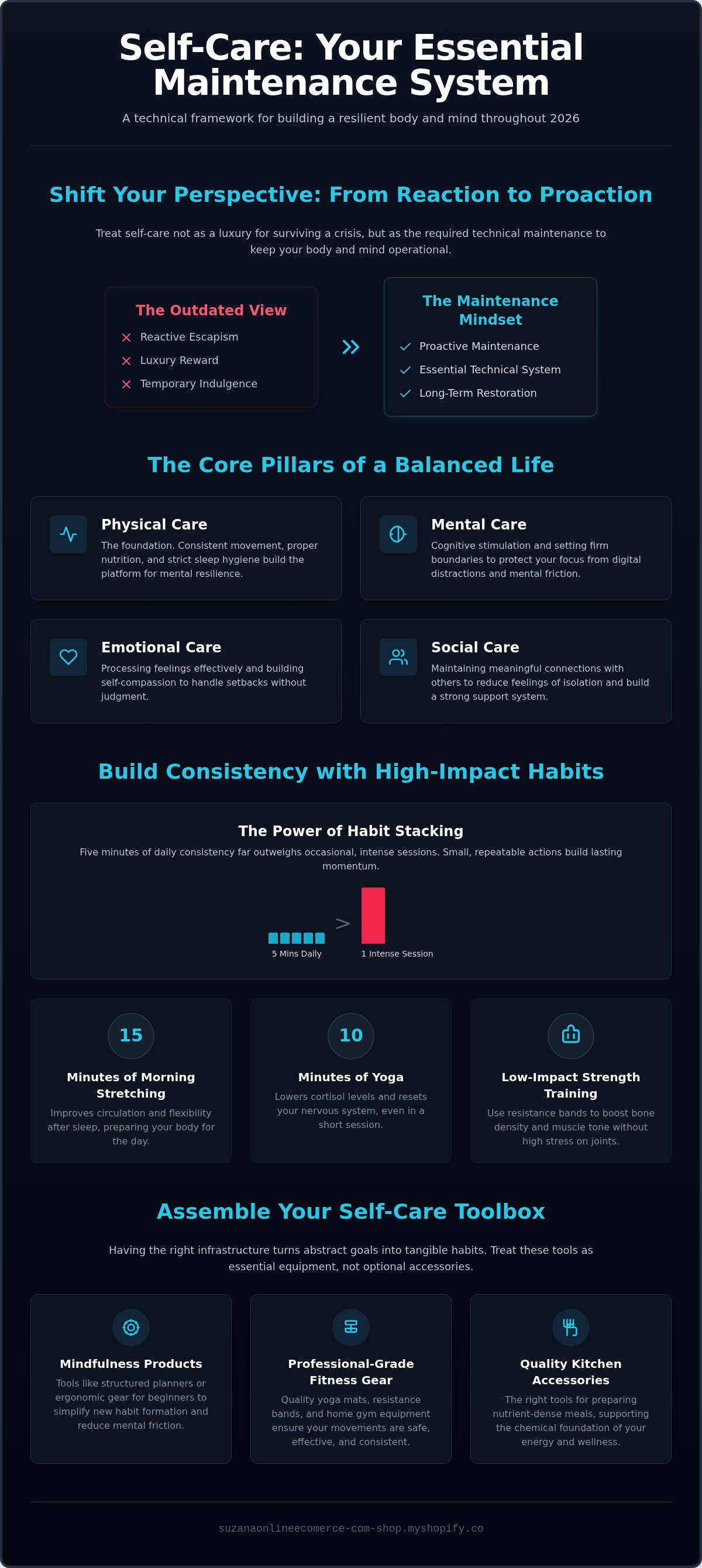
A functional self-care strategy addresses several core areas to ensure total health. Physical care forms the foundation. It includes consistent movement, proper nutrition, and strict sleep hygiene. You can't build mental resilience on a platform of physical exhaustion. Mental care involves cognitive stimulation and setting firm boundaries to protect your focus from digital distractions. Emotional care focuses on processing feelings and building self-compassion to handle setbacks. Social care ensures you maintain meaningful connections to reduce isolation. Each pillar supports the others. If you neglect physical health, your emotional resilience naturally declines.
Why Clinical Experts Prioritize Self-Care
Clinical professionals emphasize self-care because it's a proven preventative measure for long-term mental health. Regular practice is directly linked to lower burnout rates, especially in high-pressure professional environments. When you prioritize these routines, you're essentially building a buffer against future stressors. Using high-quality wellness products or fitness equipment makes these practices more consistent. Professionals don't wait for a breakdown to seek balance. They use mindfulness products for beginners and established wellness protocols to maintain their baseline daily. This disciplined approach converts wellness from a vague concept into a measurable part of a professional lifestyle.
Physical Self-Care Ideas for Energy and Vitality
Physical self-care functions as the biological fuel for your daily performance. It isn't about grueling marathons or unsustainable gym schedules. Instead, focus on high-impact activities that yield a maximum return on investment for your time. Movement triggers the release of endorphins, which are neurotransmitters that naturally alleviate pain and stress. This physiological shift directly improves sleep quality by regulating your body’s internal clock. While passive rest is necessary, active recovery through light movement is often more effective for muscle health and metabolic function. Nutrition also serves as the chemical foundation of this system. Preparing nutrient-dense meals using professional-grade kitchen accessories ensures you have the sustained energy required for daily tasks.
Movement-Based Self-Care at Home
Setting up a functional space for physical maintenance doesn't require a commercial facility. Consistency depends on having the right infrastructure readily available. To optimize your home routine, consider these technical additions:
- Morning Stretching: Dedicate 15 minutes to stretching to improve circulation and flexibility after hours of sleep.
- Strength Training: Use resistance bands for low-impact exercises that boost bone density and muscle tone.
- Dedicated Environment: Create a specific area for your home gym equipment to remove the mental friction of starting a workout.
Practicing just 10 minutes of yoga on a quality mat can lower cortisol levels and reset your nervous system. If you're new to these practices, incorporating mindfulness products for beginners, such as structured planners or ergonomic gear, helps maintain your momentum. Utilizing professional-grade fitness equipment ensures your movements are safe and effective. Integrating these mindfulness products for beginners into your physical space helps turn a chore into a seamless part of your lifestyle.
Sleep Hygiene and Restorative Habits
Quality sleep is the ultimate form of physiological restoration. Establishing a digital sunset, where you disconnect from screens 60 minutes before bed, is essential to regulate your circadian rhythm and natural melatonin production. Exposure to morning sunlight for 10 minutes also helps anchor your circadian rhythm, making it easier to fall asleep at night. Environmental factors like temperature and light also play critical roles; keeping your room cool and dark facilitates the deep sleep cycles required for cognitive recovery. Modern wellness trends, such as mouth taping to encourage nasal breathing, are gaining traction because they optimize oxygen intake during rest. Integrating these habits with high-quality wellness products creates a comprehensive system for nightly repair. You can explore a variety of tools to support your journey in our wellness products collection.
Mental and Emotional Self-Care Strategies
Cognitive load refers to the total amount of mental effort being used in your working memory. In a hyper-connected environment, this load often reaches a breaking point, leading to mental friction and decreased decision-making quality. Mental self-care acts as a system defragmentation process. By intentionally reducing external inputs through a digital detox, you allow your brain to process accumulated data and lower baseline stress levels. Many people abandon these practices because they believe they don't have time for a 30-minute meditation session. However, emotional regulation is more effective when practiced in micro-moments. A two-minute breathing exercise performed three times a day is technically superior to a single long session that you rarely complete.
To implement these strategies effectively, you need the right infrastructure. Using mindfulness products for beginners, such as guided journals or focused wellness items, provides the necessary external structure to keep these habits consistent. These tools serve as physical cues that signal your brain to transition from a high-output state to a restorative one.
Mindfulness and Cognitive Reframing
Cognitive reframing is the process of identifying and then disputing irrational or maladaptive thoughts. Journaling is a functional tool for this practice. Instead of vague reflections, use specific prompts: "What was the most technical challenge I solved today?" or "Which specific interaction caused a cortisol spike?" This data-driven approach to emotions helps you detach and analyze stressors objectively. For those in high-pressure workplaces, short-form meditation techniques, such as box breathing, can reset focus in under sixty seconds. Additionally, the benefits of aromatherapy are well-documented; using essential oils from a professional wellness catalog can stimulate the limbic system to improve mood regulation and concentration during deep-work blocks.
Emotional Boundaries and Social Self-Care
Preserving your emotional energy requires firm boundaries. Saying no to non-essential commitments is a form of emotional preservation that prevents burnout. While isolation is a risk in remote work environments, social self-care doesn't require complex events. Scheduling low-stakes social interactions, like a quick coffee or a brief walk with a colleague, boosts oxytocin levels and provides a necessary break from task-oriented thinking. Another effective method for cognitive shifting is the three-item daily gratitude list. By documenting three specific, positive outcomes from your day, you train your brain to recognize progress rather than just focusing on unresolved problems. These small, technical adjustments to your social and emotional habits build the resilience needed for long-term productivity.
Creating a Personalized Self-Care Routine
Building a sustainable routine requires a technical approach to habit formation. Habit stacking is a highly effective method where you anchor a new wellness practice to an existing daily task. For example, practicing deep breathing while waiting for your morning coffee to brew ensures the habit isn't forgotten. Consistency is technically superior to intensity. Performing a five-minute routine every day builds neural pathways more effectively than a single, one-hour session once a week. Success depends on making these practices the path of least resistance by optimizing your physical environment and reducing the mental energy required to start.
Step 1: The 5-Minute Audit
A schedule audit reveals hidden windows for restoration. Most people lose significant time to mindless scrolling or inefficient household chores. By identifying these gaps, you can insert low-friction activities from each wellness pillar. Choose one simple task for each category: a short stretch for physical health, a quick journal entry for mental clarity, and a brief boundary-setting exercise for emotional stability. Set realistic expectations during high-pressure weeks. It's better to complete a reduced version of your routine than to skip it entirely, which helps prevent self-care guilt and maintains your momentum.
Step 2: Building Your Wellness Infrastructure
Your physical environment dictates your behavior. Organizing your health and wellness essentials in a highly visible location reduces the mental friction of habit initiation. For instance, placing a yoga mat by your bed acts as a visual trigger for morning movement. In the kitchen, using specialized accessories like high-quality prep tools makes nutritional self-care faster and more accessible. When healthy choices are the easiest ones to make, you're more likely to stick to your plan.
If you're just starting, incorporating mindfulness products for beginners into your workspace or bedroom creates a dedicated zone for recovery. These items serve as functional reminders to prioritize your maintenance system. You can find the necessary hardware to support your new habits when you browse our wellness collection. By preparing your infrastructure in advance, you ensure that self-care becomes an automatic part of your daily operations rather than an optional task. Using mindfulness products for beginners helps bridge the gap between intending to practice and actually following through.
Essential Wellness Tools to Support Your Practice
Quality tools serve as the physical foundation for any self-care system. When your equipment is reliable and accessible, you're less likely to skip your routine due to technical friction. Consistency depends on having a dedicated setup that bridges the gap between fitness, nutrition, and mental wellness. Investing in versatile items ensures you get the most utility out of your space. For example, a single high-quality mat supports both vigorous exercise and quiet meditation. SUZANA SHOP acts as a one-stop destination for this essential infrastructure. We provide the hardware required to turn abstract wellness goals into a daily reality.
Fitness and Recovery Hardware
High-density yoga mats are a foundational investment for home movement. They provide the necessary joint protection and stability required for safe practice. When you have a comfortable surface, you're more likely to engage in the 15-minute morning stretching routines described in previous sections. Using resistance bands and other workout equipment allows for low-impact strength training that doubles as a stress-relief mechanism. Ergonomic tools also play a critical role in preventing physical strain. This ensures that your home workouts remain a source of restoration rather than injury. High-quality hardware removes the excuses that often derail new habits.
Wellness and Home Environment Products
The atmosphere of your home directly impacts your ability to reset after a high-stress day. Incorporating specific wellness products helps create a sensory environment conducive to relaxation and focus. This includes everything from specialized lighting to kitchen accessories that simplify meal preparation. Having the right kitchen tools makes nutritional self-care fast and efficient. This efficiency is vital for maintaining energy levels throughout a busy work week. Even your choice of jewelry can serve as a personal reminder of your commitment to self-maintenance and mental clarity.
Even your relationship with your animals contributes to your maintenance system. Pet supplies are a powerful form of social self-care infrastructure. Caring for a pet boosts oxytocin and reduces feelings of isolation, providing a biological reset. If you're a newcomer to these practices, selecting mindfulness products for beginners is the most effective way to start. These items, such as beginner-friendly wellness kits or ergonomic gear, provide the structure needed for success. By centralizing your search for these items, you can build a comprehensive self-care toolbox that addresses every pillar of your health. These mindfulness products for beginners ensure that your environment supports your long-term resilience and mental clarity.
Building Your Sustainable Maintenance System for 2026
Self-care is the technical foundation for a high-performance life. It isn't a luxury reward; it's the essential maintenance system that prevents burnout and maintains mental resilience. By implementing the habit stacking method and conducting a five-minute audit of your daily schedule, you can integrate these practices without adding stress to your routine. Success depends on your environment. Having the right infrastructure, such as professional-grade fitness equipment and mindfulness products for beginners, ensures that your wellness habits become the path of least resistance.
SUZANA SHOP provides a wide range of home fitness and wellness essentials designed for professional-grade home use. Our diverse catalog offers the specific tools needed to support physical, mental, and nutritional health pillars. With global shipping available on all wellness items, you can build your infrastructure from any location. Explore the Wellness Collection at SUZANA SHOP today to begin constructing your personalized self-care toolbox. Transitioning from reactive stress management to proactive maintenance is the most effective way to secure your long-term well-being and improve your quality of life.
Frequently Asked Questions
What are the best self-care ideas for beginners?
Start with low-friction habits like five-minute stretching or basic journaling. Beginners should focus on consistency over complexity. Utilizing mindfulness products for beginners, such as high-density yoga mats or specialized wellness items, helps create a dedicated environment for these new habits. Building a foundational infrastructure early on reduces the mental effort required to maintain a routine and ensures long-term adherence to your personal maintenance system.
How can I practice self-care when I have no money?
Effective self-care doesn't always require a financial investment. You can implement cost-free practices like deep breathing exercises, walking in nature, or establishing a strict sleep hygiene schedule. These activities lower cortisol levels and improve cognitive function without specialized equipment. While professional-grade tools enhance the experience, the biological benefits of movement and rest are accessible through disciplined daily habits and intentional time management within your existing schedule.
Is self-care just another word for pampering?
No, self-care is the technical maintenance of your physiological and psychological systems. While pampering is often a temporary form of indulgence, true self-care involves proactive health management, such as consistent nutrition and physical recovery. It's about building resilience and ensuring your body functions at peak efficiency. Using functional tools like kitchen accessories for meal prep or fitness gear for mobility training distinguishes long-term restoration from simple escapism.
Can self-care help with clinical anxiety or depression?
Self-care acts as a supportive framework for professional clinical treatment. It's not a replacement for medical care, but it helps manage physiological symptoms like elevated heart rates or sleep disturbances. Regular physical movement and structured routines provide a sense of agency and stability. If you're struggling, consult a medical professional while using wellness products to maintain a healthy baseline and support your overall recovery process through consistent daily habits.
How do I know if my self-care routine is actually working?
You'll notice a technical improvement in your baseline resilience and cognitive focus. Measure success by tracking metrics like improved sleep quality, lower daily stress levels, and consistent energy throughout the work week. If your current routine feels like a burden rather than a restorative process, it requires adjustment. A functional routine should reduce mental friction and help you recover from high-stress periods more efficiently without feeling like an additional chore.
What are some 5-minute self-care ideas for busy parents?
Busy parents can focus on high-impact micro-habits that fit into tight windows. Try a five-minute morning stretch on a quality mat or use resistance bands for a quick strength circuit. Practicing box breathing during transitions or writing a three-item gratitude list can reset your nervous system. Incorporating mindfulness products for beginners into your home environment makes these short sessions more effective by providing the right infrastructure for rapid mental and physical recovery.
Why do I feel guilty when I try to practice self-care?
Guilt often stems from a cultural misunderstanding that personal maintenance is a form of selfishness. In reality, neglecting your own health reduces your capacity to support others. Frame self-care as a technical requirement for your roles as a professional or parent. When you treat wellness as an essential infrastructure task rather than an optional luxury, the guilt diminishes. Maintaining your own systems ensures you have the energy and clarity needed for your responsibilities.