

Best Jump Rope for Home Workout: 2026 Buyer’s Guide

What if your most effective cardio tool was also the one currently scuffing your hardwood floors and waking up the neighbors downstairs? Finding the best jump rope for home workout routines shouldn't mean sacrificing your flooring or your relationship with the people living below you. You've likely felt the frustration of a rope that kinks mid-swing or the worry that every heavy strike is damaging your apartment's aesthetic. It's a common struggle for home fitness enthusiasts who need high-intensity results without the noise and bulk of a treadmill.
We'll show you exactly how to select a rope that maximizes your heart health and coordination while remaining whisper-quiet on various surfaces. You don't have to settle for equipment that trips you up or wears out after a month of use. This guide previews the top 2026 options, from durable 6mm PVC models for beginners to smart digital ropes with high-accuracy rotation sensors. You'll discover how the right material and weight can transform a small corner of your home into a high-performance training zone.
Key Takeaways
- Understand why jumping rope is a superior cardio choice, offering the calorie-burning potential of a 30-minute jog in just 10 minutes of exercise.
- Learn how to identify the best jump rope for home workout based on your specific goals, whether you need a lightweight speed rope or a weighted version for strength.
- Discover which materials, such as PVC and beaded cords, effectively minimize noise and protect your indoor flooring from impact damage.
- Master the "Step and Pull" sizing method to ensure your equipment is perfectly adjusted to your height for a safer, trip-free experience.
- Explore how professional-grade fitness equipment serves as a versatile and space-efficient entry point for a comprehensive home gym.
Why a Jump Rope is the Ultimate Home Workout Tool
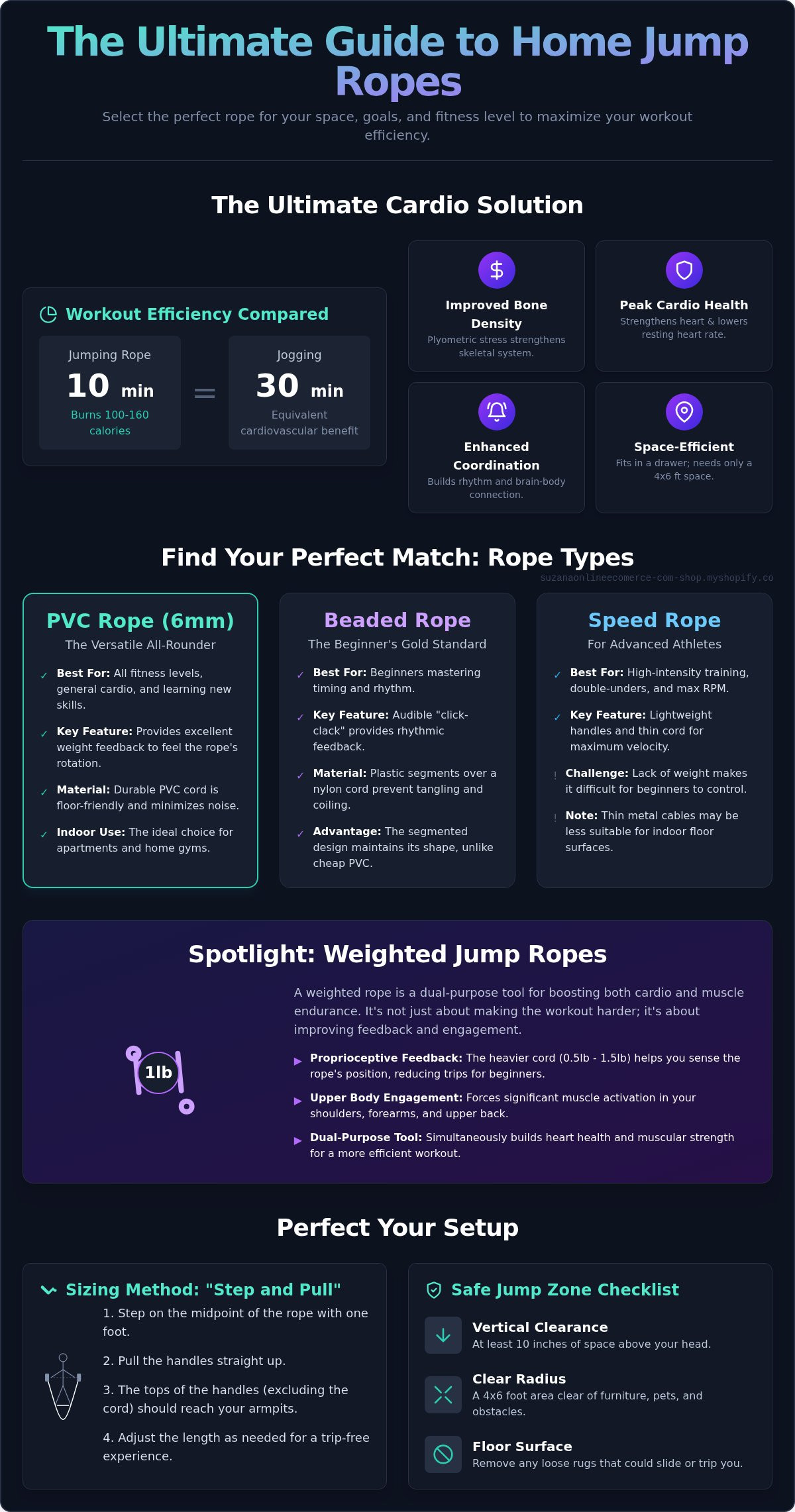
Jump rope training is the definitive high-intensity, low-space cardio solution for modern living. Unlike bulky machines, it delivers elite-level conditioning in a package that fits in a desk drawer. Research indicates that jumping rope can burn between 10 and 16 calories per minute, meaning a 10-minute session provides cardiovascular benefits comparable to 30 minutes of jogging. Finding the best jump rope for home workout sessions allows you to capitalize on this efficiency without ever leaving your house.
Plyometric exercise consists of rapid, explosive movements that require muscles to reach maximum force in short intervals; this process significantly improves bone density by stressing the skeletal system in a controlled, productive manner. Beyond the physiological gains, portability remains a primary advantage. You can transition your workout from a cramped living room to a spacious garage or even a park without hauling heavy weights. The history of skipping rope illustrates its transition from a basic playground activity to a vital component of professional athletic preparation used by boxers and cross-trainers alike.
Space-Saving Benefits for Small Apartments
Most traditional cardio machines require at least 15 to 30 square feet of dedicated floor space. In contrast, the best jump rope for home workout routines requires only the space you stand on. This makes it an essential entry point within the broader home gym equipment ecosystem. To set up a safe jump zone, follow these practical guidelines:
- Ensure at least 10 inches of vertical clearance above your head to avoid hitting light fixtures.
- Maintain a 4x6 foot radius clear of furniture, electronics, or pets.
- Clear any loose rugs that could slide during lateral movements.
The Cardiovascular and Coordination Advantage
Consistent rope work strengthens the heart muscle and lowers resting heart rate over time. It also forces the brain to synchronize footwork with hand timing, which builds superior rhythm and a stronger brain-body connection. These physical and mental gains explain why jump ropes are foundational to modern health and wellness routines. It's a functional tool that builds endurance while refining the motor skills necessary for daily movement and athletic performance.
Decoding Jump Rope Types: Speed, Weighted, and Beaded
Selecting the best jump rope for home workout routines requires matching the equipment's physics to your current fitness level. While thin metal cables dominate professional competitions, they often lack the versatility needed for indoor spaces. Speed ropes feature lightweight handles and thin cords designed for maximum RPM. These are ideal for advanced users practicing double-unders or high-intensity interval training. However, their lack of weight makes them difficult for beginners to control.
PVC ropes, particularly those with a 6mm thickness, represent the most versatile choice for the average enthusiast. They provide enough weight to feel the rotation without causing excessive fatigue. For those just starting, the beaded rope remains the gold standard. It consists of a nylon inner cord covered in plastic segments that prevent the rope from coiling or tangling, a common issue with cheap hardware store alternatives. To explore professional-grade options used in combat sports training, you can visit Fairtex for specialized equipment.
A weighted rope isn't just about making the workout harder; it's about proprioceptive feedback. This term refers to your brain's ability to sense the rope's position without looking at it. Heavier ropes, typically ranging from 0.5lb to 1.5lb, provide a constant pull that helps beginners avoid tripping. While a standard rope focuses on pure cardio, a 1 lb weighted model forces significant engagement in your shoulders, forearms, and upper back. This makes it a dual-purpose tool for both heart health and muscle endurance. If you're looking to upgrade your setup, you can find professional-grade fitness equipment designed specifically for home use.
The Case for Beaded Ropes in 2026
Beaded ropes have seen a massive resurgence because they solve the most common home workout frustrations. The distinct "click-clack" sound as the beads hit the floor provides an audible cue that helps you master timing and rhythm. This feedback loop is essential for developing the coordination mentioned in previous sections. Unlike thin PVC cords that can develop "memory" and stay coiled after being stored, the segmented design of a beaded rope ensures it always retains its arc. The plastic beads also act as a protective layer for the inner cord, offering superior durability against friction on garage floors or patios.
Essential Features for a Home-Friendly Jump Rope
Unlike gym environments where noise is irrelevant, home workouts require equipment that respects your living space and your neighbors. Metal cables, while popular in competitive settings, create a high-pitched "whip" sound and a sharp "clack" against the floor that carries through walls. PVC and beaded ropes produce a lower, muffled thud. This acoustic distinction is a primary factor when selecting the best jump rope for home workout use, especially if you live in an apartment or exercise while others are sleeping. High-quality ball-bearing systems in the handles further minimize noise by eliminating the friction and squeaking common in basic plastic designs.
Durability also depends on your specific "home gym" floor. Concrete surfaces in garages act like sandpaper on thin cables, while carpets create significant drag that can slow down your rotation. Beaded ropes are the most resilient choice for abrasive surfaces because the plastic segments take the impact, protecting the inner cord. For indoor sessions, a smooth 6mm PVC rope offers the right balance of speed and longevity. Regardless of the material, look for tangle-resistant designs to avoid the frustration of a rope that retains its coiled shape after being stored in a drawer.
Protecting Your Floors and Your Neighbors
Hardwood and tile are susceptible to micro-scratches and finish wear from repeated rope strikes. A dedicated jump rope mat is the most effective way to protect your property and extend the life of your equipment. These mats serve a dual purpose: they provide a consistent, non-slip surface and act as a shock absorber. By dampening the vibration of each landing, you significantly reduce the noise transmitted through the floor. Additionally, practicing quiet jumping techniques, such as staying on the balls of your feet and clearing the ground by only an inch, minimizes the acoustic footprint of your session.
Handle Mechanics: Plastic vs. Aluminum
The weight balance between the handle and the cable dictates your control over the rope's arc. Aluminum handles offer a professional, weighted feel and often house high-speed bearings for a smoother spin, but they can become slippery during intense sessions. Textured plastic or foam-covered handles are generally better for home users. While foam absorbs sweat for a more secure grip, textured plastic provides a more durable, long-term solution. The goal is to prevent wrist fatigue; an ergonomic handle allows you to maintain the rotation with small, efficient wrist circles rather than tiring arm movements. This efficiency is what separates the best jump rope for home workout routines from standard, low-cost alternatives.
How to Size and Set Up Your Home Jump Rope Space
Purchasing the best jump rope for home workout routines is only the first step toward a successful cardio habit. If your rope is incorrectly sized, you'll experience constant tripping and form breakdown, regardless of the equipment's quality. Most ropes arrive at a standard 10-foot length, which is too long for almost everyone. Proper sizing ensures that the cable clears your head and feet with minimal effort, allowing for the smooth, rhythmic rotation discussed in earlier sections.
Skill level significantly influences your ideal rope length. Beginners benefit from a slightly longer rope because it creates a larger "loop" that is more forgiving of timing errors. As your coordination improves, you should shorten the cable. A shorter rope moves faster and requires less arm movement, which is essential for mastering double-unders. Use wire cutters or the built-in snap-locks found on most modern handles to secure your custom fit. Always leave an extra inch of cable inside the handle during your first few sessions in case you need to readjust.
The Step-by-Step Sizing Guide
Follow this precise "Step and Pull" method to find your baseline measurement. This framework eliminates the guesswork often associated with DIY sizing.
- Step 1: Stand directly in the middle of the cable with one foot, ensuring the rope is centered.
- Step 2: Pull the handles upward along your body. For a standard fit, the top of the handles should reach your armpits. Avoid pulling them up to your shoulders, as this typically results in a rope that is too long for efficient jumping.
- Step 3: Mark the spot where the cable meets the handle. Trim the excess material using heavy-duty cutters, or slide the adjustable lock into place.
Optimizing Your Jump Environment
Your physical space is just as important as your gear. Before starting, perform a safety check by clearing a 6-foot radius. This prevents the rope from snagging on furniture, light fixtures, or pets. Position yourself in front of a mirror if possible; visual feedback is the fastest way to correct "donkey kicking" or uneven arm positioning. Integrating your rope into a wider workout equipment setup allows for seamless transitions between cardio and strength training.
Storage is the final piece of the puzzle. Never leave your rope coiled tightly or tangled in a gym bag, as this creates "memory" in the material, leading to permanent kinks. Instead, hang it over a hook or a large clothes hanger to maintain its natural arc. If you're ready to start building your space, you can find high-quality fitness equipment tailored for home environments at SUZANA SHOP.
Finding Your Ideal Fitness Gear at SUZANA SHOP
Selecting the best jump rope for home workout success requires more than just technical knowledge; it requires access to reliable, high-performance gear. SUZANA SHOP serves as a specialized curator for individuals who prioritize efficiency and quality in their personal training spaces. We select equipment that bridges the gap between commercial gym durability and home-friendly design. A single, well-chosen jump rope often acts as the essential entry point for a comprehensive home gym, proving that you don't need a massive footprint to achieve elite results.
By consolidating your fitness and household needs into a single platform, you simplify the logistics of your wellness journey. Professional-grade accessories, like the ropes and mats discussed throughout this guide, reduce the friction of starting a daily habit. We focus on providing versatile tools that withstand the rigors of high-intensity training while maintaining the aesthetic and functional requirements of a modern living environment. Our approach ensures that your equipment remains a sustainable part of your routine for years to come, and you can explore E-commerce Retail of Sports Nutrition and Performance Gear to find technical endurance gear and nutrition that supports your growth as an athlete.
Our commitment to durability ensures that every piece of equipment in our catalog is built to last. We recognize that home athletes need tools that perform consistently across different surfaces, from garage concrete to living room carpets. This focus on longevity is a core part of our philosophy, as we believe that reliable gear is the foundation of any successful fitness habit. Our diverse selection of fitness tools is designed to integrate seamlessly with a broader range of wellness products, supporting a balanced and healthy lifestyle. With global shipping coverage, we bring these essential tools directly to your door, regardless of where you're building your gym.
Next Steps: Building Your Routine
A jump rope is most effective when paired with other intentional recovery and strength tools. Consider layering your cardio sessions with resistance bands for muscle toning or high-density yoga mats to further protect your joints and floors. These additions transform a simple skipping session into a full-body conditioning routine. We invite you to explore our full selection of equipment to find the pieces that best fit your specific space and goals. Start your journey today by taking the first step toward a more active lifestyle. Browse our latest fitness equipment collection here to find the best jump rope for home workout routines and other high-quality gear.
Transform Your Daily Routine With Efficient Cardio
You've discovered that the best jump rope for home workout success isn't a one-size-fits-all tool. It's a calculated choice between the tactile feedback of beaded ropes and the high-speed efficiency of PVC models. By applying the "Step and Pull" sizing method and selecting noise-reducing materials, you can build an elite cardiovascular routine that respects your living space and your neighbors. Quality gear transforms a small corner of your home into a powerful training zone without the need for bulky, expensive machinery.
SUZANA SHOP serves as a one-stop shop for health, wellness, and home essentials. We provide a curated selection of high-quality home workout accessories designed for both sustainability and performance. With global shipping available on all fitness and wellness orders, building your ideal setup is more accessible than ever. Upgrade your home gym with premium fitness gear from SUZANA SHOP. It's time to stop worrying about floor damage and start focusing on your fitness progress. Take the first step toward a more active, balanced lifestyle today.
Frequently Asked Questions
Is jumping rope better for weight loss than running?
Jumping rope is often more efficient for weight loss because it burns between 10 and 16 calories per minute. Research suggests that a 10-minute session provides cardiovascular benefits comparable to 30 minutes of jogging. It engages more muscle groups, including the core, calves, and shoulders, while maintaining a higher heart rate. This metabolic efficiency makes it a superior choice for those looking to maximize calorie burn in a limited timeframe.
How long should my jump rope be for my height?
Your rope should reach your armpits when you stand on the center of the cable with one foot. Beginners should aim for this standard length to allow for a larger, more forgiving loop that reduces tripping. As your skill increases, you can shorten the rope to increase rotation speed and minimize arm movement. Always measure with your workout shoes on to ensure the clearance is accurate for your actual jumping height.
Can I jump rope on carpet or will it damage the floor?
You can jump on carpet, but it isn't recommended because the fibers increase friction and slow the rope's rotation. While PVC or beaded ropes won't damage the floor like metal cables might, they can wear down carpet textures over time. Using a dedicated mat is the most effective way to protect your flooring and extend the lifespan of your equipment. Mats also provide better rebound and shock absorption for your joints.
What is the best jump rope for an absolute beginner?
A 6mm PVC rope or a beaded model is the best jump rope for home workout beginners. These types provide significant tactile feedback, allowing you to feel the rope's position as it rotates around your body. Beaded ropes are particularly helpful because they don't tangle and provide an audible click when they hit the floor. This sound helps you develop the necessary rhythm and timing without the frustration of constant tripping.
How do I stop my jump rope from tangling while I use it?
To prevent tangling, choose a rope with a high-quality ball-bearing system in the handles. This mechanism allows the cord to rotate independently of your grip, which stops the material from twisting during use. Additionally, storing your rope by hanging it over a hook rather than coiling it prevents memory kinks. Beaded ropes are naturally tangle-resistant due to their segmented design, making them a reliable choice for consistent, frustration-free sessions.
Is jumping rope bad for your knees if you do it at home?
Jumping rope is a low-impact exercise when you perform it with proper technique on the right surface. You should only jump about one inch off the ground and land softly on the balls of your feet. This method actually strengthens the connective tissues around the knee joints. If you jump on hard surfaces like concrete without a mat, you increase the risk of strain. Using a shock-absorbing mat significantly reduces joint impact.
How many minutes of jumping rope is a good workout?
A 10 to 20-minute session is considered a highly effective workout for most fitness levels. Because of its high intensity, you don't need hour-long sessions to see significant cardiovascular results. Beginners should start with 1 to 2-minute intervals interspersed with short rest periods. Gradually increasing your duration helps build endurance without overtaxing your system. Even 10 minutes of consistent jumping provides a better workout than many longer, lower-intensity activities like walking.
Do I need special shoes for home jump rope workouts?
You don't need specialized shoes, but cross-trainers or basketball shoes are ideal for home sessions. These provide the necessary lateral support and arch cushioning required for repetitive jumping movements. Avoid running shoes with overly thick, cushioned heels, as they can cause instability during quick rotations. Selecting the best jump rope for home workout routines works best when paired with footwear that has a flat, stable sole to ensure proper balance.