

Dumbbell Exercises for Small Spaces: Apartment Guide

What if you could build an elite-level physique without ever stepping foot outside a three-foot by three-foot square? Many fitness enthusiasts believe that a lack of floor space is a physical limitation, but it's actually just a design challenge. It's frustrating to feel like your living room is too cramped for a real workout, especially when you're worried about hitting furniture or disturbing the neighbors downstairs. You don't need a sprawling home gym to see results. By focusing on stationary movements and vertical training, you can perform highly effective dumbbell exercises for small spaces that rival any commercial gym routine.
We understand the struggle of balancing a fitness habit with a compact lifestyle. This guide provides a clear path to mastering a full-body strength routine that requires less than nine square feet of space using only a pair of dumbbells. You'll learn which specific exercises maximize muscle engagement while minimizing your footprint. We'll also cover tips for choosing the right compact equipment, such as adjustable dumbbells and noise-dampening mats, to keep your workout quiet and your home organized. From a bedroom corner to a studio apartment entryway, you're about to transform your limited space into a high-performance training zone.
Key Takeaways
- Understand the 'Footprint-to-Utility' ratio to replace bulky gym machines with a single, versatile pair of dumbbells.
- Discover the 'Vertical-First' principle to perform effective dumbbell exercises for small spaces without risking damage to your furniture.
- Learn how to execute stationary lower body movements that provide a complete leg workout within a three-foot square.
- Implement noise-dampening strategies and floor protection techniques to maintain a professional home gym environment in a rental.
- Master a time-efficient 20-minute circuit that uses the AMRAP method to achieve strength and conditioning goals quickly.
Why Dumbbells are the King of Small Space Fitness
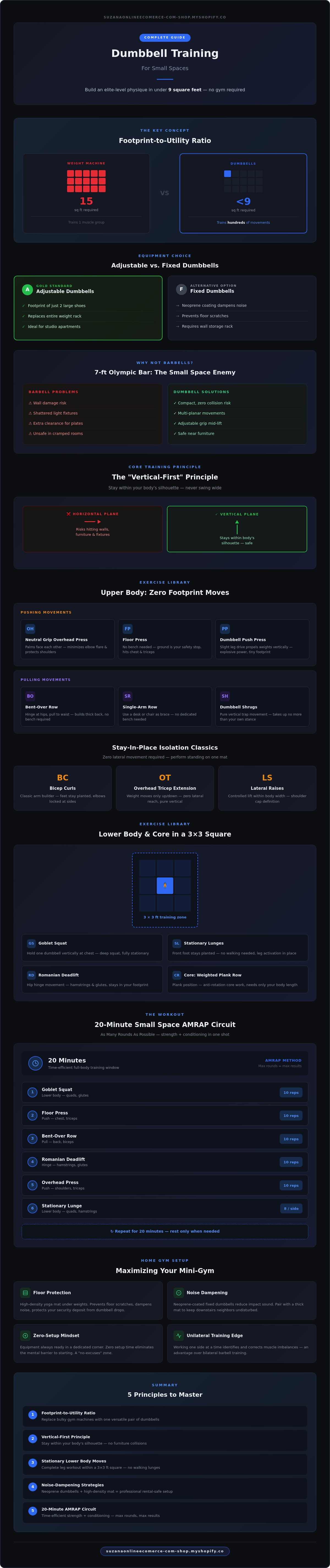
Small space fitness refers to effective strength training performed within a 3x3 to 5x5 foot area. This compact footprint is often the only option for apartment dwellers who don't have the luxury of a dedicated garage or spare room. Mastering dumbbell exercises for small spaces allows you to maintain a professional training standard without sacrificing your living area. The efficiency of a dumbbell comes down to its footprint-to-utility ratio. While a single-function weight machine might take up 15 square feet to target one muscle group, a pair of dumbbells facilitates hundreds of movements within the space of a single floor tile.
Unilateral training is another significant advantage of this setup. By working one side of the body at a time, you can identify and fix muscle imbalances that often go unnoticed with bilateral movements. Because you're holding a shorter implement, you can remain perfectly stationary. You don't need to step out or lunge across the room to get a deep stretch or a peak contraction. There's also a psychological benefit to establishing a "no-excuses" corner gym. When your equipment is always ready and requires zero setup time, the mental barrier to starting your workout disappears.
Dumbbells vs. Barbells in Small Apartments
A standard 7-foot Olympic barbell is often the enemy of the small-space athlete. Navigating a long steel bar in a cramped room is a recipe for wall damage and shattered light fixtures. Even if you have the width to accommodate the bar, you still need extra clearance on both sides to load plates safely. Dumbbells eliminate these safety concerns. Their compact size allows for multi-planar movements, meaning you can rotate and adjust your grip mid-lift to avoid furniture collisions. This versatility makes them much more practical for high-intensity training in tight quarters.
Adjustable vs. Fixed Dumbbells
The math of space-saving clearly favors modern equipment designs. A full rack of fixed dumbbells requires an entire wall of storage, which isn't feasible in a studio apartment. Adjustable dumbbells are the gold standard for apartment dwellers because they consolidate an entire weight rack into the footprint of two large shoes. If you're worried about floor protection, neoprene-coated fixed weights are an excellent alternative. These softer coatings help dampen noise and prevent scratches on hardwood or laminate. Using a high-density yoga mat from SUZANA SHOP alongside your weights provides an extra layer of security for your floors and your security deposit.
Vertical Strength: Upper Body Exercises with Zero Footprint
Success in a small apartment depends on your plane of motion. If you move weights horizontally, you risk hitting walls or knocking over your belongings. The "Vertical-First" principle focuses on movements that stay within your body's silhouette. For example, the neutral grip overhead press is perfect for tight corners. By keeping your palms facing each other, you minimize elbow flare. This protects your shoulders and ensures you don't clip a bookshelf or a door frame. Mastering dumbbell exercises for small spaces starts with these upward-reaching movements that maximize muscle tension while minimizing your physical reach.
Classic stay-in-place movements are the foundation of any compact routine. Bicep curls and overhead tricep extensions require zero lateral movement. You can perform these standing on a small mat without ever shifting your feet. For back development, the bent-over row is essential. It builds a thick, strong back without the need for a bulky adjustable bench. You simply hinge at the hips and pull the weights toward your waist. This keeps the load close to your center of gravity and prevents you from swinging the dumbbells into nearby furniture.
Pushing Movements for Tight Corners
You don't need a bench for a heavy chest day. The floor press is the ultimate space-saving alternative. By lying on the floor, the ground acts as your safety stop; this limits your range of motion and focuses tension on the triceps and chest. If you want power, try the dumbbell push press. Use a slight leg drive to propel the weights vertically. This builds explosive strength while keeping your footprint minimal. Focus on high time under tension to increase intensity. This strategy allows you to see results without needing to store heavier, bulkier equipment.
Pulling Movements with Limited Room
Pulling exercises often require a brace, but you don't need a dedicated weight bench. A single-arm row works perfectly using a sturdy desk or chair for support. For high-intensity trap training, dumbbell shrugs are a pure vertical movement that takes up no more room than your own stance. If you have enough floor space for a plank, renegade rows are excellent. They combine back strength with extreme core stability. Performing these on a high-quality yoga mat helps protect your floor from impact and provides the necessary grip for your hands and feet.
Lower Body and Core Power in a 3x3 Square
Leg day often intimidates apartment dwellers because they imagine needing massive squat racks or leg press machines. In reality, the most effective lower body movements are stationary and require very little floor space. You can build significant strength by focusing on exercises that emphasize balance and depth rather than horizontal travel. When performing dumbbell exercises for small spaces, your goal is to maximize muscle recruitment within a single floor tile. This approach keeps your heart rate high and your footprint low, ensuring your workout doesn't spill over into your living area.
The goblet squat is the #1 recommended exercise for home fitness because it allows for high-intensity loading while keeping the body's center of gravity perfectly centered over a minimal footprint. By holding a single weight against your chest, you create a counterbalance that improves your squat depth and protects your lower back. For those looking to target the posterior chain, the dumbbell Romanian deadlift (RDL) is essential. It requires almost zero forward or lateral movement; you simply hinge at the hips and lower the weights along your shins. This creates maximum hamstring tension without needing the clearance of a barbell.
Stationary Leg Builders
Reverse lunges are a safer alternative to forward lunges in tight rooms. Stepping backward ensures you stay within your established "safe zone" and prevents you from accidentally overshooting into a wall or coffee table. If you want to increase the intensity, try Bulgarian split squats. You can use the edge of a couch or a bed as a rear-foot elevate to transform a standard lunge into a high-performance strength builder. Sumo squats are another excellent option for small spaces. By taking a wider stance and pointing your toes outward, you maximize inner thigh engagement while staying completely stationary.
Core Stability Without a Mat
Core training doesn't always require lying on the floor. Dumbbell side bends allow you to train your obliques while standing perfectly still, making them ideal for narrow hallways or cluttered rooms. If you have enough space to sit down, weighted Russian twists provide a high-intensity abdominal workout that fits entirely on a small rug or a fitness mat. For total body stability, perform farmer's carries in place. Instead of walking across a room, march with high knees while holding heavy dumbbells at your sides. This stationary variation builds incredible grip strength and core endurance while respecting your apartment's physical boundaries.
Maximizing Your Mini-Gym: Setup and Logistics
Setting up a functional training area in a rental apartment requires more than just buying gear. You must consider the structural and social implications of your routine. For renters, a high-density yoga mat is a non-negotiable piece of home gym equipment. It protects your hardwood or laminate floors from impact damage and provides a stable, non-slip surface for dumbbell exercises for small spaces. Beyond physical protection, these mats serve as essential noise-dampening tools. If you're performing heavy lifts, learn to set your weights down silently using a slow, controlled motion. This isn't just about being a good neighbor; controlled eccentrics actually improve muscle growth and joint stability by increasing time under tension.
Visual feedback is often overlooked in compact setups, yet it's vital for safety. Placing a full-length mirror in your workout corner allows you to monitor your form in real-time. This is critical when you don't have a coach or much room to move around to check your posture. Psychology also plays a role in your success. Dedicating a specific corner of your bedroom or living room to fitness creates a powerful mental trigger. When you step into that designated 3x3 foot square, your brain knows it's time to work. This small design choice significantly improves long-term consistency because it removes the friction of having to "set up" your gym every single day.
Essential Small-Space Accessories
Yoga mats are the foundation of your mini-gym, providing both grip and soundproofing for your floor. To keep your living area tidy, utilize vertical storage solutions like corner racks or under-bed storage bins. This prevents your weights from becoming a tripping hazard in a high-traffic room. Resistance bands are the perfect weightless complement to your dumbbells. They add variety to your routine, such as lateral walks or face pulls, without taking up any extra floor space. These tools allow you to increase the difficulty of your lifts without needing to store a massive collection of heavy plates.
Safety in Tight Spaces
Before starting your first set, you must clear your 'strike zone'. You need a 360-degree radius where your arms can move freely without hitting a lamp, a wall, or a television. Small rooms also trap heat and moisture quickly during a workout. Ensure you have proper ventilation, such as a cracked window or a small floor fan, to keep the air moving during high-intensity sessions. This prevents the room from becoming stuffy and helps you maintain your focus. For more ideas on optimizing your setup with the right gear, check out our guide on workout equipment for home use.
Explore the full selection of professional fitness gear at SUZANA SHOP to complete your apartment gym today.
The 20-Minute Small Space Dumbbell Circuit
Circuit training is the most effective way to burn calories and build muscle simultaneously when your floor space is restricted. By moving quickly between exercises, you keep your heart rate elevated, turning a strength session into a cardiovascular challenge. For those with limited time, the "AMRAP" method, which stands for As Many Rounds As Possible, is highly efficient. Set a timer for 20 minutes and complete the circuit as many times as you can with proper form. This structured approach ensures that your dumbbell exercises for small spaces provide a high-intensity workout without needing a massive gym footprint.
Progressive overload is essential for long-term results. If you don't have the space to store a wide range of heavier weights, you can increase difficulty by adjusting your tempo or shortening your rest periods. Slowing down the lowering phase of a lift increases muscle fiber recruitment. Once the workout is over, focus on recovery. Integrating principles of health and wellness into your post-workout routine, such as proper hydration and active stretching, helps your body adapt to the training stimulus more effectively.
The 'Stationary Strength' Routine
- Step 1: 10 Goblet Squats. Hold one dumbbell at chest height. Focus on maintaining a neutral spine and achieving full depth while keeping your heels planted firmly on the floor.
- Step 2: 10 Overhead Presses. Stand with feet shoulder-width apart. Keep your core tight to prevent your back from arching as you drive the weights vertically above your head.
- Step 3: 10 Reverse Lunges per leg. Step back into the lunge with a silent foot placement to avoid disturbing neighbors. This movement targets the glutes and quads while staying within your designated 3x3 square.
- Step 4: 10 Bent-Over Rows. Hinge at the hips and drive your elbows toward the ceiling. Keep your neck in a neutral position to avoid unnecessary strain throughout the movement.
Scaling for Success
Beginners should focus on mastering the movement patterns first. Start with fewer repetitions or take longer rest periods between exercises to ensure your form doesn't break down. If you're an advanced trainee, reduce your rest to 15 seconds between movements to maximize metabolic stress. You can also increase the weight or add a 2-second pause at the bottom of each rep to intensify the load. Consistency is the primary driver of physical change. You can shop SUZANA SHOP for compact fitness equipment to find the right tools for your specific apartment goals.
Transform Your Living Space into a High-Performance Gym
Building a stronger version of yourself doesn't require a commercial gym membership or a massive garage setup. By prioritizing vertical movements and stationary lower body training, you can master effective dumbbell exercises for small spaces without ever leaving your bedroom corner. You've learned how to maximize your footprint with the goblet squat and protect your floors using high-density mats. These small adjustments turn any studio apartment into a professional-grade training zone. Success comes down to consistency and having the right tools at your disposal.
SUZANA SHOP provides a wide variety of space-saving exercise gear and durable yoga mats designed for floor protection and noise reduction. With global shipping available for all wellness and fitness products, you can access professional equipment regardless of your location. It's time to stop letting limited square footage hold back your physical progress. Upgrade your home gym with our premium fitness equipment and start your transformation today. Your apartment is no longer a limitation; it's your new favorite place to train.
Frequently Asked Questions
Can I build significant muscle with just dumbbells at home?
Yes, you can build significant muscle at home by applying progressive overload and maintaining a high training volume. Dumbbells provide the mechanical tension and range of motion necessary to stimulate muscle hypertrophy effectively. Focus on compound movements like goblet squats and overhead presses to engage multiple muscle groups at once. As long as you stay consistent, your results won't differ much from those achieved in a traditional gym setting.
What is the best weight to start with for home dumbbell exercises?
The ideal starting weight depends on your current fitness level, but a pair of 10 to 15-pound dumbbells is a standard baseline for most beginners. This range allows you to perform upper body movements with proper form while providing enough resistance for basic lower body exercises. As your strength improves, you'll need heavier options to continue challenging your muscles. It's often better to start light to master the mechanics before increasing the load.
How do I prevent damaging my apartment floor when using dumbbells?
Using a high-density yoga mat or specialized interlocking floor tiles is the most effective way to protect your apartment floor. These accessories provide a cushioned barrier that absorbs impact and prevents scratches on hardwood or laminate surfaces. Additionally, choosing neoprene-coated weights can further reduce the risk of surface damage during your routine. Always avoid dropping weights directly on the floor so it doesn't damage the surface and keep your rental in perfect condition.
Are adjustable dumbbells worth the investment for small spaces?
Adjustable dumbbells are a superior investment for small spaces because they replace an entire rack of weights with a single pair. They don't require much storage space, which is vital when performing dumbbell exercises for small spaces in a studio or bedroom. While the initial cost might be higher than a single set of fixed weights, the long-term utility and space-saving design make them the most professional choice for home enthusiasts.
How many times a week should I do this small space workout?
You should aim for three to four sessions per week to achieve optimal results while allowing for adequate muscle recovery. A day of rest between workouts helps prevent overtraining and reduces the risk of injury. This frequency ensures you maintain metabolic momentum without overwhelming your weekly schedule or crowding your living area every single day. It's the most efficient path to reaching your strength and wellness goals while training in a compact home environment.
What should I do if I don't have enough room for a weight bench?
You can perform many traditional bench exercises on the floor or by using stable household furniture as a brace. The floor press is an excellent alternative for chest training that doesn't require extra equipment and keeps your footprint minimal. For pulling movements, a sturdy chair or the edge of your bed can serve as a support for single-arm rows. These modifications allow you to maintain a full-body routine without needing a bulky, dedicated weight bench.
Is it possible to do a full-body workout in under 30 minutes?
Yes, it's entirely possible to complete a full-body routine in under 30 minutes by using circuit training or AMRAP methods. By minimizing rest periods, you keep your heart rate high and increase workout density. This approach is ideal for busy apartment dwellers who use dumbbell exercises for small spaces to maximize their training efficiency. Focusing on compound movements ensures that every minute spent in your workout corner counts toward your long-term fitness goals.
Can I use household items as a substitute for dumbbells?
You can use items like water jugs or heavy backpacks as temporary substitutes if you don't have weights yet, but they lack the ergonomic grip of professional gear. Proper weights provide a consistent load and a secure handle, which is essential for safety during complex movements. Investing in actual fitness equipment ensures you can train with precision and avoid accidental breakages. Professional tools are designed to withstand the rigors of high-intensity training over time.