

How to Keep Home Gym Equipment from Rusting in a Garage: The 2026 Maintenance Guide

Your expensive barbell isn't just sitting in your garage; it's slowly dissolving in an invisible soup of humidity and salt. Most owners realize too late that a non-climate-controlled space is a hostile environment for precision-engineered steel. Learning how to keep home gym equipment from rusting in a garage is not just about aesthetics. It's about protecting a significant financial investment and ensuring your gear retains its performance and resale value for years to come.
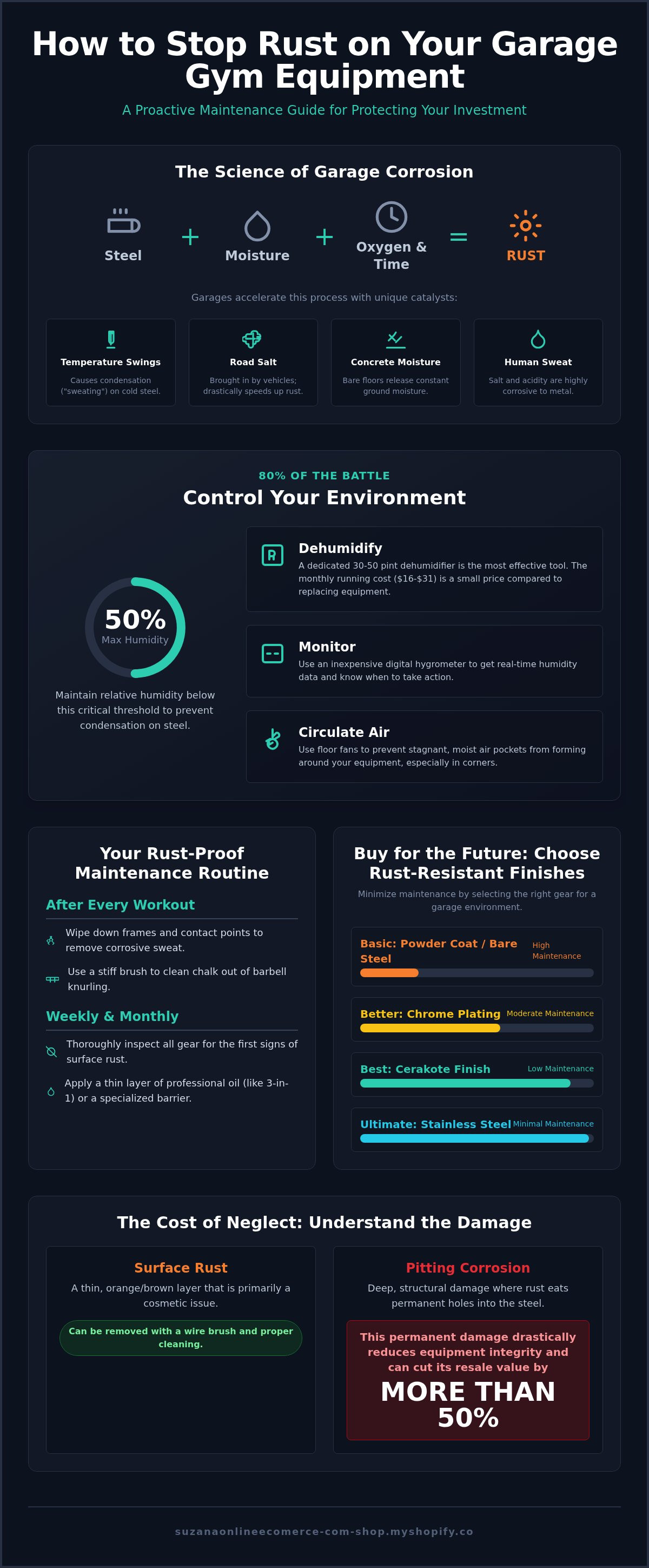
It's frustrating to see surface rust on a bench frame or feel the grit of oxidation on a favorite pull-up bar. This 2026 maintenance guide provides professional strategies to combat moisture and sweat-induced corrosion effectively. You'll learn why environmental control represents 80 percent of the battle and which specific coatings provide the most durable barrier against the elements. We'll outline a low-effort routine that keeps your equipment pristine without requiring hours of tedious scrubbing.
Key Takeaways
- Maintain garage humidity levels consistently below 50 percent to stop moisture from condensing on cold steel surfaces.
- Apply professional-grade oils or specialized barrier coatings to learn how to keep home gym equipment from rusting in a garage effectively.
- Establish a strict post-workout protocol that includes wiping down frames and brushing chalk out of barbell knurling to prevent sweat-induced corrosion.
- Prioritize stainless steel or Cerakote finishes when purchasing new gear to minimize the maintenance requirements of a non-climate-controlled space.
- Implement a consistent weekly routine to preserve the structural integrity and future resale value of your fitness investment.
The Science of Garage Rust: Why Your Equipment is at Risk
Rust is the result of a chemical process known as oxidation. It occurs when iron, the primary component of steel, reacts with oxygen and moisture to create iron oxide. In a controlled indoor environment, this process happens very slowly. However, figuring out how to keep home gym equipment from rusting in a garage requires understanding why these specific spaces accelerate the reaction. While oxygen is always present, garages provide the high moisture levels and chemical catalysts needed for rapid, aggressive corrosion.
The "Cold Steel Effect" is perhaps the most significant factor in a garage setting. Dense metal objects like barbells, plates, and kettlebells have high thermal mass. They remain cold long after the morning air begins to warm up. When warm, humid air enters the garage and contacts this cold steel, the air temperature immediately drops to its dew point. This causes liquid condensation to form directly on the metal surface. This thin, often invisible layer of water provides the perfect environment for oxidation to begin.
Garage environments also introduce unique triggers that typical indoor gyms avoid. If you park a vehicle in the same space, it carries in road salt during winter months. Salt is highly hygroscopic, meaning it attracts moisture, and it increases the electrical conductivity of water. This speeds up the electrochemical reaction of rusting significantly. Furthermore, bare concrete floors are porous. They constantly release moisture from the ground through capillary action, creating a humid microclimate around any equipment stored directly on the floor. Human sweat adds the final blow. The salt and acidity in sweat act as corrosive agents that can penetrate thin protective oils in a matter of hours.
Understanding the Dew Point in Your Garage
Rapid temperature fluctuations are the primary enemy of metal longevity. Uninsulated garage doors are often the culprit, as they allow the internal temperature to swing wildly throughout the day. These swings create frequent "sweating" events on your gear. Storing home gym equipment directly on bare concrete exacerbates this, as the floor acts as a constant source of rising dampness that keeps the air near your racks saturated.
Corrosion vs. Surface Rust
You must distinguish between surface oxidation and structural pitting. Surface rust is a thin, orange or brown layer that sits on top of the metal; it's usually purely cosmetic and can be removed with a wire brush. Pitting is far more serious. It represents deep structural damage where the rust has eaten permanent holes into the steel. While finishes like chrome plating or powder coating offer a barrier, they aren't 100 percent rust-proof. Micro-scratches or pores in these coatings allow moisture to reach the underlying steel, leading to "spiderwebbing" rust that bubbles under the surface. This damage drastically reduces the resale value of your gear, often cutting its market price by more than half.
Environmental Control: Managing Humidity and Airflow
Controlling the environment is the most effective way to address how to keep home gym equipment from rusting in a garage. Professional maintenance standards dictate that you must keep relative humidity levels consistently below 50 percent. When humidity exceeds this threshold, the moisture in the air becomes a constant threat to exposed steel. To monitor this, install a digital hygrometer. These inexpensive devices provide real-time data, allowing you to adjust your climate control strategy before condensation begins to form on your racks and plates.
A dedicated dehumidifier is the centerpiece of this strategy. For a standard two-car garage, a 30-pint unit is usually sufficient for maintenance. However, if your space is particularly damp or lacks insulation, a 50-pint unit is necessary to move enough air. Based on 2026 electricity rates of approximately 18.83 cents per kilowatt-hour, running a certified 20-pint dehumidifier costs between $16 and $31 per month. While this is a recurring expense, it's significantly cheaper than replacing a rusted power rack or a set of specialty barbells. For lighter maintenance in well-sealed garages, smaller units may only cost around $6.50 per month to operate.
Airflow prevents stagnant moisture pockets where rust thrives. Use high-velocity floor fans to keep air moving, especially in corners where equipment is stored. You can also improve the "envelope" of your garage by installing radiant barriers on the back of garage doors. These foil-faced kits reflect heat and help stabilize internal temperatures, reducing the "sweating" effect on metal surfaces during rapid outdoor temperature shifts.
The Role of Gym Flooring
Rubber flooring is essential for safety, but it can trap moisture against the concrete. If you use heavy stall mats, you must install a 6-mil polyethylene vapor barrier underneath them. Without this barrier, moisture rising through the porous concrete becomes trapped, creating a damp microclimate that will rot subfloors and cause the base of your gym rack to corrode from the bottom up. Specialized gym tiles with molded feet on the underside are often superior for garages as they allow for passive airflow beneath the lifting surface.
Heating and Cooling Solutions
Winter brings unique challenges because cold steel attracts condensation the moment the air warms up. Space heaters can help, but you should prioritize those that provide "dry heat," such as oil-filled radiators or infrared heaters. Avoid propane-powered heaters, as they release significant amounts of moisture as a byproduct of combustion. For those with a higher budget, a mini-split HVAC system is the gold standard. It provides both dehumidification and precise temperature control, virtually eliminating the risk of oxidation. If your current gear has already suffered from neglect, you can find professional-grade fitness equipment to rebuild your setup once your climate control is established.
Surface Protection: Oils, Waxes, and Barriers for Metal
While controlling the air quality is essential, applying a direct physical barrier to your steel is the most reliable way to address how to keep home gym equipment from rusting in a garage. The "Barrier Method" involves creating a molecular layer between the metal surface and the ambient air. This prevents oxygen and moisture from initiating the oxidation process. Even in high-humidity environments, a properly applied coating can stop rust before it starts, preserving the structural integrity of your racks and weights.
Several professional-grade protectants are highly effective for garage use. 3-in-1 Oil is a classic choice for barbells because it's inexpensive and easy to apply. For longer-lasting protection, WD-40 Specialist Corrosion Inhibitor (not the standard blue can) or Boeshield T-9 provide superior results. Boeshield T-9, originally developed for aviation, leaves a thin, waxy film that doesn't feel greasy once dried. If you're looking for budget-friendly options, a 12-ounce aerosol can of specialized rust stopper typically costs between $10.47 and $12.99, providing enough coverage for an entire power rack.
For enclosed storage, Vapor Corrosion Inhibitors (VCI) offer a high-tech solution. VCI capsules or bags emit invisible, odorless vapors that coat metal surfaces in a protective layer. These are ideal for storing smaller accessories in cabinets or toolboxes. When deciding between wax and oil for dumbbells or kettlebells, consider the handle texture. Paste wax is often better for smooth handles as it provides a dry, non-slip grip, while oils are better suited for penetrating the deep knurling of barbells.
Barbell Care: Protecting the Knurling
For those in particularly humid or coastal areas, looking toward marine-grade protection standards from experts like Nautic Haven can offer further insight into maintaining metal hardware against extreme salt and moisture.
You should never use standard WD-40 "Blue Can" as a long-term protectant for your barbells. It's a solvent designed to displace water and degrease parts, meaning it eventually dries out and leaves the steel vulnerable. Instead, apply a dedicated machine oil once a month in humid climates, or quarterly in drier areas. To apply it without ruining your grip, put a small amount of oil on a stiff nylon brush and work it into the knurling. Wipe away any excess with a microfiber cloth until the bar feels dry to the touch.
Machine Maintenance: Cables and Pulleys
Properly maintaining machines for weight training requires a different approach than barbells. Use a dry silicone spray for guide rods instead of heavy grease, as grease tends to attract dust and hair which can cause friction. Regularly inspect your cables for "cable fray." This is often a sign of internal rust eating through the steel strands inside the plastic coating. If you see any bubbling or discoloration under the cable jacket, replace the cable immediately to prevent a dangerous failure during a lift.
The Rust-Proof Routine: Daily and Weekly Habits
Consistency is the only defense against a damp garage environment. A professional maintenance routine ensures that small amounts of moisture don't turn into permanent structural damage. The most critical habit is the two-minute "dry wipe" protocol immediately following every workout. Sweat is a primary catalyst for rust because its sodium chloride content accelerates the electrochemical reaction of oxidation. Use a clean cloth to remove all moisture from contact points, including barbell shafts, pull-up bars, and bench frames. If you don't remove these salts immediately, they'll pull even more moisture from the air once you leave the room.
The "Chalk Trap" is a frequently overlooked risk in garage gyms. While lifting chalk improves your grip, magnesium carbonate is a powerful desiccant. It attracts water from the humid air and holds that moisture directly against the metal knurling of your barbell. If you leave chalk in the knurling overnight in a non-climate-controlled space, you're essentially wrapping your bar in a damp cloth. You must brush your barbell after every heavy session to clear these particles. This is a vital step in learning how to keep home gym equipment from rusting in a garage.
Weekly inspections allow you to catch "orange dust" before it pits the steel. Check the undersides of frames and the joints of folding racks where moisture often pools. You should also perform a seasonal deep clean before the "Winter Humidity Peak." This involves stripping old, dust-clogged oil and reapplying a fresh barrier layer to prepare for the cold months. If your current setup has already suffered significant structural damage from neglect, it's safer to replace the compromised pieces with high-quality fitness equipment designed for longevity.
Choosing the Right Cleaning Cloths
Microfiber is superior to cotton for gym maintenance because its split fibers create a larger surface area for trapping moisture and salt. You should maintain separate "oil rags" and "sweat rags." Cross-contaminating your supplies can spread acidic sweat into the protective oil layer you've applied, neutralizing its effectiveness. Store these cloths in a ventilated area rather than a sealed bin to prevent mold growth between uses.
Managing Magnesium Carbonate (Lifting Chalk)
The choice of brush depends on your equipment's finish. Use a stiff nylon brush for Cerakote or zinc-plated bars to avoid scratching the protective coating. Stainless steel or raw steel bars can handle a brass brush for deeper cleaning of the knurling. To quickly clear loose particles from your gear without scratching the surface, explore BarberNation Cordless Air Duster as a versatile addition to your cleaning kit. Switching to liquid chalk is an effective way to minimize airborne particles and prevent the "caked" rust that forms when dry chalk mixes with high humidity.
The most effective strategy for how to keep home gym equipment from rusting in a garage starts before you ever set up your rack. Selecting the right finish is a critical decision that dictates your future maintenance workload. Professional-grade finishes are ranked by their ability to withstand oxidation. Stainless steel is the gold standard because it's an alloy, not a coating; it won't chip or peel. Urethane and Cerakote follow closely, offering high durability against moisture. Chrome is a middle-tier option that's better than decorative black zinc, which is notorious for rusting quickly in non-climate-controlled spaces.
Beyond finishes, the physical construction of your rack matters. Fully welded frames are generally superior to bolt-together racks for garages. Every bolt hole and joint in a modular rack creates a tiny crevice where condensation can pool, leading to internal corrosion that you can't see. If you choose a bolt-together system, ensure you use plastic-lined J-cups. These prevent metal-on-metal contact, which scratches the protective finish of your barbell and creates an entry point for rust. You must also know when to give up on a piece of gear. If you see deep pitting or structural flaking in a load-bearing upright, it's a safety hazard that requires immediate replacement.
Materials That Never Rust
Aluminum is becoming a popular choice for workout equipment because it doesn't rust in the traditional sense. While iron plates are essentially rust magnets, solid rubber bumper plates or urethane-coated dumbbells provide a moisture-proof barrier that protects the underlying weight. Maintaining a clean, dry environment also involves your personal health. Integrating high-quality wellness products into your routine helps you stay healthy while training in the unique conditions of a garage gym.
Restoring Rusted Gear
If you have small accessories like collars or change plates that have already oxidized, a 24-hour vinegar soak can often dissolve the rust. For larger rack frames, use a wire brush to strip the area down to bare metal before applying a rust-reformer spray. This chemical treatment turns iron oxide into a stable, paintable surface. However, you should only attempt this for surface rust. If the oxidation has compromised the thickness of the steel, repainting is a cosmetic fix that hides a dangerous structural weakness. In these cases, purchasing new, professional-grade equipment is the only responsible choice.
Secure Your Fitness Investment for the Long Term
Protecting your gear from oxidation doesn't require a commercial-grade climate control system, but it does demand consistency. By maintaining humidity levels below 50 percent and establishing a strict post-workout "dry wipe" routine, you've already won most of the battle against corrosion. Mastering how to keep home gym equipment from rusting in a garage is about combining these environmental controls with professional-grade barrier oils and rust-resistant finishes like stainless steel or Cerakote.
If your current equipment has already suffered deep structural damage or you're looking to start a new build with durability in mind, choosing the right products is essential. We provide professional-grade fitness accessories designed to withstand the rigors of home use. You can browse rust-resistant fitness gear at SUZANA SHOP and take advantage of our global shipping for all your home gym essentials. With the right maintenance routine and high-quality equipment, your garage gym will remain a safe, high-performing space for years to come.
Frequently Asked Questions
Is it okay to keep a gym in an unheated garage?
It's acceptable to keep a gym in an unheated garage if you implement humidity controls. The main risk isn't the cold itself but the temperature fluctuations that lead to condensation on steel. Without a heater, you'll need to be more diligent with barrier oils and ensure your gym flooring has a vapor barrier. This prevents rising dampness from the concrete floor from saturating the air around your racks.
Does WD-40 stop rust on gym equipment?
Standard WD-40 is a water displacer and degreaser, so it isn't a long-term rust preventative. It evaporates quickly, leaving the metal vulnerable to the air. For effective results, use the WD-40 Specialist Corrosion Inhibitor or 3-in-1 oil. These products create a durable molecular barrier. Learning how to keep home gym equipment from rusting in a garage requires using these specialized coatings rather than general-purpose lubricants.
How often should I oil my barbell in a garage?
You should oil your barbell once a month if you live in a humid climate. In drier regions, a quarterly application is usually enough to maintain the finish. However, if you're a heavy sweater or use significant amounts of chalk, you should inspect the knurling weekly. If the steel looks dull or shows tiny orange specks, it's time for a fresh coat of protective oil and a thorough brushing.
What is the best dehumidifier for a garage gym?
The best unit is a compressor-based dehumidifier with a 30-pint to 50-pint capacity. For a standard garage, a unit that can handle up to 1,500 square feet is ideal. These units typically cost between $47 and $600 depending on features. Look for a model with a continuous drain hose. This allows the machine to run 24/7 without you needing to manually empty the water bucket every few hours.
Why is my barbell turning orange?
The orange tint is iron oxide, commonly known as surface rust. This happens when the iron in your steel gear reacts with oxygen and moisture. It's often triggered by sweat salts left on the bar or humidity levels that stay above 50 percent. While it looks bad, surface rust is usually cosmetic. You can remove it with a stiff nylon or brass brush before applying a protective barrier.
Can I use car wax on my dumbbells?
Yes, high-quality paste car wax is an excellent rust preventative for smooth metal surfaces like dumbbell handles or plate loaded sleeves. It provides a hard, dry finish that doesn't feel greasy or attract dust. Unlike oils, wax doesn't rub off on your clothes as easily. It's a great secondary layer to use after you've cleaned the equipment to ensure a long-lasting moisture barrier in damp environments.
Does lifting chalk cause rust?
Lifting chalk is a primary cause of rust because magnesium carbonate is a desiccant. It naturally attracts moisture from the air and holds it directly against the steel knurling. This "chalk trap" creates a damp micro-environment that accelerates oxidation overnight. To prevent this, always use a brush to clear the knurling after every session. This simple habit is a core part of how to keep home gym equipment from rusting in a garage.
Will a heater stop rust in my garage?
An electric or infrared heater can help by keeping the metal gear above the dew point, which prevents condensation. However, you must avoid propane or kerosene heaters. These fuel-burning heaters release significant amounts of water vapor as a byproduct of combustion, which actually increases the humidity in your garage. For the best results, combine a dry electric heater with a dedicated dehumidifier to keep the air stable.