

How to Use a Foam Roller: Muscle Recovery Guide (2026)

Your foam roller isn't just a piece of high-density plastic meant to "iron out" your muscles; it's a sophisticated communication tool for your nervous system. While most people see it as a simple stretching aid, it's actually the key to overriding chronic tension that limits your athletic potential. You've likely felt the frustration of persistent knots in your back or legs that refuse to budge, or perhaps you've noticed your range of motion decreasing as your training intensity increases. Professional massage therapy offers relief, but the recurring costs make it an inaccessible luxury for many daily athletes.
We understand that you want to move without pain and see better results from your workouts. By mastering how to use a foam roller, you can achieve professional-grade self-myofascial release at home to eliminate stubborn knots and accelerate recovery. This guide provides a clear, functional approach to foam rolling based on 2026 recovery standards. We'll walk you through targeted techniques for every major muscle group, explain the science of fascia hydration, and show you how to integrate this essential wellness gear into your daily routine for lasting flexibility and performance.
Key Takeaways
- Understand the science of self-myofascial release and how it rehydrates the fascia "web" to restore muscle function and mobility.
- Master the proper technique for how to use a foam roller by applying the 1-inch-per-second rule to target deep muscle knots safely.
- Compare the time-efficiency of foam rolling against static stretching to optimize your post-workout recovery schedule at home.
- Learn to manage physical discomfort through controlled breathing to prevent the body's fight-or-flight response during intense recovery sessions.
- Identify the correct density and surface texture for your equipment to ensure your wellness gear matches your specific recovery goals.
The Science of Myofascial Release: How Foam Rolling Works
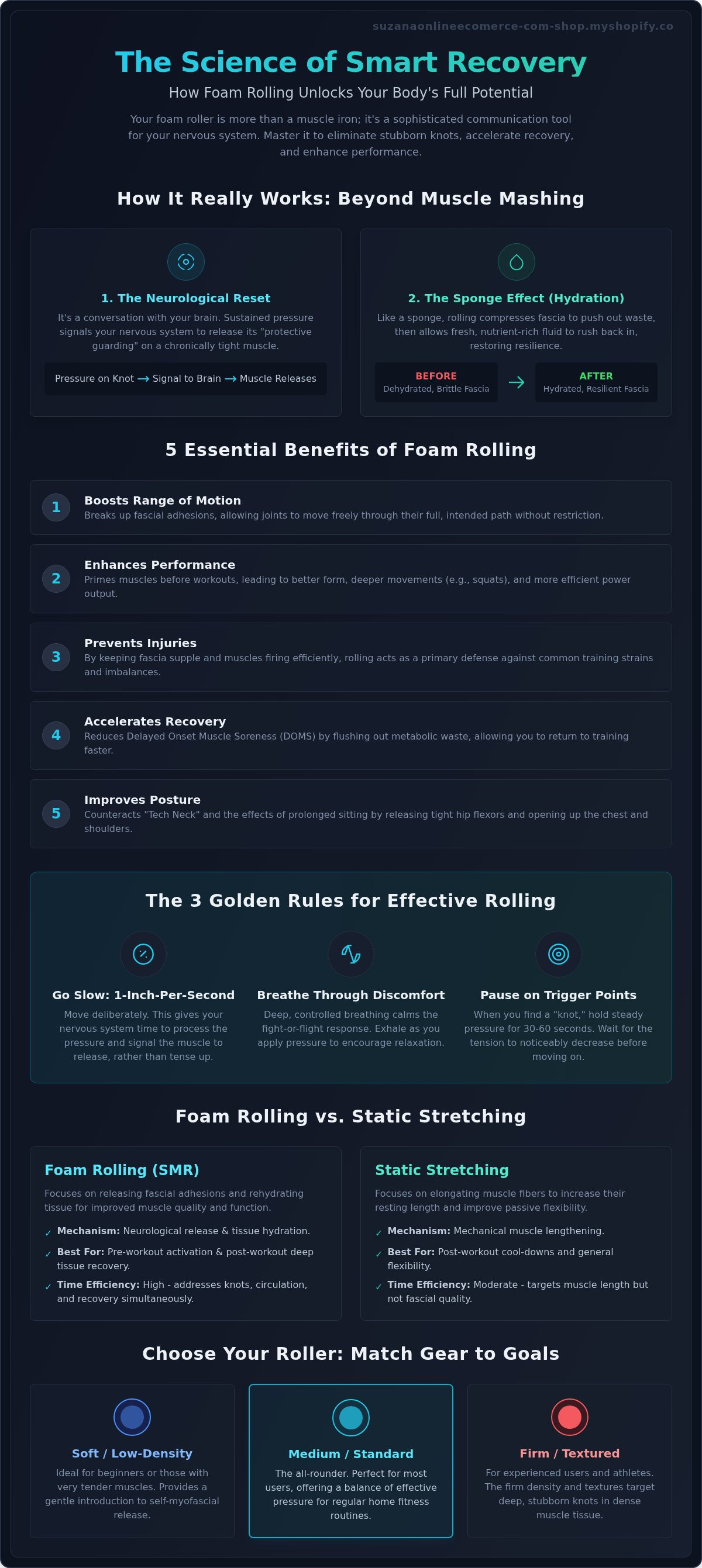
Self-Myofascial Release, or SMR, is a technical term for what most people call "rolling out." While it feels like you're physically crushing a knot, the process is much more complex. You're actually interacting with your fascia. This is a thin, tough, elastic web of connective tissue that wraps around every muscle and organ in your body. When you learn how to use a foam roller, you're learning how to manipulate this web to restore its natural elasticity.
Healthy fascia is supple and glides easily. However, intense exercise or prolonged sitting can cause it to become "tacky" or stuck. This creates adhesions that feel like hard lumps. When you apply pressure with a Foam roller, you aren't just stretching the muscle. You're signaling your brain to allow those tissues to relax. This transition often starts with acute discomfort as you hit a "trigger point," but it soon gives way to a sensation of deep warmth as the muscle finally lets go.
Neurological vs. Physical Release
Foam rolling acts as a manual reset for your parasympathetic nervous system. It isn't just about the physical pressure; it's about the signals sent to your brain. Within your muscles and fascia are mechanoreceptors that sense changes in pressure and tension. When the roller applies sustained pressure, these receptors tell the brain to lower the activity of your muscle spindles. This reduces the "protective guarding" your body does after a hard workout. Regular foam rolling improves your proprioception, or body awareness, by heightening the sensitivity of these neural pathways. This neurological shift is why you often feel a sense of calm after a session.
Fascial Hydration and Blood Flow
Think of your fascia like a kitchen sponge. When a sponge is dry, it's brittle and easily damaged. When it's wet, it's resilient and flexible. This "sponge effect" is a core benefit of knowing how to use a foam roller effectively. As you roll, you compress the tissue, pushing out stagnant fluid and metabolic waste. Once the pressure is released, fresh, nutrient-rich blood and water rush back into the area. This rehydration process breaks down dry, brittle adhesions and prevents long-term myofascial tightness. Increased circulation ensures that your muscles receive the oxygen they need to repair microscopic tears from your workout, significantly shortening your recovery time. To complement this physical rehydration, incorporating molecular hydrogen from Pureffect can help support overall wellness and manage inflammation at a cellular level.
5 Essential Benefits of Foam Rolling for Home Fitness
Implementing a recovery routine is as vital as the workout itself. Foam rolling offers five distinct advantages that transform your physical health and athletic performance. First, it significantly increases your range of motion. By breaking up fascial restrictions, your joints can move through their full intended path without resistance. This isn't just about feeling flexible; it's about ensuring your body can handle the mechanical demands of high-intensity training.
Performance and Mobility
Learning how to use a foam roller as a pre-workout tool can drastically change your session results. For example, rolling your calves and ankles before leg day often leads to deeper squat depth and better form. Flexible fascia allows muscles to fire more efficiently, which acts as a primary defense against common training injuries. When you pair these techniques with high-quality home gym equipment, you create a professional-grade training environment in your own living room. Regular sessions also help reduce muscle and tissue soreness by flushing out metabolic waste. This reduction in Delayed Onset Muscle Soreness (DOMS) means you can return to your training schedule faster without the debilitating stiffness that often follows heavy lifting.
Daily Wellness and Posture
Modern life often involves hours spent hunched over screens, leading to "Tech Neck" and chronic lower back stiffness. Foam rolling targets these postural imbalances by opening up the chest and releasing tight hip flexors. It serves as an essential form of health and wellness maintenance that counteracts the physical toll of sedentary work. Beyond physical alignment, the mechanical release of tension provides several systemic benefits:
- Lymphatic Drainage: The rhythmic pressure aids in moving lymph fluid, which assists the body in natural toxin removal.
- Stress Reduction: Physical tension release signals the brain to lower cortisol levels, making it an excellent tool for evening relaxation.
- Improved Sleep: Using the roller before bed can calm the nervous system and prepare the body for deeper rest cycles.
Understanding how to use a foam roller correctly turns a simple tool into a comprehensive recovery station. If you're looking to upgrade your recovery setup, explore our curated selection of professional-grade wellness products to support your fitness journey.
Foam Roller vs. Static Stretching: Which Is Better for Recovery?
Static stretching has long been the traditional staple of recovery, but it targets a different biological structure than a foam roller. Stretching focuses primarily on lengthening muscle fibers. In contrast, knowing how to use a foam roller allows you to target the fascia, the connective tissue that often holds the most stubborn tension. If you imagine a knotted rope, static stretching is like pulling on both ends; the knot often just gets tighter. Rolling applies direct, localized pressure to that "knot" or trigger point, forcing the tissue to release from the inside out.
Time efficiency is another major factor in the debate. For many home fitness enthusiasts, finding 20 minutes for a full-body stretching routine is difficult. Research suggests that 5 minutes of focused rolling can provide mobility gains similar to a much longer stretching session. Because rolling addresses the fascial adhesions that limit movement, you can achieve a greater range of motion in a fraction of the time. This makes it a high-performance tool for those who need to optimize their recovery window without sacrificing results.
When to Roll and When to Stretch
Timing is critical for safety and performance. Research indicates that long-duration static stretching before a workout can temporarily reduce muscle power and explosive strength. Rolling is a safer alternative pre-exercise because it increases blood flow and mobility without compromising your muscle's ability to contract quickly. Post-workout, the synergy of both methods is ideal. Once the roller has released the fascial adhesions, the muscle fibers are more receptive to being lengthened through gentle static stretches. Having the right workout equipment at home ensures you can transition seamlessly between these two recovery phases.
The Long-Term Mobility Strategy
Investing in a high-quality roller offers a significant return on investment compared to the recurring costs of professional massage therapy. While a therapist provides expert care for acute issues, the ability to perform daily maintenance yourself leads to fewer overuse injuries over time. Integrating these tools into your personal wellness products collection creates a sustainable habit that supports your long-term health goals. Consistency is the primary factor in maintaining mobility as you age. Mastering how to use a foam roller gives you the autonomy to manage your own physical recovery every day, ensuring that minor stiffness doesn't evolve into chronic pain.
How to Use a Foam Roller Safely: A Beginner’s Step-by-Step Routine
The most common error when learning how to use a foam roller is moving too fast. Rapid rolling creates surface friction but fails to engage the deeper fascial layers. To achieve a genuine release, follow the 1-inch-per-second rule. This slow, deliberate tempo allows your nervous system to process the pressure and signal the muscles to let go. While you move, maintain deep, rhythmic breathing. Holding your breath triggers a fight-or-flight response, which causes muscles to tighten further and defeats the purpose of the session.
Distinguishing between "good pain" and "bad pain" is vital for safety. You should feel a dull, manageable ache as you hit a trigger point, which is often described as a productive discomfort. If you experience sharp, stabbing sensations, numbness, or tingling, you're likely putting pressure on a nerve or a joint. Immediately shift your position to avoid these areas. Knowing how to use a foam roller effectively means listening to these signals to prevent injury while maximizing recovery.
The Core Four Routine
Start with your quads by lying face down and supporting your weight on your forearms. Move from just above the knee toward the hip, using your arms to manage how much pressure you apply. For the upper back, cross your arms over your chest to pull the shoulder blades apart, which opens the chest and exposes the muscles between the ribs. Support your head with one hand if needed to protect the neck. When targeting calves, cross one leg over the other to increase pressure and hover over specific trigger points for 20-30 seconds. Finally, for the glutes, use the figure-four technique by crossing one ankle over the opposite knee. This angles the roller directly into the piriformis for a deep, targeted release.
Common Mistakes to Avoid
Avoid rolling directly over your lower back. The lumbar spine lacks the structural protection of the rib cage, and direct pressure can cause the surrounding muscles to seize up in a protective spasm. Additionally, limit your time on any specific trigger point to under two minutes. Overworking a single spot can lead to bruised tissue or localized inflammation rather than release. Never roll directly over bony joints or bruised skin. If you're ready to start your recovery journey, explore our collection of professional-grade foam rollers to find the right density for your needs.
Choosing the Right Foam Roller for Your Home Wellness Sanctuary
Selecting the right equipment is the final step in mastering how to use a foam roller. Your choice depends on your current mobility levels and specific recovery goals. Beginners should almost always opt for lower density, softer foam. High-density rollers can feel overwhelming at first, potentially causing your muscles to tense up in a protective reflex rather than relax. As your tissue quality improves and you become accustomed to the sensation, you can graduate to firmer models. Smooth rollers provide even pressure across the muscle surface, while textured patterns mimic the thumbs and elbows of a massage therapist for deeper trigger point work.
Size also plays a significant role in your home setup. A full-length 36-inch roller is the most versatile choice for back work, as it supports the entire length of your spine during chest-opening exercises. Shorter 12-inch or 18-inch rollers are more portable and easier to manage when targeting limbs like the calves or quads. Regardless of the style, hygiene is paramount. Most rollers are made from porous materials that can trap sweat and bacteria. Wiping your equipment down with a non-toxic disinfectant after every session prevents buildup and significantly extends the life of the material.
Material Quality and Durability
Not all foam is created equal. Polyethylene (PE) is often the most affordable entry-level choice, but it tends to lose its shape and flatten after a few months of heavy use. EVA foam is a professional-grade alternative. It's a closed-cell material that offers superior durability and a "rubbery" feel that grips the skin better during use. Investing in high-quality items from a curated wellness products collection ensures your roller maintains its structural integrity for years. High-density EVA rollers are essential for deep tissue work, as they provide the consistent resistance needed to break up stubborn fascial adhesions.
Creating a Consistent Recovery Habit
Owning the gear is only effective if you use it. To see lasting results, integrate your roller into your broader home gym ecosystem. Set up a dedicated recovery corner where your roller is stored visibly alongside your other workout equipment. A simple 10-minute evening ritual can serve as a powerful tool for stress reduction and improved sleep quality. By consistently applying the techniques of how to use a foam roller, you transform a basic piece of equipment into a non-negotiable part of your fitness journey. This daily commitment to maintenance ensures your body remains resilient, flexible, and ready for your next training session.
Transform Your Recovery Routine Today
Mastering the mechanics of self-myofascial release is more than a fitness trend; it's a fundamental shift in how you maintain your body's longevity. By applying the 1-inch-per-second rule and focusing on fascial hydration, you move beyond surface-level stretching to address the root causes of muscle tension. We've explored the critical role of the nervous system in relaxation and the importance of selecting high-density EVA foam for lasting results. Understanding how to use a foam roller correctly allows you to take control of your recovery, reducing the need for expensive professional treatments while keeping your performance at its peak.
Success in home fitness depends on having the right tools. SUZANA SHOP provides a curated selection of high-density recovery tools and professional-grade wellness products designed for home use. With global shipping on all home gym equipment, your recovery journey is more accessible than ever. Take the next step in your wellness journey by equipping your space with the gear professionals trust.
Shop Premium Fitness & Wellness Gear at SUZANA SHOP to build a more resilient, pain-free body today.
Frequently Asked Questions
Is it normal for foam rolling to hurt at first?
Discomfort is expected when you first learn how to use a foam roller because you are applying pressure to tight connective tissue. This sensation is often described as a productive ache. It occurs as the roller breaks up fascial adhesions. However, the pain should never be sharp, stabbing, or nauseating. If you experience intense pain, reduce the pressure by using your arms or legs to support more of your body weight.
How long should I spend on each muscle group?
Aim to spend between 30 and 60 seconds on each specific muscle group during your routine. If you find a particularly tender knot or trigger point, you can pause and hold the pressure for up to 30 seconds to encourage the tissue to release. Don't exceed two minutes on a single spot, as overworking the area can cause bruising or inflammation. A total body session typically takes 10 to 15 minutes to complete effectively.
Can you use a foam roller every day?
You can safely use a foam roller every day as part of a consistent wellness routine. Daily rolling helps maintain fascial elasticity and prevents the buildup of new adhesions from sedentary work or exercise. For most people, a short 10-minute session in the evening is sufficient for maintenance. If you have intense muscle soreness, daily rolling can assist in flushing out metabolic waste and improving circulation to speed up the natural recovery process. To source wellness and medical products for your home routine, visit JEM Health Care and Wellness.
You can roll both before and after exercise, depending on your goals. Pre-workout rolling acts as a dynamic warm-up to increase blood flow and improve joint mobility without reducing muscle power. Post-workout rolling focuses on recovery by reducing muscle soreness and helping the body transition into a relaxed state. Many athletes find that rolling before a session helps them achieve better form, while rolling afterward prevents long-term stiffness and keeps the fascia supple.
Can foam rolling help with lower back pain?
Foam rolling can alleviate lower back pain, but you should avoid rolling the lumbar spine directly. The lower back lacks the structural protection of the rib cage, and direct pressure may cause muscles to spasm. Instead, focus on rolling the glutes, hip flexors, and quads. Tightness in these surrounding muscle groups is often the primary cause of lower back strain. Releasing these areas helps restore proper pelvic alignment and reduces the pull on your spine.
What is the difference between a smooth and a textured foam roller?
Smooth rollers provide even pressure across the muscle and are the best choice for beginners or those with sensitive tissue. They offer an accessible introduction to myofascial release. Textured rollers, featuring grids or knobs, provide a more intense experience. These patterns mimic a massage therapist's hands, allowing for deeper penetration into stubborn trigger points. Choose a textured model only when a smooth surface no longer provides the necessary level of release for your muscle tissue.
Are there any areas of the body I should never foam roll?
Never apply direct pressure to bony joints like the knees, elbows, or ankles. You should also avoid the neck and the lumbar region of the lower back to prevent injury to the spine or nerves. Do not roll over areas with open wounds, bruises, or localized inflammation. Learning how to use a foam roller safely involves staying on the fleshy parts of the muscle and avoiding any area where you feel a pulse or sharp, radiating pain.
How do I know if I am rolling too hard?
You are rolling too hard if your muscles instinctively tense up or if you find yourself holding your breath to endure the sensation. The goal is to encourage the tissue to relax, which is impossible if your body is in a state of guarding. If you notice bruising the next day or feel sharp, localized pain during the session, you've applied excessive force. Always use your limbs to offload some weight until the discomfort becomes a manageable, dull ache.