

The Complete Guide to Squat Rack Attachments: Upgrade Your Home Gym in 2026

Why should your home gym be limited by the four posts of a standard power cage? Many lifters find themselves trapped between the desire for exercise variety and the reality of limited floor space. You've likely experienced the frustration of trying to determine if a specific cable system or dip bar will actually fit your 2x2 or 3x3 uprights. It's a technical hurdle that often leads to expensive shipping mistakes or wasted gym space.
The right squat rack attachments can turn a basic frame into a multi-functional power station that replaces several dedicated machines. With the residential strength training equipment market projected to grow to $18.88 billion by 2031, modularity is now the industry standard for home fitness enthusiasts. You don't need a commercial warehouse to build a professional setup; you just need the correct technical knowledge. Understanding hole spacing and why 11-gauge steel remains the requirement for safety in 2026 will help you expand your gym efficiently.
This guide provides the objective specifications you need to ensure compatibility across different brands and styles. You'll discover how to transform your rack into a full-body functional trainer while maintaining a cost-effective budget. We'll examine the essential measurements and the most versatile upgrades available for your current setup.
Key Takeaways
- Learn how to maximize your training space by selecting the right squat rack attachments to replace bulky, single-use machines.
- Master the "Big Three" compatibility factors including upright dimensions, hole diameter, and spacing to avoid costly equipment returns.
- Identify essential safety upgrades like j-cups and spotter arms that are required for secure solo lifting.
- Explore advanced modular options such as cable pulleys and jammer arms to build a complete functional training station.
- Establish a professional maintenance routine to inspect weld integrity and ensure your rack remains stable during heavy use.
What Are Squat Rack Attachments and Why Do You Need Them?
Modular steel components known as squat rack attachments are the building blocks of a modern home gym. These tools bolt, pin, or slide onto the uprights of a Power rack, extending its functionality far beyond the basic squat or bench press. In 2026, the fitness equipment market has shifted heavily toward these modular solutions. Instead of buying five separate machines, lifters now invest in a high-quality chassis and add components as their training evolves.
This approach is exceptionally cost-effective. A standalone lat pulldown machine often costs as much as a mid-range rack itself. By contrast, a pulley attachment integrates directly into your existing frame, saving both thousands of dollars and dozens of square feet. For those living in urban environments or with limited garage space, turning a 16-square-foot area into a total-body training zone isn't just a luxury; it's a necessity.
The Evolution of the Power Rack
The traditional squat cage was once a simple safety device designed to catch a falling barbell. Today, it has evolved into a functional training hub. The rise of the 1-inch hole standard in 2026 means that many modern racks are designed with universal compatibility in mind. You're no longer locked into a single ecosystem. This flexibility has contributed to the decline of commercial gym memberships, as home users can now replicate almost any cable or plate-loaded movement using squat rack attachments.
Primary Benefits of a Modular Rack
Space efficiency is the most immediate advantage for garage and spare-room gyms. By utilizing the vertical height of your rack for storage and exercise variety, you keep the floor clear for movement. Customization is the second pillar. A powerlifter might prioritize heavy-duty spotter arms and monolifts, while a bodybuilder adds jammer arms and leg developers.
Safety also sees a significant upgrade. Modern attachments aren't just for variety; they're for protection. Using j-cups with plastic liners protects the knurling of your barbell, while heavy-duty spotter arms made from at least 11-gauge steel ensure you can lift to failure safely. This modularity ensures that your gym grows with your strength levels, allowing you to add professional-grade features without needing to replace your entire foundation.
Compatibility Guide: Will These Attachments Fit Your Rack?
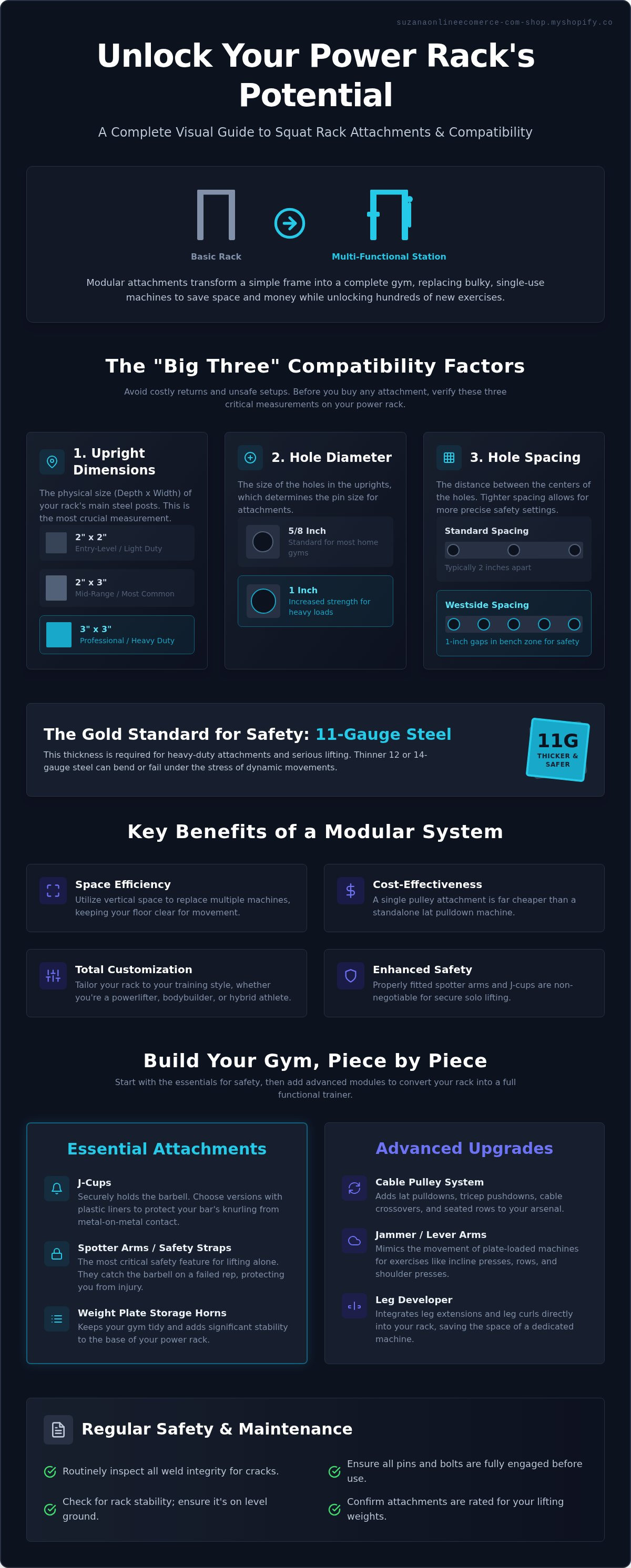
Determining if new squat rack attachments will fit your existing frame requires technical precision. You cannot rely on visual similarity alone. The industry currently operates on three primary variables: upright dimensions, hole diameter, and hole spacing. If any of these measurements are off by even a few millimeters, the attachment will either be dangerously loose or impossible to install. Precise compatibility is the difference between a professional-grade setup and a hazardous workout environment.
Upright dimensions refer to the physical size of the steel posts. Entry-level racks often use 2x2-inch steel, while mid-range models utilize 2x3-inch tubing. The professional standard in 2026 remains 3x3-inch uprights made from 11-gauge steel. This heavy-duty construction is necessary for supporting complex modular systems like lever arms or heavy cable pulleys. If you're using thinner 12 or 14-gauge steel, some heavy attachments may cause the uprights to deflect or bend under load during explosive movements.
Pin sizes are equally critical. Most home gym equipment uses either 5/8-inch or 1-inch pins. A 5/8-inch pin is standard for most residential setups, but 1-inch pins offer increased shear strength for high-load applications. Finally, consider hole spacing. Westside spacing, which features 1-inch gaps through the bench press zone, allows for much finer safety adjustments than the standard 2-inch spacing found on basic models. This allows you to set your safety bars at the exact height needed to protect your neck and chest without limiting your range of motion.
Measuring Your Rack Correctly
To verify your specs, use a digital caliper or a standard tape measure. Measure the outer width of the upright and the diameter of the accessory holes. It is vital to identify if your rack uses metric or imperial measurements. A 75mm upright might look like a 3-inch post, but imperial attachments will often rattle on metric steel. Checking these details ensures you select the right fitness equipment for your specific cage. Never assume that two different brands are compatible just because they look identical in photos.
The Compatibility Matrix
The risks of using "close enough" fitments are significant. Forcing a metric attachment onto an imperial rack can damage the powder coating or compromise the pin's integrity. Conversely, a 5/8-inch pin inside a 1-inch hole creates excessive play, which can lead to catastrophic failure during a heavy lift. Always match the pin size to the hole diameter exactly. If you are unsure, consult the manufacturer's technical sheet before purchasing any squat rack attachments to guarantee a secure, professional fit. Precise measurements are the only way to avoid the hassle of returns and the danger of equipment failure.
Top 5 Essential Squat Rack Attachments for Home Gyms
Choosing the right squat rack attachments is a matter of prioritizing safety and exercise versatility. You don't need every available accessory to have a professional setup. Instead, focus on high-utility components that replace large, standalone machines. This strategic approach ensures your gym remains functional without becoming cluttered or exceeding your budget.
Foundational Safety Attachments
J-cups are the most basic yet critical component of any rack. While standard J-cups are functional, sandwich J-cups provide superior protection for your home gym equipment. They feature UHMW plastic on all contact points, preventing metal-on-metal contact that ruins barbell knurling and scratches the rack's finish. For those who frequently adjust their bar position, roller J-cups allow you to center the barbell easily even when it's loaded with heavy weight.
Solo lifters must prioritize safety straps or spotter arms. Safety straps are generally superior to traditional pin-pipe safeties because they are quieter and protect the barbell from impact damage if a lift is failed. When selecting spotter arms, verify the weight capacity ratings. Most professional-grade arms are rated for at least 800 to 1,000 lbs, provided they are used on 11-gauge steel uprights. These squat rack attachments provide the peace of mind necessary to push for new personal records without a human spotter present.
Functional Performance Add-ons
Once safety is established, focus on expanding your exercise library. A landmine attachment is one of the most cost-effective upgrades available. It bolts to the base of your rack and enables rotational movements, T-bar rows, and landmine presses. This single piece of hardware replaces several dedicated rowing and pressing machines while taking up almost no additional floor space. It's a professional solution for building core stability and explosive power.
Moving beyond basic bars and plates, advanced squat rack attachments allow for specialized movements typically reserved for commercial facilities. These components turn a simple cage into a high-performance ecosystem. In 2026, modularity has reached a point where you can replicate almost any machine-based movement without leaving your home. It's about maximizing the utility of every square inch of steel you own.
The Power of Cable Attachments
Cable pulley systems are the most impactful upgrade for lifters wanting to add lat pulldowns and low rows. You can choose between plate-loaded systems, which use your existing iron, or selectorized weight stacks for faster transitions. These systems apply the same biomechanical principles found in professional machines for weight training, providing constant tension throughout the range of motion. This tension is difficult to achieve with free weights alone. To keep these systems smooth, you'll need to wipe down the guide rods with silicone spray monthly and inspect the nylon coating on the cables for any signs of fraying. Bushings should also be checked for debris to ensure the weight carriage slides without friction.
Heavy-Duty Customization
Jammer arms, also known as lever arms, provide a hybrid experience between free weights and machines. They're excellent for explosive pressing and rowing movements because the fixed path of motion allows for maximum power output without the stability requirements of a barbell. Another elite upgrade is the monolift attachment. This counterweighted hook system eliminates the need for the "walk-out" during squats. By staying in place, you save significant energy and reduce the shear stress on your knees and hips. This is a professional-grade solution for those pushing heavy loads who want to prioritize joint longevity.
Adding these heavy components changes the center of gravity of your rack. This is where weight plate storage pegs become functional safety tools rather than just organizers. By loading your heaviest plates onto the bottom pegs of the uprights, you create a natural anchor. This added mass prevents the rack from tipping or shifting when using jammer arms or performing high-tension cable work. It's an effective way to increase stability without always needing to bolt the frame into a concrete floor. Explore our full range of fitness equipment to find the perfect modular upgrades for your setup.
Safety and Maintenance for Rack Attachments
Owning a modular power station requires a commitment to regular equipment audits. While squat rack attachments are designed for durability, the dynamic forces they introduce can compromise the stability of your rack over time. This is especially true for accessories that extend away from the frame, such as jammer arms or dip stations. Safety in a home gym environment isn't a one-time setup; it's a continuous process of inspection and adjustment.
Bolting your rack to the floor is the most effective way to ensure stability when using heavy lever arms. These attachments create a significant amount of torque that can cause a rack to shift or tip during explosive movements. If your flooring doesn't allow for bolting, you must prioritize weight distribution. Keeping your heaviest plates on the lowest storage pegs helps, but it doesn't replace the security of floor anchors. Always test the stability of your rack with a light load before attempting a maximum effort lift with new accessories.
Structural Integrity Checks
Inspect the welds on every attachment once a month. Look for stress fractures or "spiderweb" patterns in the powder coating, as these are early indicators of metal fatigue. You should also verify the integrity of the pins and bolts used to secure your squat rack attachments. Never replace manufacturer-supplied pins with standard hardware store bolts. Standard bolts often lack the necessary tensile strength to handle the shear forces generated by heavy lifting. Additionally, use a level to ensure your uprights haven't shifted. An unlevel rack causes pins to sit at an angle, which increases the risk of catastrophic failure under load.
Long-Term Care for Your Gear
Garage environments are particularly harsh on steel equipment due to temperature fluctuations and humidity. Sweat is highly corrosive and can eat through powder coating if left to sit. Wipe down your gear after every session with a microfiber cloth and a mild, non-abrasive cleaner. For moving parts like pulley wheels and jammer arm pivots, apply a dry silicone lubricant every three months. This prevents friction-related wear and keeps the movement feeling professional and smooth.
Before you start your next session, perform a quick safety sweep. Check that all pins are fully seated and that the rack remains firmly anchored. Taking five minutes to verify your workout equipment can prevent injuries and extend the life of your investment. A well-maintained rack is a safe rack, allowing you to focus entirely on your performance rather than equipment failure.
Future-Proofing Your Strength Training Journey
Integrating the right squat rack attachments is the most efficient way to scale your home gym without requiring additional floor space. Success depends on precise technical compatibility, specifically matching your upright dimensions and pin sizes to ensure a secure fit. By prioritizing essential safety components like sandwich J-cups and then expanding into functional cable systems, you create a professional-grade training environment that evolves with your strength levels.
Regular maintenance and structural checks remain non-negotiable for long-term safety. At SUZANA SHOP, we provide a curated selection and direct expert advice to help you navigate these technical specifications. With our global shipping reach, home gym enthusiasts around the world can access professional-grade gear designed for high-performance training. Consistency and safety are the pillars of any successful fitness program.
Shop Professional Fitness Equipment at SUZANA SHOP and start transforming your basic rack into a multi-functional power station today. Your path to a more versatile and effective home workout starts with the right foundation.
Frequently Asked Questions
Do all squat rack attachments fit all racks?
No, squat rack attachments are not universal components. Compatibility depends on three specific variables: the outer dimensions of the steel uprights, the diameter of the accessory holes, and the vertical spacing between those holes. A 3x3-inch attachment won't slide onto a 2x3-inch rack, and a 1-inch pin won't fit through a 5/8-inch hole. You must verify these technical specifications before purchasing to ensure a secure fit and avoid equipment damage.
What is the difference between 2x2 and 3x3 squat racks?
The primary difference lies in structural stability and attachment variety. A 2x2 rack uses two-inch square steel tubing, which is suitable for standard residential use and lighter loads. A 3x3 rack uses three-inch tubing, providing a larger footprint for heavy-duty upgrades like jammer arms. Most professional-grade racks in 2026 use 3x3 steel with 11-gauge thickness to handle the dynamic forces of high-intensity training and complex modular systems.
Are 5/8-inch pins strong enough for heavy lifting?
Yes, 5/8-inch pins are more than sufficient for the vast majority of home lifters. These pins are typically rated to handle several hundred pounds of shear force, which exceeds the requirements for standard strength training. While 1-inch pins offer even higher weight capacities for elite powerlifters, the 5/8-inch standard is the benchmark for most residential fitness equipment. The quality of the steel used in the pin is more critical than the extra diameter.
Can I use attachments from one brand on a different manufacturer's rack?
Cross-brand compatibility is possible if the technical specifications match perfectly. If both racks use 3x3-inch uprights with 5/8-inch holes and 2-inch spacing, the accessories are often interchangeable. You should be cautious about metric versus imperial differences. Some manufacturers use 75mm steel while others use true 3-inch steel. This slight variation can cause attachments to fit poorly or rattle, which compromises stability during heavy lifting.
Do I need to bolt my squat rack to the floor to use dip bars?
Bolting is strongly recommended for safety, though it isn't always required for flat-foot racks with a large footprint. Dip bars create a cantilever effect that shifts the center of gravity outside the rack's base. If your rack is lightweight or has a narrow base, the frame could tip forward during a set. To prevent this without bolting, you can use weight storage pegs loaded with heavy plates on the rear uprights to act as a counterweight.
What are Westside hole spacings and why do they matter?
Westside spacing refers to accessory holes drilled at 1-inch intervals through the bench press and pull-off zones of the uprights. Standard racks often use 2-inch spacing, which can be too wide for precise safety adjustments. Westside spacing allows you to set your spotter arms or safety straps at the exact height needed to protect your chest while still allowing a full range of motion. This precision is vital for solo lifters training to failure.
How much weight can a standard J-cup attachment hold?
Weight capacity varies by design and steel quality. A standard entry-level J-cup is usually rated for approximately 500 to 800 lbs. Professional-grade sandwich J-cups, which feature reinforced steel and protective plastic liners, are often rated for 1,000 lbs or more. Always check the manufacturer's specific rating for your squat rack attachments. It's also important to ensure your rack's uprights are made of at least 11-gauge steel to support these heavy loads.
Is it better to buy a lat pulldown machine or a rack attachment?
For most home gym owners, a rack-mounted attachment is the superior choice. It saves significant floor space and is much more cost-effective than buying a standalone machine. Modern cable attachments provide a similar range of motion and weight capacity to commercial units. You should only consider a dedicated lat pulldown machine if you have a very large budget and enough square footage to accommodate a single-use piece of equipment without cluttering your area.