

Best Home Gym Weight Bench: 2026 Buyer’s Guide

Would you trust your physical safety to a piece of equipment that costs less than your weekly grocery bill? Selecting the right home gym weight bench is more than a simple furniture purchase; it's a critical safety investment for your strength training journey. Many lifters struggle with the fear of a bench collapsing under heavy load or simply don't have the floor space for bulky commercial units. It's easy to feel overwhelmed by the technical jargon surrounding incline, flat, and decline settings.
We understand that you want a stable, durable foundation that won't fail when you're pushing for a personal record. This 2026 buyer's guide delivers an expert-backed framework to help you choose the perfect bench for your specific goals and budget. You'll learn how to evaluate structural integrity, determine which exercises actually require adjustability, and find space-saving designs that don't sacrifice quality. We'll examine the latest industry standards and market trends to ensure your fitness investment provides long-term value.
Key Takeaways
- Understand why a dedicated, specialized platform is the essential structural foundation for safe resistance training at home.
- Determine whether your training goals require the extreme stability of a flat bench or the versatility of an adjustable incline/decline model.
- Learn how to evaluate technical specifications like steel gauge and weight capacity to ensure your equipment remains durable under heavy loads.
- Discover how to select a home gym weight bench with integrated wheels and vertical storage features to maximize limited floor space.
- Explore how to build a comprehensive fitness ecosystem by pairing your bench with specialized weight training machines and wellness products.
Why a Weight Bench is the Foundation of Your Home Gym
A home gym weight bench serves as the structural centerpiece for any serious strength training environment. Technically known as a utility bench, this equipment provides a stable, elevated platform specifically engineered to support both your body weight and the external load of dumbbells or barbells. While beginners might consider using household furniture like chairs or ottomans, these items lack the structural integrity required for resistance training. A dedicated bench ensures that your focus remains on muscle contraction rather than balancing on an unstable surface that could collapse.
Beyond safety, a bench offers significant biomechanical advantages. By elevating your torso, it allows your elbows to drop below the plane of your back during pressing movements. This increased range of motion leads to greater muscle fiber recruitment in the pectorals and anterior deltoids compared to floor presses. It's a versatile tool that facilitates everything from heavy chest presses to seated rows and even explosive step-ups. It isn't just a seat; it's a specialized performance tool.
The Difference Between Commercial and Home Benches
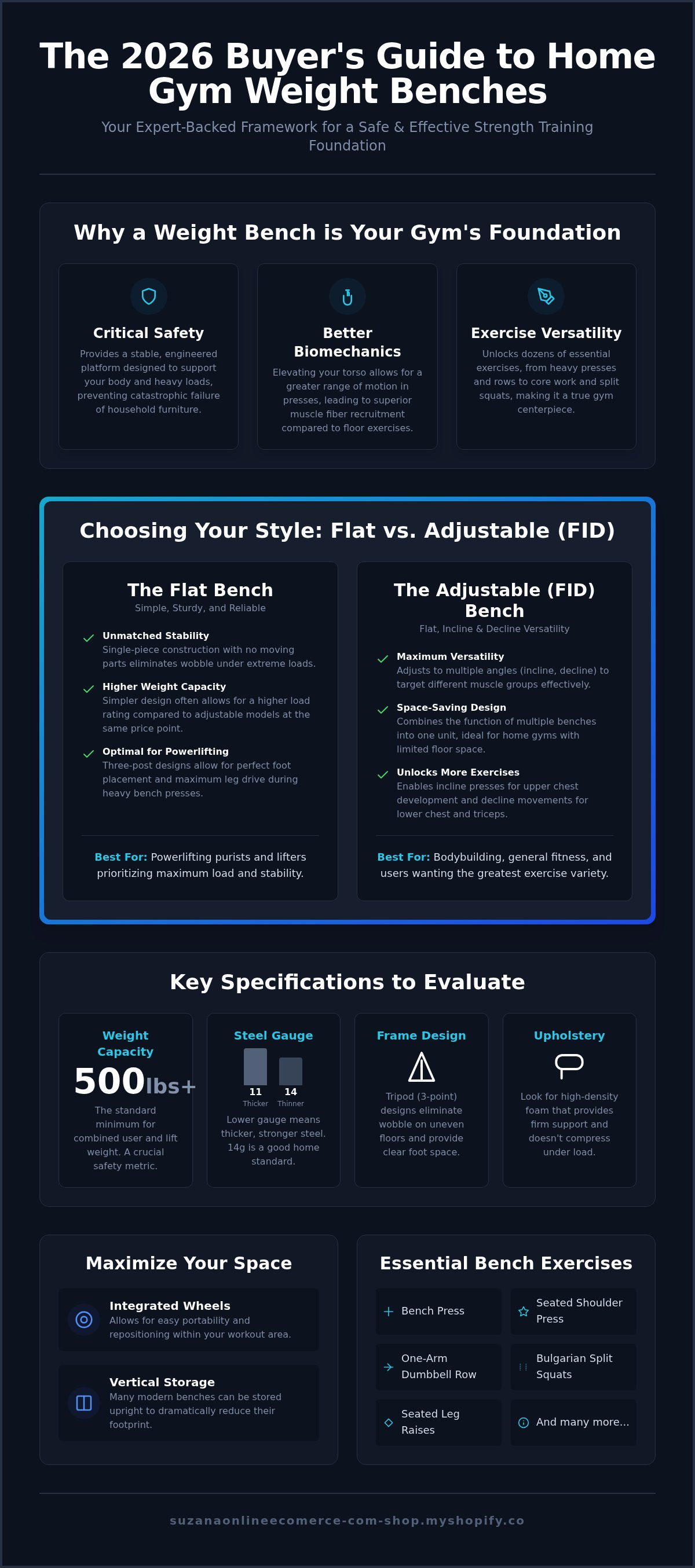
When selecting a bench for a home setting, weight capacity is the primary safety metric. For most users, a bench rated for at least 500 lbs is the standard minimum to account for combined body weight and lifting progress. Professional commercial units often use heavy 11-gauge steel, while home models might utilize 14-gauge steel to balance weight and durability. While 11-gauge is heavier, modern home designs often adopt a tripod frame style. This three-point contact system is popular because it eliminates wobbling on uneven garage floors while providing clear space for your feet during a bench press. High-density foam upholstery is another hallmark of quality equipment. It provides firm support that doesn't bottom out under heavy loads like soft household cushions.
Common Exercises That Require a Bench
The bench is essential for the heavy hitters of strength training: the bench press, seated shoulder press, and one-arm dumbbell rows. Without this elevation, these movements are either impossible or severely restricted in their effectiveness. You can also utilize the bench for lower body and core work, such as Bulgarian split squats or seated leg raises. Additionally, a high-quality bench serves as a stable anchor point for other fitness equipment like resistance bands. This adaptability makes the home gym weight bench the most utilized piece of gear in a functional setup.
Flat vs. Adjustable Benches: Choosing the Right Style
Selecting the correct style of home gym weight bench is a decision that dictates your future exercise variety and the stability of your lifts. You generally have two primary options: the classic flat bench or the adjustable model, often referred to as an FID bench. Your choice should align with your specific fitness goals, whether you're chasing a heavy powerlifting total or focusing on bodybuilding aesthetics. Balancing functionality with your available budget is key to long-term satisfaction. While flat benches offer unmatched simplicity, adjustable versions provide the mechanical flexibility needed to target specific muscle groups from multiple angles.
The Flat Bench: Simple, Sturdy, and Reliable
Flat benches are the gold standard for pure stability. Because they lack hinges and adjustment mechanisms, they offer a solid, single-piece surface that won't wobble under extreme weight. This simplicity often translates to higher weight capacities, which is a vital safety factor when you're progressing in strength. Many lifters prefer the "three-post" design found on professional flat benches. This configuration features a single front leg, which allows for optimal foot placement and better leg drive during a heavy press. If you're a powerlifting purist or working with a tighter budget, a high-quality flat home gym weight bench provides the most reliability per dollar spent. It's a straightforward tool that performs its primary job without compromise.
The Adjustable (FID) Bench: Maximum Versatility
An FID bench stands for Flat, Incline, and Decline. This style is the ultimate choice for those who need to maximize a small space by combining several functions into one unit. By adjusting the back pad, you can target the upper chest with incline presses or the lower chest and triceps with decline movements. When evaluating these, look for expert recommendations on weight benches to understand the trade-offs in construction quality. You'll typically encounter two adjustment styles: ladder systems and pop-pins. Ladder systems are incredibly fast to change, while pop-pins offer a more locked-in feel. One detail to watch for is the "pad gap," which is the space between the seat and the backrest when the bench is flat. High-quality designs minimize this gap to prevent discomfort. While adjustable benches are more complex, they allow for a complete bodybuilding routine in a single footprint. You can find a wide selection of comprehensive weight training options at SUZANA SHOP to complement your bench setup.
Key Specifications to Evaluate Before You Buy
Technical specifications often look like a confusing list of numbers, but they determine the safety and longevity of your investment. When evaluating a home gym weight bench, you must look beyond the aesthetics and focus on structural engineering. A bench that feels stable during a light warm-up might flex or wobble when you approach your maximum lifting capacity. Understanding these metrics allows you to distinguish between a budget-friendly consumer model and a piece of equipment that will last a lifetime.
Weight capacity is your primary safety metric. You should calculate this by adding your current body weight to your long-term lifting goals. If you weigh 200 lbs and aim to bench press 300 lbs, a bench with a 500-lb limit is at its absolute maximum. It's safer to choose a model that offers a significant buffer. Additionally, pay attention to the height from the floor. Most professional standards, including those used in competitive powerlifting, favor a height of approximately 17 inches. This height is ideal for most users to maintain proper leg drive, ensuring your feet stay flat on the floor for maximum stability.
Understanding Steel and Construction
The frame's durability is dictated by the steel gauge. In the world of fitness equipment, a lower gauge number indicates thicker steel. An 11-gauge steel frame is considered tank-like and is the standard for commercial facilities. Many high-quality home models use 14-gauge steel, which is lighter but still sufficiently strong for most residential use. You should also examine how the bench is put together. Welded joints are generally superior for permanent stability, though bolted joints allow for easier shipping and assembly. If you choose a bolted model, ensure the hardware is high-grade to prevent loosening over time. Finally, look for a powder-coated finish. This electrostatically applied coating is far more resistant to sweat, humidity, and rust than standard spray paint.
Pad Quality and the "Pad Gap" Issue
The surface you lie on is just as important as the steel beneath it. Look for high-density foam that provides firm support; if the foam is too soft, your shoulders will sink through to the plywood base. The vinyl covering should be grippy rather than slick to prevent your back from sliding during heavy presses. A major pain point for many users is the "pad gap" found on an adjustable home gym weight bench. This is the space between the seat and the backrest when the bench is in a flat position. While some gap is necessary for the hinge to function, a gap wider than two inches can be uncomfortable for your lower back. Some premium designs use a sliding mechanism to minimize this space. You might also consider tapered pads, which are wider at the lumbar area for support but narrower at the shoulders to allow for a greater range of motion.
Maximizing Space and Safety in Your Workout Area
In a commercial gym, equipment is often bolted to the floor. In a residential setting, you're likely working within a multi-use room or a crowded garage. This makes the portability of your home gym weight bench a critical consideration. Integrated wheels and a sturdy handle are non-negotiable features if you need to move your gear frequently. These additions allow you to roll the bench into a corner or against a wall once your training session is complete.
Vertical storage is the most effective way to reclaim your floor space. High-quality modern benches are often designed to stand securely on their end, reducing the occupied area to just a few square inches. Beyond storage, you must consider floor protection. Placing a dense rubber mat under your bench prevents the frame from shifting during heavy lifts and shields your flooring from scratches. This simple addition is a key part of organizing your workout equipment for long-term safety and home maintenance.
Maintenance for Longevity
A consistent maintenance routine extends the life of your equipment and ensures user safety. Sweat is naturally corrosive; the salts can cause vinyl upholstery to harden and crack over time. Wipe the pads down with a damp cloth and mild soap after every workout to keep the material supple. You should also perform a monthly "bolt check." The vibrations from dropping weights or shifting your body can loosen hardware. Tightening these connections prevents the frame from developing a dangerous wobble. For adjustable models, applying a small amount of silicone lubricant to the hinges every few months ensures smooth, silent transitions between angles.
Safe Lifting Practices
Safety begins before you pick up a weight. Always verify that the adjustment pin or ladder is fully engaged before loading the bench. An improperly seated pin can lead to a sudden collapse under load. During the lift, maintain proper foot placement to create a stable tripod with your body. Your feet should remain flat on the floor to provide the necessary leverage for heavy presses. Finally, learn to recognize the signs of equipment failure. If you notice hairline cracks in the welds, visible warping of the steel frame, or significant thinning of the padding, it's time to replace the unit. You can find durable, professional-grade replacements in the fitness equipment collection at SUZANA SHOP.
Completing Your Home Setup with SUZANA SHOP
Building a high-performance training space involves more than just selecting a single piece of equipment. While the home gym weight bench is your primary structural foundation, integrating it with specialized machines for weight training allows for a more comprehensive full-body routine. Machines provide guided paths of motion that complement the free-weight versatility of your bench. This combination ensures you can safely target muscle groups from angles that dumbbells alone might not reach. It's about creating a layered approach to strength that challenges your body while minimizing the risk of injury.
A professional home gym isn't just about the heavy lifting. It's about creating an environment where every aspect of your physical health is supported. SUZANA SHOP offers a curated variety of accessories to round out your space, from high-density yoga mats for floor work to precision kitchen tools designed for efficient meal preparation. Having access to these diverse categories from a single professional source simplifies the process of building your personal fitness sanctuary. The convenience of global e-commerce means you can source high-quality gear regardless of your location.
The Synergy of Fitness and Wellness
True strength is built during the hours between your workouts. Developing consistent health and wellness habits is what allows your body to repair the micro-tears caused by resistance training. Recovery isn't a passive state; it's an active part of your program. By integrating essential wellness products into your post-workout routine, you can reduce muscle soreness and improve sleep quality. This holistic approach ensures that your hard work on the home gym weight bench translates into visible, long-term results. A balanced life requires a home environment that supports both intense physical exertion and deep mental relaxation.
Why Order from SUZANA SHOP?
To further support your recovery and relaxation goals, incorporating a home sauna from inSPORTline can be an effective way to soothe tired muscles and enhance your overall wellness routine after a strenuous workout.
SUZANA SHOP operates as a global online retailer with a focus on professional, objective guidance. We provide a diverse catalog that spans fitness equipment, wellness items, and even home accessories like kitchenware and jewelry. This variety allows you to order your training gear and lifestyle essentials simultaneously, benefiting from our global shipping coverage. We don't just sell products; we provide the tools necessary for a complete lifestyle transformation. Our approach is direct and functional, ensuring you receive clear instructions and high-quality equipment without unnecessary fluff. Whether you're upgrading your current setup or starting from scratch, we offer the convenience and variety needed to support your fitness journey at every stage.
Elevate Your Strength Training Environment
Selecting the right home gym weight bench is a decisive step toward achieving your long-term fitness objectives. By prioritizing structural integrity through high-gauge steel and appropriate weight capacities, you ensure your safety during every heavy set. Whether you choose the unwavering stability of a flat bench or the versatility of an adjustable model, your equipment should serve as a reliable partner in your strength journey. It's essential to remember that consistent maintenance and smart storage solutions preserve the lifespan of your gear and the safety of your workout space.
Building a comprehensive training sanctuary is more efficient when you have access to a curated selection of professional equipment and wellness essentials. We provide global shipping on all fitness gear and offer professional customer support for all orders. This allows you to focus entirely on your performance while we manage the logistics of your home setup. Shop our full collection of Fitness and Wellness gear at SUZANA SHOP and start refining your personal gym today. Your commitment to quality equipment is a lasting investment in your physical potential.
Frequently Asked Questions
Is a flat bench or an adjustable bench better for beginners?
An adjustable bench is often the superior choice for beginners because it offers the most versatility in a single piece of equipment. While a flat bench is simpler and often more stable for heavy powerlifting, an adjustable model facilitates incline and decline movements that target different muscle groups. This flexibility helps new lifters experiment with various routines without needing to purchase multiple specialized platforms early in their fitness journey.
How much weight should a home gym bench be able to hold?
A high-quality home gym weight bench should have a minimum total weight capacity of 500 lbs. This figure must include both your body weight and the maximum amount of weight you intend to lift. For advanced trainees or those focusing on heavy powerlifting, seeking a bench with a capacity of 1,000 lbs or more provides an essential safety buffer. Always verify that the manufacturer's rating is a static load limit.
Do I need a decline bench for a complete chest workout?
You don't strictly need a decline bench for a complete chest workout, though it is highly effective for targeting the lower pectoral muscles. Most lifters can achieve comprehensive chest development using flat and incline presses alone. However, if your goal is specific aesthetic refinement or if you want to vary your triceps training, an adjustable bench that offers a decline setting provides a significant advantage without requiring additional floor space.
How do I stop my weight bench from wobbling?
To eliminate wobbling, start by placing your bench on a flat, level surface such as a dense rubber gym mat. Many stability issues arise from uneven garage floors rather than the equipment itself. If the bench still feels loose, perform a thorough check of all assembly bolts and tighten them with a socket wrench. For adjustable models, ensure the locking pin is fully engaged and the hinge mechanism hasn't developed excessive play.
What is the best height for a weight bench?
The industry standard height for a home gym weight bench is approximately 17 inches from the floor to the top of the pad. This specific height is used in competitive powerlifting because it allows most users to keep their feet flat on the ground. Maintaining this contact is crucial for generating leg drive and ensuring a stable, safe base during heavy pressing movements. Benches that are too tall can cause your back to arch excessively.
Can I use a weight bench without a squat rack?
You can certainly use a weight bench without a squat rack by focusing on dumbbell exercises, bodyweight movements, and support-based lifts. Exercises like dumbbell chest presses, seated shoulder presses, and Bulgarian split squats don't require a rack for safety. However, if you plan to perform heavy barbell bench presses, a rack or stand becomes essential to safely unrack and re-rack the weight without risking injury to your shoulders or chest.
How often should I clean the upholstery on my gym bench?
You should wipe down the upholstery after every single workout session to remove sweat and oils. This simple habit prevents the buildup of bacteria and protects the vinyl from becoming brittle or cracking over time. Use a damp cloth with a mild, non-abrasive soap solution rather than harsh chemicals. Regular cleaning not only maintains hygiene but also preserves the grip of the pad, which is vital for keeping your shoulders locked.
Are foldable weight benches safe for heavy lifting?
Foldable benches are safe for lifting as long as you stay well within the manufacturer's specified weight limits. While they offer excellent space-saving benefits, the extra hinges and locking pins can introduce slight movement compared to a welded, fixed-frame bench. If you are a heavy lifter moving several hundred pounds, a non-folding model is generally safer. Always prioritize a high-gauge steel frame and robust locking mechanisms when choosing a foldable design.