

Best Home Rowing Machines: Complete Buyer’s Guide (2026)

The best rowing machine for home is defined by your living room floor plan and your neighbors' patience as much as your own fitness goals. It's a bold claim, but it's true. You probably already know that rowing offers one of the most efficient full-body workouts available today. However, the anxiety of choosing between air, water, or magnetic resistance can be paralyzing. You don't want to invest in a piece of equipment that's too loud for your apartment or too bulky for your spare bedroom.
This guide provides a professional decision framework to help you select the perfect rowing machine for home based on your specific environment and budget. We'll break down the technical differences between resistance systems, offer practical storage solutions for small spaces, and rank the quietest models on the market. By the end of this article, you'll have a clear path to building your ideal home gym setup without the guesswork. You'll gain the technical knowledge needed to make a functional investment that fits your lifestyle and your space.
Key Takeaways
- Understand how a single rowing session engages 86% of your muscle groups while providing a low-impact alternative to running for joint longevity.
- Evaluate the technical differences between air, water, and magnetic resistance to find the best rowing machine for home use.
- Learn to measure your active and stored footprint requirements to prevent equipment from overwhelming your living area.
- Identify the specific noise levels of different machines to ensure your workouts don't disturb your household or neighbors.
- Discover the essential setup steps, including proper flooring and ventilation, to create a functional and professional home gym environment.
Why a Rowing Machine is the Ultimate Home Fitness Investment
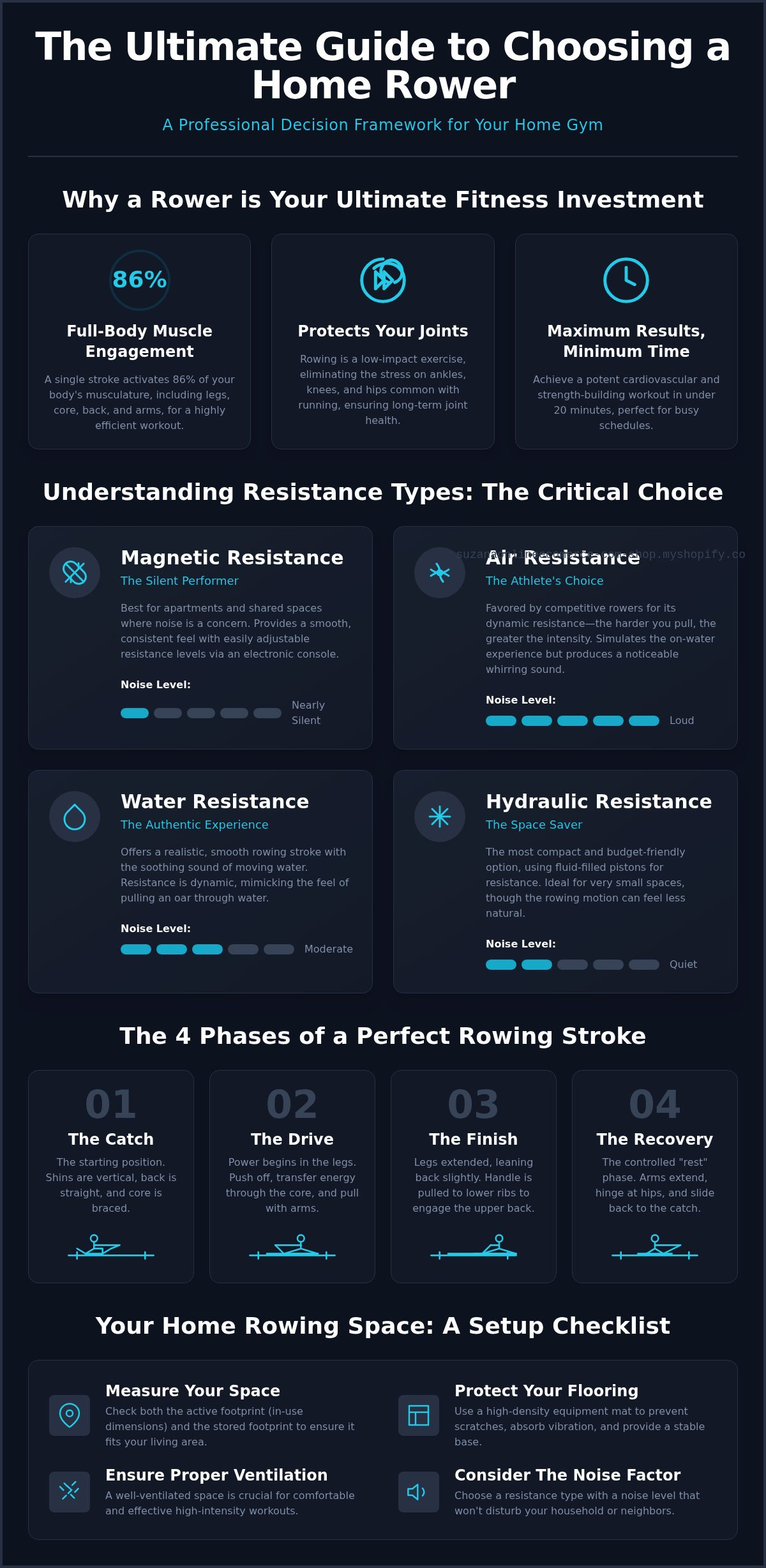
A rowing machine for home is one of the most efficient tools for achieving peak physical condition. Unlike equipment that isolates specific muscle groups, a rower engages 86% of your body's musculature in a single stroke. This includes major groups like the quadriceps, hamstrings, glutes, lats, and abdominals. Because you're utilizing so much muscle mass, your heart rate climbs quickly, providing a potent cardiovascular challenge alongside a strength-building stimulus. It's a total-body solution that eliminates the need for multiple machines.
For many, the primary draw is the low-impact nature of the exercise. Running on pavement or even a treadmill creates significant stress on the ankles, knees, and hips. Rowing eliminates this impact entirely. It allows you to push your limits without the risk of repetitive stress injuries, making it a sustainable choice for fitness as you age. Additionally, the time-saving benefits are undeniable. In a world where schedules are tight, achieving a full-body, high-intensity workout in under 20 minutes is a major advantage for any professional.
The Science of the Rowing Stroke
Understanding the mechanics of the stroke is essential for maximizing your results. The movement is broken down into four technical phases that require focus and coordination:
- The Catch: This is the starting position. Your shins are vertical, your back is straight, and your core is braced to handle the initial resistance.
- The Drive: Power begins in the legs. You push off the footplates, transitioning the energy through your core and finally pulling with your arms.
- The Finish: Your legs are extended, and you lean back slightly. The handle is pulled toward your lower ribs to engage the upper back.
- The Recovery: This is the "rest" phase. You move your arms away, hinge at the hips, and slide back to the catch in a controlled manner.
This cycle improves aerobic capacity and muscular endurance simultaneously. It forces the heart to pump blood to both the upper and lower body, which is far more taxing than lower-body-only exercises.
Rowing for Weight Loss and Wellness
If weight management is your goal, a rowing machine for home is a top-tier solution. The calorie-burning potential is significantly higher than walking or moderate cycling because the effort is distributed across the entire body. However, the benefits extend beyond the scale. The rhythmic, repetitive motion of the stroke often creates a meditative effect, helping to clear the mind. Integrating these sessions into a comprehensive health and wellness routine provides a balanced approach to physical and mental health. It's a professional-grade workout you can perform in your own living space.
Understanding Resistance Types: Air, Magnetic, and Water Rowers
Selecting the right resistance system is the most critical technical decision you'll make when buying a rowing machine for home use. The mechanism dictates the noise level, the footprint, and the overall feel of the workout. There are four primary types of resistance available on the market today, each serving a different fitness profile and living situation.
Magnetic resistance is widely considered the gold standard for quiet, apartment-friendly workouts. These machines use a magnetic brake system to create tension against the flywheel. Because the parts don't touch, the operation is nearly silent. Air resistance, on the other hand, uses a fan to create drag. It offers "dynamic" resistance, which means the intensity increases automatically as you pull harder. For those with limited space, hydraulic rowers offer a compact, budget-friendly option using fluid-filled pistons, though they don't provide the smooth glide of larger models.
You can browse professional fitness equipment that utilizes these specific technologies to find the right fit for your goals.
Magnetic vs. Air: Which is Right for You?
Noise level is usually the deciding factor between these two systems. Magnetic rowers are the best choice for early morning sessions or shared households because they don't produce the loud whirring sound associated with fans. However, air rowers are often preferred by competitive athletes. The resistance is speed-dependent, which provides a more realistic simulation of rowing a boat. Maintenance requirements also differ. Air rowers require you to vacuum the fan cage to prevent dust buildup from affecting performance. Magnetic units are generally lower maintenance but rely on electronic consoles to change resistance levels.
The Water Rower Experience
Water resistance systems provide a unique sensory experience that many find superior to mechanical alternatives. These machines use paddles housed in a water tank to create drag. Every stroke produces a rhythmic "whoosh" sound that can be quite meditative. Beyond the sound, water rowers are often praised for their aesthetics. Many models feature high-quality wooden frames that allow them to blend into home decor more effectively than steel frames. Maintaining these systems requires adding water treatment tablets every few months to prevent algae growth. They offer an "infinite" resistance feel, as the drag naturally scales with your effort without the need for manual adjustments.
Key Features to Evaluate for a Home Environment
A rowing machine for home is a significant physical presence in your living space. Unlike a gym environment, your home requires you to balance performance with practical constraints like floor area and acoustic impact. You must distinguish between the active footprint and the stored dimensions before making a purchase. Most professional-grade rowers require a clearance of at least 8 feet in length and 2 feet in width during operation. Failing to account for the "finish" phase of the stroke, where your body leans back, can lead to cramped and ineffective workouts.
Noise management is the second technical hurdle. If you live in a shared household or an apartment, decibel levels are a priority. Magnetic rowers typically operate between 40 and 50 decibels, which is comparable to a quiet conversation. In contrast, air rowers often exceed 70 decibels. Beyond sound, consider the console's connectivity. Modern monitors range from basic LCD screens that track strokes per minute to Bluetooth-enabled smart screens that sync with fitness apps. These digital tools are essential for tracking long-term progress and maintaining motivation.
Maximizing Space with Foldable Designs
If you don't have a dedicated gym room, storage flexibility is mandatory. There are two primary ways to save space: vertical storage and folding mechanisms. Vertical storage is generally more stable because it doesn't involve a structural hinge in the middle of the rail. You simply lift the back of the machine and stand it upright against a wall. If you choose a folding model, ensure the locking pin is heavy-duty to prevent frame flex during high-intensity sprints. Always verify that the machine includes high-quality transport wheels. These allow you to move the equipment without damaging hardwood floors or straining your back.
The Importance of a Quality Ergometer
The build quality of the rail and seat determines the smoothness of your workout. Dual-rail systems offer a wider base and more lateral stability, while mono-rail systems are the industry standard for competitive training. Seat height is a frequently overlooked ergonomic feature. Standard rails sit low to the ground, but models with elevated seats (14 to 20 inches) are much easier to mount and dismount, especially for users with knee or hip mobility issues. An ergometer serves as the technical standard for measuring the specific output of work during each rowing stroke. Durable footplates with adjustable straps and ergonomic handles with a slight curve will prevent blisters and foot slippage during longer sessions.
Setting Up Your Home Rowing Space for Success
Once you've selected the right rowing machine for home, the physical preparation of your workout area is the next step toward a professional training experience. A common mistake is placing the equipment directly on hardwood or carpet without a dedicated mat. A high-quality equipment mat provides a non-slip surface that prevents the machine from "walking" during high-intensity sprints. It also acts as a secondary sound dampener, catching vibrations before they travel through the floor. This is particularly useful in apartments where floor-borne noise can disturb neighbors.
Safety clearances are equally important. You should maintain 2 to 3 feet of open space on all sides of the rower. This area ensures you can safely mount and dismount the machine and allows for the slight lateral movement that occurs during a powerful drive. Ventilation is another technical requirement. Rowing is a high-output activity that generates significant body heat; positioning your machine near a window or under a ceiling fan is necessary for optimal cooling. Without proper airflow, your core temperature will rise quickly, which can shorten your sessions prematurely.
Routine maintenance keeps the machine functional for years. You must wipe down the rail with a damp cloth after every session to prevent dust from grinding into the rollers. Monthly inspections of the chain or strap for signs of wear are also recommended to ensure safe operation. If you use a water rower, check the clarity of the water every few months and add purification tablets as needed to prevent algae growth.
Essential Accessories for Your Home Gym
Your setup should include more than just the rower itself. A dense equipment mat is a non-negotiable first purchase to protect your property and stabilize the frame. Many users find it helpful to supplement their routine with other workout equipment, such as resistance bands, to activate the glutes and shoulders before starting a session. Post-workout recovery is just as vital. Keep wellness items like foam rollers or massage balls nearby to address muscle tightness immediately after you finish your rows. Having these tools within reach makes it easier to stick to a complete fitness protocol.
Optimizing Your Workout Environment
The atmosphere of your room directly impacts your consistency. Bright, natural lighting helps maintain energy levels, while a dedicated tablet or phone mount allows you to follow training programs or monitor heart rate data in real-time. If your rower is in a multi-purpose room, try to create a "wellness corner" by organizing your gear in a way that signals it's time for focused effort. This mental separation helps you transition from household tasks to a professional-grade training mindset. Small adjustments, like adding a dedicated towel rack or a water bottle holder, can make the space feel more functional and inviting.
You can find all the components needed for a complete setup by exploring the professional fitness equipment collection at SUZANA SHOP.
Choosing Your Perfect Rower at SUZANA SHOP
After identifying the technical requirements for a rowing machine for home, the final step is sourcing a unit that meets these professional standards. SUZANA SHOP curates its "Fitness Equipment" category specifically for the at-home enthusiast who prioritizes functionality over gimmicks. Instead of overwhelming you with consumer-grade novelties, the focus remains on professional-grade gear built for daily use. Purchasing your home gym equipment from a single, reliable source ensures compatibility between your machine, your protective flooring mats, and your recovery tools.
Global e-commerce reach ensures that your equipment is handled with professional care from the warehouse to your doorstep. You can expect clear communication regarding shipping timelines for large-scale items, which is essential when coordinating the delivery of heavy rowing frames. If technical questions arise during the selection or assembly process, the support team provides direct, functional guidance to help you get started. This centralized approach saves time and reduces the logistical friction often associated with building a home gym.
Building a Complete Home Gym
Rowing is an exceptional cardiovascular tool, but a balanced fitness routine often requires supplemental resistance. You can pair your new rower with machines for weight training to target specific strength goals that complement your rowing endurance. Adding wellness products like foam rollers or massage tools to your cart allows for a holistic approach to physical health. SUZANA SHOP simplifies the e-commerce experience for fitness enthusiasts by offering a streamlined, professional selection of all necessary home gym components in one location.
Final Tips for Your Purchase
Always review the warranty details and return policies before finalizing your order, especially for large fitness equipment. These documents provide clarity on long-term support and part replacement. Reading customer reviews offers real-world insights into how a specific rowing machine for home performs in typical living environments. Once you've verified the machine's dimensions and noise profiles against your specific space, you're ready to make an informed decision. Taking the first step today by ordering your rowing machine is the most direct path to establishing a sustainable, high-performance fitness habit in your own home.
Transform Your Living Space Into a High-Performance Training Ground
Selecting the right rowing machine for home is a technical decision that balances your fitness goals with the practicalities of your environment. You've learned how magnetic resistance provides a silent workout for shared spaces and how proper room preparation, including equipment mats and ventilation, ensures long-term success. By focusing on professional-grade ergonomics and functional storage, you're making an investment that supports both your physical health and your lifestyle. It's not just about buying a machine; it's about creating a sustainable routine that fits your home without compromise.
SUZANA SHOP offers a curated selection of professional-grade home gym gear alongside a comprehensive catalog of wellness and pet supplies. With global shipping available on all wellness and fitness items, you can build your complete training environment with confidence from any location. Our professional approach ensures that you receive functional equipment designed for durability and high performance. You don't have to settle for consumer-grade gear when professional solutions are accessible globally.
Browse our selection of professional fitness equipment at SUZANA SHOP and take the first step toward a stronger, healthier version of yourself today. You have the framework; now it's time to build your ideal home gym.
Frequently Asked Questions
Is a rowing machine better than a treadmill for home use?
A rowing machine is often superior for home use because it offers a full-body workout with zero joint impact. While a treadmill focuses primarily on the lower body, rowing engages your core, back, and arms simultaneously. This leads to higher caloric expenditure in less time than traditional walking. Additionally, many rowers can be stored vertically, making them more space-efficient than bulky treadmill decks that require a permanent floor footprint.
How much space do I really need for a rowing machine?
You generally need an active area of 9 feet in length and 3 feet in width to operate a rowing machine for home safely. This allows for the full extension of your body during the finish phase without hitting walls. For storage, many models only require a 2-foot by 2-foot corner when stood vertically. Always measure your ceiling height if you plan on vertical storage to ensure the rail clears the top.
Are magnetic rowing machines truly silent?
Magnetic rowers are the quietest option available, though they aren't completely silent. You'll still hear the mechanical whir of the internal flywheel and the sound of the seat rollers sliding along the metal rail. These sounds typically range between 40 and 50 decibels, which is equivalent to a quiet conversation. They're ideal for apartment dwellers who need to exercise while others in the household are sleeping or watching television.
Can I lose belly fat by using a rowing machine at home?
You can effectively reduce body fat, including in the abdominal area, by maintaining a consistent rowing routine and a balanced diet. Rowing is a high-calorie activity that creates the necessary energy deficit for weight loss. While you can't "spot reduce" fat from your belly specifically, the full-body engagement helps build lean muscle. This increased muscle mass raises your resting metabolic rate, making it easier to manage your weight over time.
How often should I row if I am a beginner?
Beginners should aim for three sessions per week, lasting 15 to 20 minutes each. It's essential to prioritize technique over intensity during the first month to prevent lower back strain. As your muscular endurance improves, you can gradually increase the duration or add a fourth weekly session. Always allow at least one day of rest between workouts to let your muscles recover and adapt to the new physical demands.
Do I need to be in good shape to start using a rowing machine?
No, rowing is one of the most accessible exercises for individuals at any fitness level. Because the movement is seated and low-impact, it puts minimal stress on your joints compared to running or jumping. You control the intensity through your own effort and the machine's resistance settings. This makes it an excellent entry point for those returning to fitness or recovering from minor injuries who need a safe, effective workout.
What is the best way to maintain a water-resistance rowing machine?
Maintaining a water-resistance rowing machine for home requires consistent care of the tank and the rail. You must add a purification tablet to the water every six months to prevent algae growth and keep the tank clear. Additionally, wipe the rail after every workout to prevent dust buildup from damaging the seat rollers. Periodically check the tank seals for leaks and ensure the bungee cord or strap remains free of fraying.
Should I choose a chain or a strap drive for my home rower?
A strap drive is generally better for a home environment because it operates much more quietly than a metal chain. Straps don't require regular lubrication with oil, which keeps your workout area cleaner. While chains are known for their extreme durability in commercial gym settings, they produce a distinct mechanical noise and can rust if not maintained. For most home users, the smooth, quiet pull of a high-quality reinforced strap is the professional choice.