

How to Build Grip Strength at Home: The Complete 2026 Guide

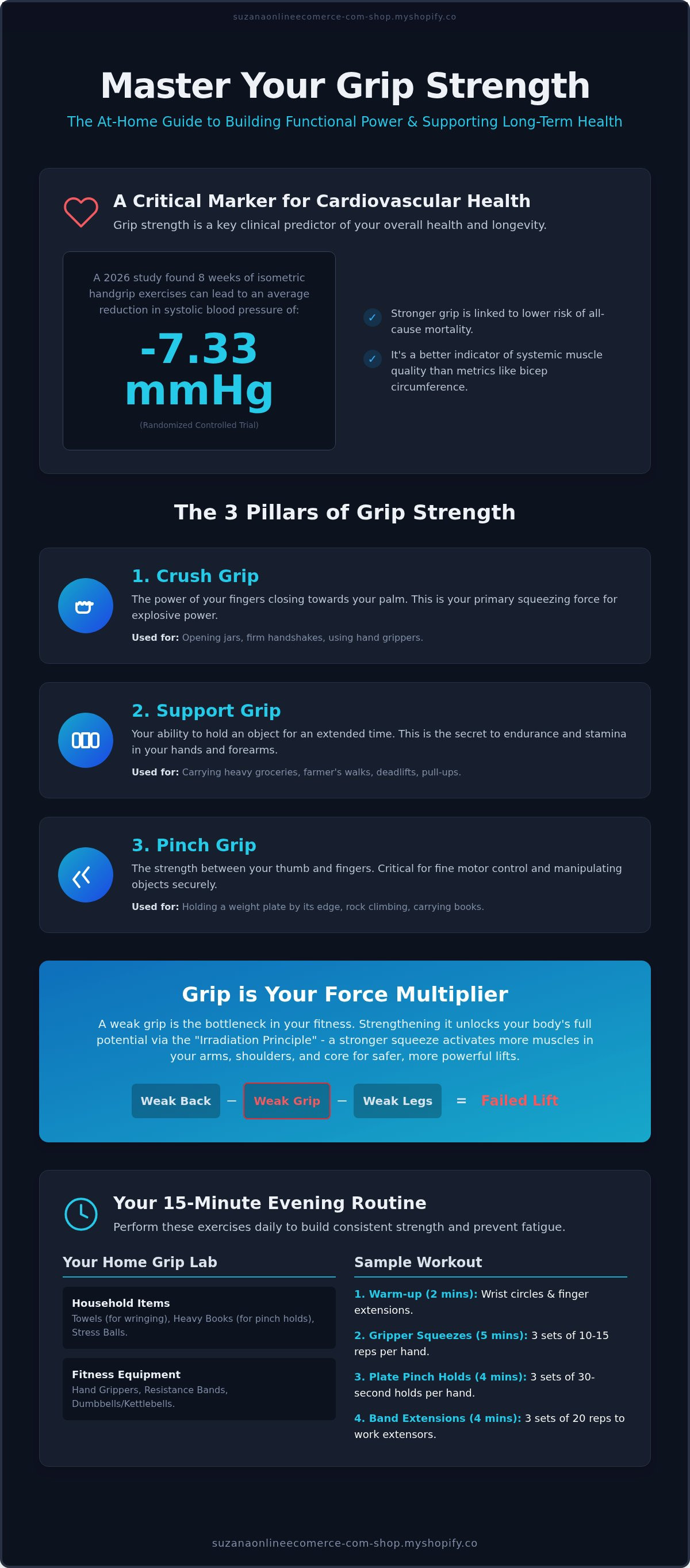
Did you know that a 2026 randomized controlled trial found that just eight weeks of home-based isometric handgrip exercises can reduce systolic blood pressure by an average of 7.33 mmHg? Grip strength is no longer just about a firm handshake; it's a critical indicator of your overall cardiovascular health and functional longevity. If you've ever felt your hands fail during a heavy set of deadlifts or experienced nagging wrist fatigue after a long day at the keyboard, you understand the frustration of a weak link. You want to feel capable and strong, but it's hard to know which exercises or tools actually deliver results.
Learning how to build grip strength at home doesn't require bulky machines or expensive memberships. This guide provides the master techniques you need to develop powerful hand and forearm strength using basic fitness equipment. You'll discover how to eliminate hand fatigue and noticeably improve your lifting capacity with a clear, 15-minute routine that fits into your evening relaxation time. We'll examine the best ergonomic training methods and the specific movements that turn your hands into high-performance tools. By the end of this guide, you'll have a functional plan to master your grip and support your long-term wellness goals.
Key Takeaways
- Understand why grip strength is a vital clinical marker for cardiovascular health and functional longevity in 2026.
- Discover exactly how to build grip strength at home using a combination of everyday household items and professional fitness equipment.
- Identify the differences between crush and support grip to ensure your training targets both explosive power and long-term endurance.
- Implement a simple 15-minute daily routine that delivers consistent results and fits easily into your evening schedule.
- Learn how to utilize resistance bands and wellness products to optimize recovery and prevent nagging hand or wrist pain.
Why Grip Strength is Your Secret Fitness Superpower
Grip strength is the ability to exert force through your hands and fingers to manipulate or hold objects. It is far more than just a firm handshake. It's the foundational point of contact between your body and the physical world. Learning how to build grip strength at home allows you to unlock hidden potential in your existing fitness routine by ensuring your hands are never the weakest link in your chain of movement.
Beyond the physical benefits, there's a distinct psychological boost that comes from functional power. Knowing you can carry heavy groceries in one trip or open any jar without struggle provides a sense of self-reliance. This confidence translates into your workouts, where you no longer fear a weight slipping from your grasp. To better understand this concept, watch this helpful video:
The Connection Between Grip and Longevity
Recent 2026 research highlights grip strength as a key predictor of cardiovascular health. A randomized controlled trial even demonstrated that consistent handgrip exercises can significantly reduce systolic blood pressure. Doctors often prefer this metric over bicep circumference because it provides a clearer picture of systemic muscle quality. In this context, all-cause mortality is defined as the statistical risk of death from any medical cause over a specific period. Individuals with higher grip strength scores consistently show lower risks in these longitudinal studies.
Grip as a Force Multiplier for Other Exercises
If your hands are weak, they become a bottleneck for your progress with home gym equipment. You can't train your back or legs to their full potential if your fingers give out during a set of rows or deadlifts. By mastering how to build grip strength at home, you apply the "Irradiation" principle to every lift. Squeezing a handle with maximum force sends a signal to your nervous system to activate more muscle fibers in your shoulders and core. This creates a more stable, powerful movement while simultaneously reducing the risk of tendonitis in the elbows and wrists.
The Three Types of Grip Strength You Need to Train
To truly master how to build grip strength at home, you have to look past the simple idea of "squeezing." Your hand is a complex mechanical system capable of various types of force. Training only one aspect leads to plateaus and increases the risk of repetitive strain. A balanced approach ensures your hands remain resilient and capable of handling diverse physical challenges.
Functional hand strength is built on three pillars: crush, support, and pinch. Each relies on different muscle groups in the forearm and hand. Understanding these categories is essential for anyone learning how to build grip strength at home, as it prevents the boredom of repetitive movements and ensures complete development. By rotating your focus through these categories, you develop a more complete and useful level of power.
Mastering the Crush Grip
Crush grip is the most recognizable form of hand power. It's the force exerted when your four fingers close toward your palm. You use this type of strength every time you open a stubborn jar or offer a firm handshake. While the index and middle fingers are often the strongest, the ring and pinky fingers are essential for generating maximum torque. To start building this power, you can use basic fitness equipment designed for resistance squeezing. These tools allow you to progressively increase the load as your hands adapt.
- Opening Jars: Requires a combination of friction and crushing force.
- Handshakes: A classic application of controlled crushing power.
- Squeezing Exercises: The primary method for building finger-to-palm strength.
Developing Support and Pinch Strength
Support grip focuses on endurance rather than immediate force. It's the ability to hold onto an object for an extended period. This is the secret to carrying heavy grocery bags in a single trip without your fingers failing halfway to the door. It relies heavily on the stamina of the forearm muscles. Pinch strength involves the power between your thumb and your fingers. It's vital for dexterity and fine motor skills. Strengthening your pinch grip is one of the best ways to prevent finger strain injuries, as it fortifies the often-neglected thumb muscles.
Training all three types of grip creates a functional synergy. It protects your joints while maximizing your physical output. If you're serious about your progress, consider adding high-quality wellness products to your recovery phase to soothe the connective tissues after a session. Integrating these movements into your routine ensures you have the all-around strength needed for real-world tasks.
Effective Grip Exercises Using Household Items
Building elite hand strength doesn't require a dedicated facility. In fact, many people overlook the high-tension tools already sitting in their kitchen or home office. By repurposing common objects, you can learn how to build grip strength at home without waiting for a delivery. These exercises provide functional resistance that mimics real-world tasks like carrying luggage or opening heavy doors. For those who want to supplement their home routine with high-performance gear, you can explore E-commerce retail of powerlifting accessories to find specialized tools designed for serious athletes.
One of the most versatile tools is a simple bucket filled with uncooked rice. This old-school conditioning method involves digging your hands into the rice and performing various movements like opening your fist, rotating your wrist, or grabbing handfuls. It provides 360-degree resistance that targets every small muscle in the hand and forearm. It's a total conditioning secret used by professional athletes to build iron-clad hands.
The Towel Hang and Wring Technique
The wet towel wring is an exceptional way to build forearm endurance and crushing power. Start by soaking a thick hand towel in water. Hold it vertically and twist it as hard as possible to squeeze out every drop. Reverse the direction and repeat for three sets. This movement engages the deep flexors of the forearm in a way that standard weights cannot replicate.
For those looking for more intensity, the towel hang is a powerful isometric exercise. Loop a dry towel over a sturdy pull-up bar or a high-quality door frame that can support your weight. Grip both ends of the towel and hang for as long as possible. To ensure safety, always check that the door hinges are secure and avoid using decorative molding that might snap under pressure. Keep your shoulders active and avoid "dead hanging" to protect your joints from excessive strain.
Finger Dexterity and 'Desk' Exercises
If you spend hours typing, your hand flexors are likely overactive while your extensors are weak. You can address this imbalance during meetings with a "stealth" workout. Place a thick rubber band around your fingers and thumb, then expand your hand against the resistance. This simple extension movement balances the muscles and helps prevent common issues like carpal tunnel syndrome. Regular keyboard-friendly stretches, such as gently pulling your fingers back toward your forearm, also mitigate the strain caused by repetitive typing.
To perform a book pinch for 30 seconds, simply grasp a heavy hardcover book between your thumb and fingers without using your palm, holding it at your side until the time expires. This specific movement targets the pinch grip mentioned earlier in this guide. Integrating these small habits into your workday makes the process of how to build grip strength at home feel effortless and consistent.
Building Your Home Grip Lab with Fitness Equipment
While household items are excellent for starting your journey, dedicated tools provide the progressive resistance needed for long-term growth. Precision matters when you're pushing for elite levels of power. Professional workout equipment allows you to measure your progress with accuracy. Adjustable hand grippers are particularly effective for this purpose. These tools often feature a tension dial, allowing you to start at a manageable level and work your way up to 132 lbs as your crush grip improves.
Thick bar grips are another essential addition to your home setup. These rubber sleeves slip over standard dumbbells or barbells, effectively doubling the diameter of the handle. This change in geometry forces your hands and forearms to work significantly harder during every repetition. It's a simple, space-efficient way to learn how to build grip strength at home while performing your usual rows or curls. By increasing the demand on your hands, you turn every upper-body session into a grip-building opportunity.
Resistance Band Finger Training
Most people focus exclusively on the muscles used to close their hands. However, training the muscles that open your fingers is vital for maintaining hand balance and joint integrity. Use small resistance bands to perform finger extensions. This practice is a core part of maintaining long-term health and wellness. It prevents the repetitive strain often associated with gripping heavy objects or typing for extended periods. You can also loop a band around your wrist to add tension to wrist curls, which strengthens the tendons that support your overall grip capacity.
Weight-Based Grip Challenges
If you have dumbbells, the Farmer's Walk is a premier support grip exercise that requires very little space. Simply hold the heaviest weights you can manage and walk through your hallway for 30 to 60 seconds. This move builds the endurance required for real-world tasks like carrying heavy luggage. For those following a machines for weight training routine, you can integrate grip work by holding the final rep of a pull-down or row for an extra ten seconds. This is a key phase in how to build grip strength at home because it bridges the gap between general fitness and specialized power.
Plate pinches offer another level of challenge. Hold two weight plates together with just your fingers and thumb to build a powerful pinch grip. This exercise is notoriously difficult and highly effective for developing thumb strength. To get the most out of your training, ensure you have the right tools for the job. Upgrade your setup with professional fitness equipment to reach your strength goals faster.
The 2026 At-Home Grip Strength Routine
Consistency is the primary factor when mastering how to build grip strength at home. The muscles and tendons in your hands are remarkably resilient. Unlike larger muscle groups like the quadriceps or latissimus dorsi, which often require 48 to 72 hours of recovery after intense training, the forearms and hands can handle higher frequency. Most individuals find success training their grip four to five times per week, provided they rotate the focus between crush, pinch, and support movements.
A 15-minute "TV Routine" makes progress effortless. You don't need a dedicated gym hour to see results; you can perform your sets while relaxing in the evening. A simple circuit might include three sets of 12 repetitions with an adjustable gripper, followed by two 45-second book pinches and a set of towel wrings. Tracking your gains is essential for long-term motivation. Use a notebook or a digital tracker to record your maximum hold times or the resistance levels you've conquered. If you can hold a weight for 10 seconds longer than you could last month, your routine is working.
Recovery is a vital component of this process. Intense hand training can lead to stiffness in the connective tissues. Utilizing specialized wellness products, such as massage balls or soothing topical balms, can help manage soreness and maintain flexibility. Proper hand care ensures you can train consistently without setbacks.
A Sample Weekly Schedule for Beginners
A balanced weekly schedule prevents overtraining while ensuring all three pillars of grip strength are addressed. This breakdown helps you understand how to build grip strength at home without overwhelming your nervous system:
- Monday: Crush focus. 3 sets of 10 to 12 reps with grippers or towel wrings.
- Tuesday: Pinch focus. 3 sets of 30-second book pinches or plate holds.
- Wednesday: Support focus. 3 sets of 45-second dumbbell carries or towel hangs.
- Thursday: Active recovery. Finger extensions with resistance bands and wrist stretches.
- Friday: Mixed session. One exercise from each category to test total hand power.
- Weekend: Rest and recovery with wellness tools.
Recovery and Injury Prevention
Distinguishing between different types of discomfort is crucial for longevity. "Good" pain feels like a dull, deep ache in the muscle belly of the forearm. "Bad" pain presents as sharp, stabbing, or localized sensations in the wrist, thumb joint, or knuckles. If you experience sharp pain, reduce your training volume immediately. Maintaining wrist mobility through daily stretching is the best defense against injury. Keep your movements controlled and avoid jerky motions when using heavy resistance. To ensure you have the best tools for your journey, shop SUZANA SHOP for your home fitness essentials and build a professional-grade setup in your own living room.
Take Control of Your Functional Power Today
Mastering your hand and forearm power is a strategic investment in your long-term physical capability. By understanding the mechanics of crush, support, and pinch grips, you've moved beyond basic exercises toward a professional approach to training. You now have the complete blueprint for how to build grip strength at home using both common household items and specialized accessories. Consistency with your 15-minute routine will yield noticeable improvements in your lifting capacity and daily resilience. Small habits lead to big gains.
Achieving elite results requires the right tools to support your progression. We provide a curated selection of home workout accessories designed to meet professional standards. With global shipping available on all wellness gear, you can easily access professional-grade fitness tools needed to elevate your performance. Taking these steps ensures your hands are never the weak link in your fitness journey.
Upgrade your home gym with professional fitness equipment from SUZANA SHOP and start building a stronger foundation today. Your journey toward superior hand strength and better health starts with the first squeeze.
Frequently Asked Questions
How long does it take to see results in grip strength?
Most individuals notice initial improvements in neural coordination and hand stability within two to three weeks of starting a routine. Significant muscular adaptations and measurable increases in crushing power usually require eight to twelve weeks of consistent effort. A 2026 study demonstrated that blood pressure benefits were evident after just eight weeks of isometric training. Your specific timeline depends on your starting point and how consistently you follow your schedule.
Can grip strength exercises help with carpal tunnel syndrome?
Grip exercises can support recovery when they are balanced with extension movements that target the muscles on the back of the hand. Strengthening these extensors helps counteract the repetitive flexion caused by long hours of typing. However, if you're experiencing active inflammation or sharp pain, you should consult a medical professional first. Integrating wellness products like massage balls can also assist in managing tissue tension during your recovery process.
Do I need to buy expensive equipment to build hand strength?
No, you don't need a massive budget to learn how to build grip strength at home effectively. You can start with household items like thick towels, buckets of rice, or heavy hardcover books to provide initial resistance. As you progress, investing in professional fitness equipment like adjustable grippers or resistance bands provides a more streamlined path to higher resistance levels. These tools offer precise tracking and take up very little storage space.
Is it okay to train my grip every single day?
While the hands recover faster than larger muscle groups, training with maximum intensity every day can lead to overuse injuries in the tendons. It's more effective to aim for four to five sessions per week. This frequency allows the connective tissues in your wrists and fingers to adapt to the stress. If you prefer a daily habit, vary your intensity and focus on active recovery or mobility work on alternate days.
What is the best time of day to do grip exercises?
The ideal time for grip training is typically in the afternoon or evening when your body temperature is higher and your joints are naturally lubricated. Many people find success integrating a short routine into their evening relaxation time while watching TV. However, avoid heavy grip work immediately before a primary weightlifting session. Fatigued hands will limit your performance in compound movements like rows or deadlifts if performed too early.
Can children or seniors benefit from at-home grip training?
Individuals of all ages can benefit from maintaining hand health. For seniors, grip strength is a proven indicator of functional independence and cardiovascular health. For children, it supports the development of fine motor skills and bone density. The key is to adjust the resistance to an age-appropriate level and focus on controlled, slow movements. This approach ensures safety for both developing and aging joints while building lasting functional power.
Will building grip strength make my forearms look bigger?
Developing your hands often leads to noticeable forearm hypertrophy because the muscles responsible for moving your fingers are located in the forearm. When you consistently challenge these muscles with resistance, they adapt by growing thicker and more defined. While genetics play a role in your final muscular shape, a dedicated routine focused on how to build grip strength at home will contribute to a more powerful and muscular forearm appearance over time.