

Overcoming Home Workout Anxiety: A Professional Guide to Stress-Free Fitness

Recent data indicates that 38% of Americans planned mental health-related resolutions for 2026, yet many discover that their own living room can become a source of performance pressure. When your place of rest suddenly doubles as a training ground, the fear of improper form or the confusion of choosing the right equipment often leads to total avoidance. If you've felt this tension, you're not alone in the challenge of overcoming home workout anxiety. This internal stress usually stems from an environmental blur where your domestic life and fitness goals compete for the same space.
It's natural to worry about injury or feel paralyzed by a cluttered workout area. This professional guide provides the functional strategies you need to separate your home life from your fitness time and build a consistent routine. You'll learn how to identify the psychological roots of your hesitation and how to use high-quality equipment, such as professional yoga mats, to anchor your dedicated training zone. We'll outline exactly how to simplify your gear and set clear physical boundaries to ensure your home remains a place of both progress and peace.
Key Takeaways
- Identify the psychological triggers of "environmental blur" to establish a professional mental boundary between your living space and your training zone.
- Discover how selecting intuitive, beginner-friendly fitness equipment reduces the fear of injury and minimizes decision fatigue before you even begin.
- Learn to implement a "Ritual of Entry" to effectively signal the transition from domestic responsibilities to physical performance.
- Master functional strategies for overcoming home workout anxiety by following structured, pre-written plans that eliminate the stress of choosing exercises on the fly.
- Apply holistic wellness principles to your post-workout recovery to manage stress levels and maintain long-term consistency in your routine.
What is Home Workout Anxiety and Why Does It Happen?
Home workout anxiety is a specific form of performance paralysis that occurs in what should be your most comfortable setting. Unlike "gymtimidation," which involves the fear of being judged by others in a public space, this internal resistance often stems from the pressure to perform perfectly without professional supervision. It manifests as a persistent hesitation to start a session, even when you've cleared your schedule. For many, overcoming home workout anxiety starts with recognizing that your living room has become a site of high-stakes self-evaluation rather than a place of health.
One primary trigger for this stress is "environmental blur." Your brain naturally associates your home with relaxation or professional tasks. Attempting to force a high-intensity workout into a space meant for sleep or work creates cognitive dissonance. This is often worsened by social media "fitspiration" that showcases unattainable home gym aesthetics. When your setup doesn't look like a professional studio, you might feel your efforts are less valid. This comparison trap makes it difficult to commit to a routine, leading to physical symptoms like an elevated heart rate, chronic procrastination, or finding "urgent" household chores to avoid your mat.
Performance Paralysis vs. Gymtimidation
While gymtimidation is driven by external social comparison, home-based performance paralysis is fueled by internal perfectionism. The fear of "doing it wrong" and causing an injury is magnified when there's no trainer present to provide feedback. You become an "audience of one," over-analyzing your reflection or form to a degree that stalls all progress. Ironically, a private space can feel more judgmental than a public one because you're trapped in a loop of self-correction that prevents you from actually moving.
The Science of Cortisol and Exercise
Pre-workout stress can spike cortisol levels before you even pick up a weight. When cortisol stays high due to performance dread, it leads to mental fatigue, making the simple act of starting feel physically exhausting. Understanding the neurobiological effects of exercise helps reframe this resistance; while consistent activity eventually regulates mood, the initial friction is a biological response to a perceived threat. In the context of starting a new habit, the "fight or flight" response is your brain's attempt to protect you from the perceived discomfort and uncertainty of physical exertion. Lowering the mental cost of entry is essential to bypass this survival mechanism and build a sustainable habit.
The Root Causes of At-Home Performance Anxiety
Performance anxiety at home is a complex issue driven by the absence of professional feedback and the presence of domestic distractions. When you train alone, you naturally become an "audience of one." This self-monitoring often leads to over-analyzing your form or reflection to a point of mental exhaustion. Without a coach to validate your efforts, your mind focuses on perceived flaws rather than physical progress. This internal scrutiny creates a sense of failure that can derail even the most committed individuals before they finish their first set.
Inadequate equipment also plays a significant role in this stress. Trying to perform a professional routine with subpar gear often results in frustration and safety concerns. If your equipment feels unstable or difficult to use, you are more likely to associate fitness with irritation rather than achievement. Research from Harvard highlights how exercise can help treat anxiety by regulating stress hormones, yet this benefit is lost if the workout itself becomes a source of technical dread. High-quality tools are not just about aesthetics; they provide the stability needed to focus on movement rather than gear failure.
The Technical Knowledge Gap
The fear of injury is a primary barrier for those training without supervision. Many beginners feel overwhelmed when deciding between cardio, strength, or flexibility routines. This uncertainty is especially high when using specialized equipment like machines for weight training. Without a clear understanding of biomechanics, the risk of improper form feels like an imminent threat. Bridging this confidence gap requires access to educational resources that simplify complex movements. Overcoming home workout anxiety is much easier when you have a structured plan that removes the guesswork from your session. You can start by browsing our selection of functional fitness tools designed for intuitive use in any home setting.
Environmental Stressors
Your physical surroundings directly impact your mental state. A cluttered living space often leads to a cluttered mind, making it nearly impossible to enter a "flow state" during exercise. The difficulty of switching from "parent or partner mode" to "athlete mode" is a unique challenge of home fitness. When your gym is also your office or your living room, household responsibilities constantly vie for your attention. Reclaiming a specific corner of your home for wellness is vital. By designating a dedicated zone, you create a physical boundary that signals your brain to focus on training. This separation helps minimize the domestic noise that often breaks your concentration and fuels performance anxiety.
Choosing Low-Friction Fitness Gear to Reduce Stress
The physical tools you use serve as more than just functional aids; they are psychological anchors. Subpar gear often leads to technical frustration, which feeds into the cycle of avoidance. By selecting high-quality home gym equipment, you establish a sense of professional commitment that validates your efforts. This commitment is a vital step in overcoming home workout anxiety, as it transforms a casual activity into a structured, serious practice. When your equipment performs reliably, your brain can stop worrying about gear failure and start focusing on movement.
Intuitive design is essential for beginners who fear "doing it wrong." Equipment that is easy to set up and adjust removes the technical barriers that often trigger performance paralysis. When your gear feels safe and predictable, you're less likely to experience the pre-workout dread associated with complex setups. Focusing on items that provide immediate stability allows you to bypass the learning curve and get straight to the physical benefits of your routine.
The Foundation: Quality Mats and Basic Gear
A professional-grade yoga mat is the most critical component of a low-friction setup. It defines your "safe zone," creating a visual and physical boundary between your workout and your living space. A mat with superior grip reduces the subconscious fear of slipping, which is a common source of performance stress. Beyond safety, the tactile feedback from a dense, high-quality surface improves proprioception, which is your body's ability to sense its own position. This heightened awareness builds immediate confidence in your form. When you feel grounded, the mental "cost" of starting a session drops significantly.
Versatile Tools for Beginners
Accessibility is key to maintaining consistency. If your tools are hidden in a closet or buried under furniture, the extra effort required to retrieve them becomes an excuse to skip the session. Keeping your workout equipment visible and organized signals that your health is a priority. For those intimidated by heavy weights, resistance bands offer a low-impact, high-control alternative. They allow you to practice foundational movements without the fear of dropping a heavy object or straining a joint. Starting with these wellness-focused items allows you to build strength incrementally, ensuring each session feels achievable rather than overwhelming.
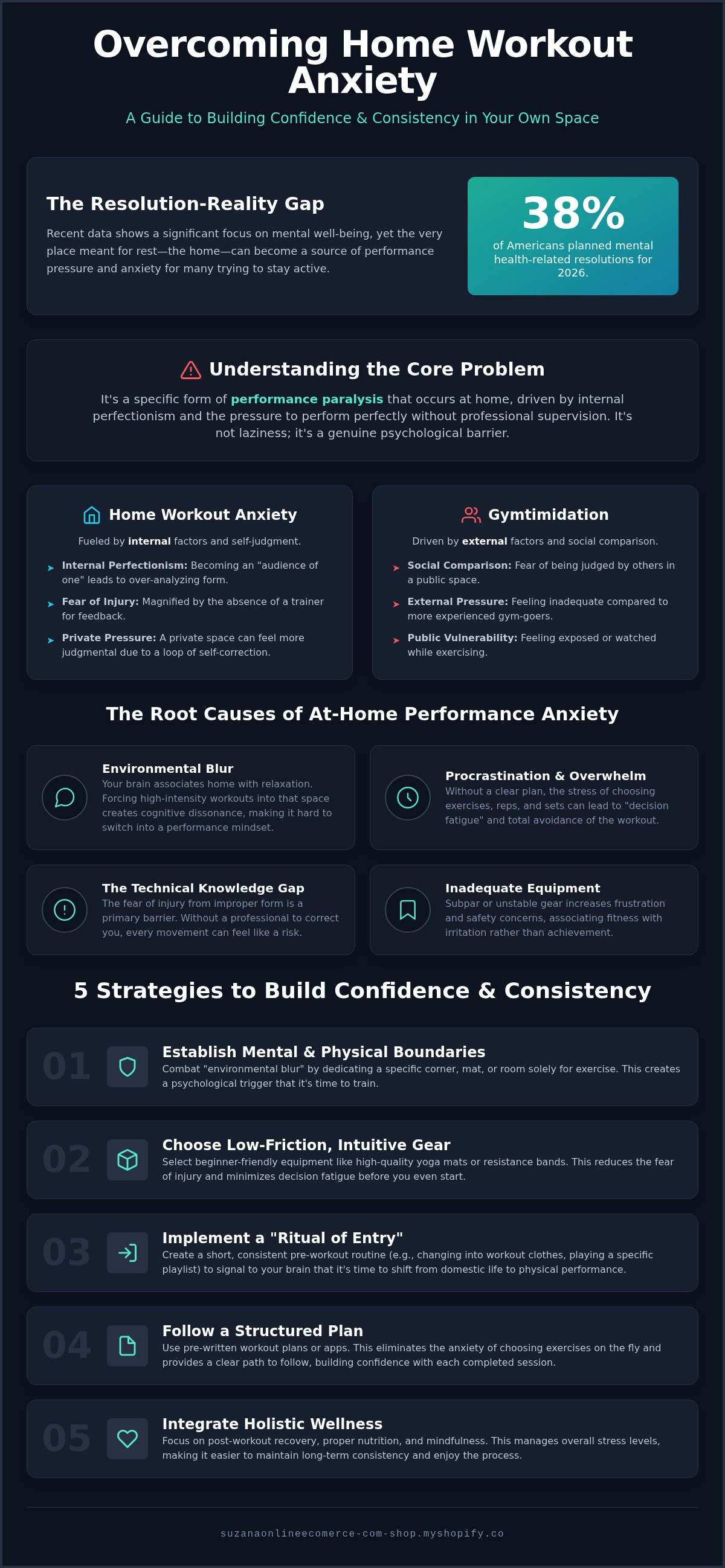
5 Strategies to Build Confidence and Consistency
Building a sustainable habit requires more than just the right tools; it demands a structured mental approach. To succeed in overcoming home workout anxiety, you must reduce the friction between your daily life and your training session. Implementing a "Ritual of Entry" is one of the most effective ways to signal this transition. This might involve a specific stretching routine or simply clearing your floor space to make room for movement. By following a pre-written plan, you eliminate decision fatigue, which is a major source of pre-workout stress. When you know exactly which movements to perform, you spend less time over-analyzing and more time making progress.
Shifting your focus from outcome goals to process goals is equally vital for long-term success. Instead of worrying about long-term physical changes, aim for simple objectives like spending 10 minutes on your mat. Dressing in functional fitness attire also helps, even if you aren't leaving the house. Wearing the right gear shifts your mindset into "athlete mode," helping you separate your fitness time from your domestic responsibilities. You can further anchor the experience by incorporating wellness products like aromatherapy or brief mindfulness exercises to calm the nervous system before you begin.
Establishing Your Workout Sanctuary
Your environment should actively support your fitness goals rather than detract from them. Visual cues, such as laying out your gear the night before, serve as a non-verbal commitment to yourself. Auditory cues are just as powerful; using a dedicated playlist can trigger focus and help drown out household noise. Ensure your space has adequate lighting and ventilation to keep the atmosphere fresh. A bright, well-ventilated area prevents the room from feeling cramped, which directly reduces feelings of stress during your session. You can browse our professional fitness essentials to help define and organize your dedicated sanctuary.
The 10-Minute Rule for Beginners
Commitment is often the most difficult part of any new routine. Lowering the "barrier to entry" by promising yourself just ten minutes of movement makes the task feel manageable and less intimidating. These small wins build the self-efficacy needed to tackle longer, more intense sessions as your confidence grows. In the first 30 days, you should prioritize consistency over intensity. It's much better to show up for a short, low-stress session every day than to force a grueling workout that leaves you feeling anxious or defeated. Celebrating these early milestones reinforces the habit and proves that you can maintain a routine without overwhelming your mental health.
Integrating Wellness and Fitness for a Balanced Routine
Successful fitness isn't just about the sweat; it's about the support system you build around your physical efforts. Following core health and wellness principles ensures that your body and mind work in tandem rather than in conflict. This holistic approach is essential for overcoming home workout anxiety because it addresses the stress that can linger after a session ends. When you view fitness as part of a broader wellness ecosystem, individual workouts feel less like isolated hurdles and more like integrated lifestyle choices that support your overall quality of life.
Post-workout recovery is often the most neglected part of an at-home routine, yet it's the phase where real progress happens. Effective recovery involves more than just stopping your movement; it requires active stretching and consistent hydration to flush out toxins and repair muscle tissue. Utilizing specific wellness products, such as aromatherapy or specialized recovery tools, helps your nervous system transition from a state of exertion to a state of rest. This decompression phase is vital for mental clarity and ensures that you don't carry physical tension into your domestic or professional tasks.
Holistic Recovery Techniques
A structured cool-down offers significant mental health benefits by lowering your heart rate and cortisol levels gradually. Using wellness items like essential oils or a dedicated recovery space signals the definitive end of the training phase. This clear boundary prevents the workout from spilling into your domestic life and creates a sense of closure. Implementing a consistent recovery protocol prevents physical burnout and reduces the psychological anxiety associated with your next scheduled session. It turns the end of a workout into a rewarding experience rather than an abrupt stop.
Your Next Steps with SUZANA SHOP
Curating a starter kit that balances high-performance gear with wellness essentials is the most practical way to sustain your progress. Our collection of professional yoga mats provides the physical foundation you need, while our broader wellness catalog supports your recovery and stress management. This functional gear ensures that your home environment feels like a professional studio, giving you the confidence to train without hesitation. Your home is the perfect place to grow at your own pace, free from external judgment. Explore our collection to build your stress-free home gym and reclaim your fitness journey today.
Reclaiming Your Fitness Space with Confidence
Transitioning your living room into a functional training zone requires more than just physical effort; it demands a clear mental boundary. By establishing a "Ritual of Entry" and committing to manageable 10-minute sessions, you effectively lower the psychological barriers to movement. Quality equipment serves as the foundation for this transition, providing the stability and professional feel needed to focus on your progress rather than your surroundings. Each small win builds the self-efficacy required to sustain a long-term routine.
Successfully overcoming home workout anxiety is a process of reclaiming your home as a place of growth and wellness. Integrating post-workout recovery and high-quality gear helps you maintain a professional standard without the pressure of a public gym. With the right tools and a structured approach, you can turn your private environment into a sanctuary for health. Build your confident home gym with SUZANA SHOP's professional fitness equipment, featuring professional-grade yoga mats for stability and functional wellness products for holistic health. We provide the expert-backed guidance you need to start your journey with certainty. You have the power to transform your routine at your own pace.
Frequently Asked Questions
Is it normal to feel anxious about working out even when I'm alone?
Yes, feeling anxious while alone is a common psychological response to a lack of professional feedback. Many people experience performance paralysis because they fear making mistakes without a guide. This internal pressure can be just as intense as the social anxiety felt in a public gym. Recognizing this is the first step in overcoming home workout anxiety and building a sustainable routine.
How do I know if I'm doing an exercise correctly without a mirror or trainer?
You can gauge your form by focusing on tactile feedback and muscle engagement rather than visual cues. Pay close attention to how your body feels during a movement; for instance, you should feel your core engage during a plank. Using recorded video of yourself to compare against professional demonstrations is a practical way to verify your technique without needing a mirror.
What is the best 'entry-level' equipment for someone with home workout anxiety?
A high-quality, non-slip yoga mat and a set of resistance bands are the best starting points. These tools are intuitive and provide a low-intimidation entry into fitness compared to heavy weights or complex machinery. A stable mat defines your training zone, while resistance bands allow you to control the intensity of every movement, significantly reducing the fear of injury.
Can working out at home actually help reduce my overall daily anxiety?
Regular physical activity at home is highly effective for managing general stress levels. Exercise helps regulate cortisol and increases the production of mood-stabilizing neurotransmitters. By creating a predictable, private routine, you provide your brain with a sense of control. This consistent practice can lower your overall baseline for daily anxiety over time. Complementing your fitness routine with other calming home-based hobbies, such as caring for an aquarium with the help of Fish Guppy, can further contribute to a serene living environment and reduced stress levels.
How do I stop my family or roommates from making me feel self-conscious while I train?
Setting clear boundaries and communicating your schedule is essential for maintaining focus. Inform your household of your training hours and request that they treat your workout area as a private zone. Using auditory cues like noise-canceling headphones can also help you stay immersed in your session. Establishing these physical and social rules prevents the self-consciousness that arises from unexpected interruptions.
What should I do if I feel a panic attack coming on during a workout?
If you feel a panic attack approaching, stop your physical activity immediately and focus on grounding your senses. Sit or lie down on your mat and practice slow, diaphragmatic breathing to signal safety to your nervous system. Remember that exercise increases your heart rate, which your brain might misinterpret as a sign of danger. Taking a break allows your heart rate to normalize and restores mental clarity.
How long does it take for home workout anxiety to go away?
Most people notice a significant decrease in anxiety within the first 30 days of consistent practice. As you master foundational movements and become familiar with your equipment, your self-efficacy increases. The habit becomes more automatic, which lowers the mental cost of starting each session. Consistency is more important than intensity when you're training your brain to feel safe during exercise.
Do I really need professional gym clothes if I'm just working out in my living room?
Wearing functional fitness attire is a powerful psychological tool for shifting your mindset. It signals to your brain that it's time to transition from domestic life to physical performance. Beyond the mental benefit, professional clothes provide the necessary support and range of motion to prevent discomfort. This simple change helps in overcoming home workout anxiety by making the session feel like a structured, professional commitment.